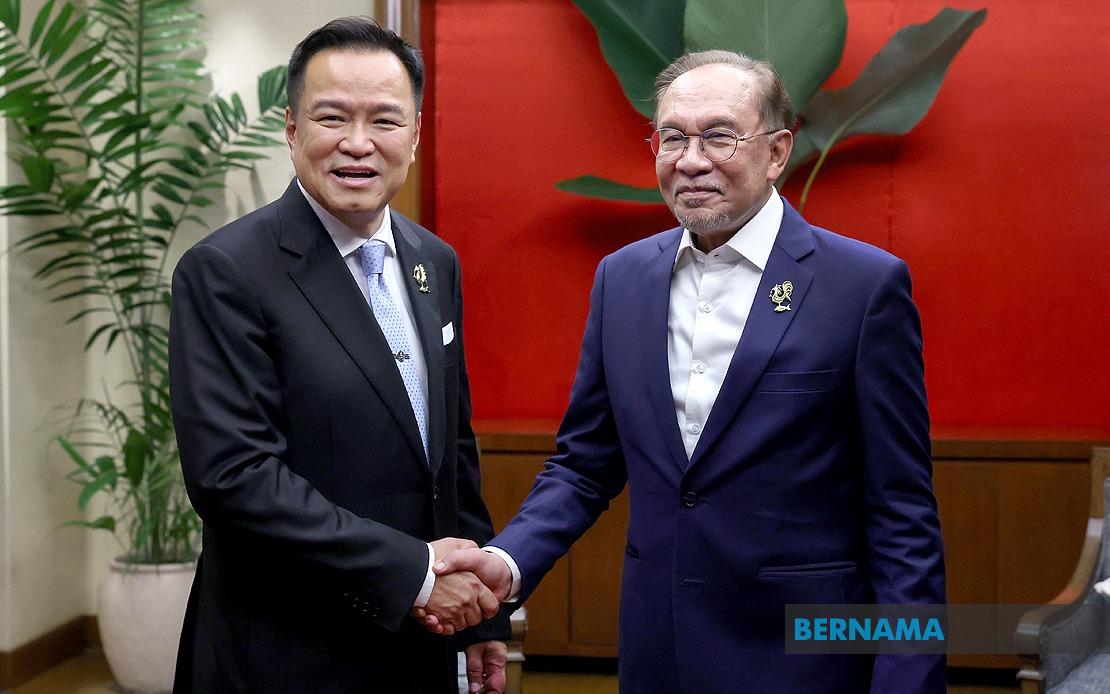
Thai Prime Minister Anutin Charnvirakul will arrive in Malaysia on Thursday, July 9, for a two-day official visit that carries symbolic and practical importance for regional connectivity. The timing is significant, as the trip precedes the inauguration of the new permanent Sadao border checkpoint on July 11, a facility expected to transform how goods, services, and people move between Thailand and Malaysia along this critical trade corridor.
The invitation from Malaysian Prime Minister Datuk Seri Anwar Ibrahim underscores the two governments' shared commitment to deepening bilateral engagement. According to government spokesperson Ratchada Thanadirek, the visit represents more than routine diplomatic courtesy—it reflects strategic alignment between Bangkok and Kuala Lumpur ahead of the 70th anniversary of formal diplomatic relations in 2027. This milestone suggests both nations are intent on cementing institutional ties and practical cooperation frameworks that will define the next phase of their relationship.
The new Sadao Customs, Immigration and Quarantine facility in Songkhla province represents a substantial infrastructure investment designed to replace the existing crossing point. Located in Thailand's southernmost province, the checkpoint will serve as the gateway for the Dan Nok border community and connect seamlessly with Malaysia's Bukit Kayu Hitam facility in Kedah. The architectural arrangement facilitates coordinated customs processing and reduces friction points that historically complicated cross-border movement.
Operational details reveal careful planning by Thai authorities. The facility will function daily between 5 am and 11 pm Thailand time under Ministry of Interior regulations, establishing predictable hours that businesses and regular travellers can plan around. This reliability is essential for commercial operations, where supply chains depend on consistent border access. The extended operating window—compared to some regional checkpoints with more restrictive hours—acknowledges the volume and variety of legitimate cross-border traffic that flows through this route.
The Cabinet-approved decision to construct supporting infrastructure extends the checkpoint's impact beyond the border itself. Connectivity roads on the Thai side are being prioritized to manage traffic bottlenecks that typically form when vehicles converge at border facilities. Shuttle bus services linking the checkpoint to inland areas will provide alternatives to private vehicle crossings, potentially reducing congestion and lowering transport costs for individual travellers and small traders who cannot justify commercial freight vehicles.
Public awareness campaigns represent an often-overlooked but crucial dimension of border infrastructure development. Thai authorities have been directed to educate residents and businesses in the Dan Nok community about new traffic routes, revised customs procedures, and immigration requirements. For cross-border traders operating at regional scale, clarity about regulatory processes directly affects operational costs and timeline reliability. Enhanced communication reduces costly mistakes at the checkpoint and builds confidence among Malaysian counterparts that their Thai partners understand and will comply with bilateral protocols.
The new checkpoint's opening arrives at a moment when regional supply chain considerations carry heightened weight. Southeast Asian economies have increasingly diversified manufacturing bases and supply networks away from single-country concentration, creating multiple cross-border movements daily. Malaysia and Thailand, as two of the region's more industrialized economies with substantial trade relationships, benefit directly from infrastructure that reduces border crossing times and costs. The Sadao-Bukit Kayu Hitam corridor serves as a major land route for regional commerce, complementing maritime routes and making its efficiency a matter of regional economic interest.
Anutin's visit marks his third trip to Malaysia since becoming prime minister, indicating pattern-building diplomatic engagement. His previous attendance at the ASEAN Summit in Kuala Lumpur in October last year, followed by an official visit in November, suggests a deliberate strategy of maintaining high-level bilateral contact beyond ceremonial occasions. This frequency of interaction, unusual for premiers of neighbouring countries, reflects mutual recognition that Thailand-Malaysia relations warrant sustained attention at the highest political level.
The checkpoint opening carries implications extending beyond immediate bilateral commerce. As the only land border between Thailand and Malaysia, this corridor's efficiency affects broader regional logistics networks. Goods transiting between Peninsular Malaysia and Thailand to reach Myanmar and Laos, or reverse flows from those countries into Malaysia, all pass through Sadao-Bukit Kayu Hitam. Improvement here generates positive externalities for multiple economies and strengthens the physical integration that underpins ASEAN's vision of a single market and production base.
Tourism considerations add another dimension to the project's significance. The southern Thai provinces and northern Kedah represent destinations for regional travellers, with many crossing the border for leisure rather than commerce. Streamlined immigration and customs processes reduce wait times that discourage casual tourism, while shuttle bus services make the crossing accessible to travellers without personal vehicles. For Malaysia, improved border efficiency supports tourism growth in Kedah and other northern states by making them more accessible to Thai visitors.
The institutional coordination evident in the checkpoint project suggests both governments view infrastructure as foundational to broader partnership objectives. Rather than ad hoc cooperation on individual issues, Bangkok and Kuala Lumpur appear to be systematizing their engagement through tangible projects with measurable outcomes. This approach carries particular resonance as both nations navigate regional geopolitical shifts and recognize that economic interdependence supported by efficient logistics networks provides mutual benefit.
Looking ahead to 2027 and the 70th anniversary of diplomatic relations, the Sadao checkpoint represents the kind of concrete achievement that governments highlight when assessing partnership success. Unlike policy statements or memoranda of understanding, a functioning border facility generates daily evidence of bilateral commitment. Each truck crossing, each tourist transiting, and each trader conducting legitimate commerce at Sadao-Bukit Kayu Hitam will validate the investment and reinforce institutional relationships that support stability in the region. Anutin's visit, timed to coincide with this opening, sends a clear signal that Thailand's leadership views the Thailand-Malaysia relationship as a cornerstone of its regional strategy.

