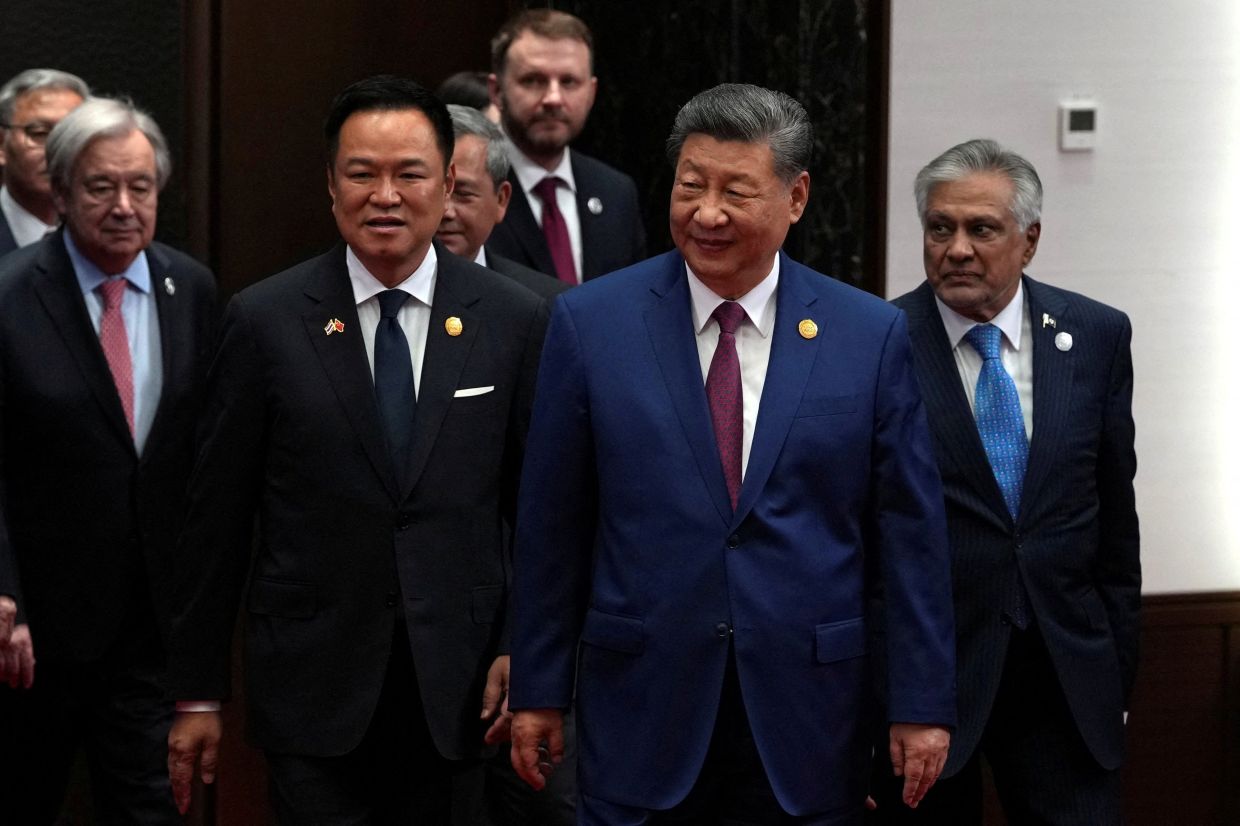
Thai Prime Minister Anutin Charnvirakul has adopted an unconventional approach to high-level diplomacy, performing a rendition of a Teresa Teng classic for Chinese Premier Li Qiang during a formal lunch in Beijing on Monday. The surprising moment, captured in footage released by Anutin's office, showed the Thai leader seated at a long table alongside the Chinese Premier, microphone in hand, while a pianist accompanied his vocals. Guests seated beneath Thai and Chinese flags responded with applause, underscoring what appears to be a deliberate strategy to inject personal warmth and informality into state-level encounters.
This Beijing performance represents the latest chapter in what observers are increasingly calling Anutin's signature diplomatic method. Rather than relying solely on traditional state protocols and formal speeches, the Thai Prime Minister has transformed musical performances into a tool for building bilateral relationships across the region. The approach extends beyond symbolic gestures; it appears designed to humanise diplomatic interactions and create memorable moments that transcend standard intergovernmental exchanges, potentially signalling a shift in how contemporary Asian leaders engage with their counterparts.
Just weeks prior, Anutin demonstrated this same musical inclination during a visit to Hanoi, where he performed on a traditional Vietnamese instrument alongside local musicians in the presence of Prime Minister Le Minh Hung. The performance generated considerable media interest and appeared to resonate well with Vietnamese audiences, suggesting that this unconventional diplomacy strategy resonates across different cultural contexts within Southeast Asia. Most notably, earlier this month he appeared with Malaysian Prime Minister Anwar Ibrahim, where the two leaders performed "My Way", the Frank Sinatra classic. During that performance, Anutin switched to the saxophone while his Malaysian counterpart provided vocals, illustrating his versatility across multiple instruments and his willingness to adapt his role depending on the diplomatic occasion.
Anutin's musical versatility is not merely for show. The Thai Premier is genuinely accomplished across several instruments, including piano and the traditional Thai flute. His hobbyist aviation skills—he maintains a passion for jet piloting—further underscore his image as a multifaceted individual rather than a typical political functionary. This cultivated persona of a well-rounded, culturally engaged leader stands in deliberate contrast to more austere diplomatic presentations, potentially appealing to younger, increasingly cosmopolitan populations across Southeast Asia who may find traditional state ceremonialism distant or outdated.
His political trajectory adds important context to understanding this diplomatic strategy. Anutin assumed office in September before securing electoral validation through February elections, positioning himself as a leader seeking to consolidate legitimacy and public connection. Coming from a prominent construction dynasty, he has consciously positioned himself as "a man of the people"—a framing that musical performances across borders arguably reinforce. By engaging in cultural exchanges rather than purely transactional diplomatic ceremonies, he projects approachability and cultural sensitivity, qualities that resonate in societies where personal relationships remain central to trust-building.
The broader implications of this approach merit consideration for Malaysia and the wider region. As Southeast Asian nations navigate increasingly complex great power dynamics, especially between China and Western powers, leaders who can establish personal rapport and demonstrate genuine cultural interest may find diplomatic channels strengthened. Anutin's strategy, whether calculated or instinctive, aligns with a growing recognition that soft power and cultural affinity increasingly matter in bilateral relations. For Malaysian policymakers observing from Kuala Lumpur, the effectiveness of Anutin's approach—evidenced by positive reception across Vietnam, China, and Malaysia—may suggest that cultural diplomacy holds underutilised potential.
Thailand's conservative social fabric and reverence for traditional institutions have historically shaped its diplomatic culture. Anutin's positioning as simultaneously loyal to Thailand's traditional social order while embracing modern, personalised diplomacy reflects a careful balancing act. He maintains credibility with conservative constituencies—including the military and establishment figures—while signalling to progressive and international audiences that his leadership incorporates contemporary, humanistic elements. This duality may explain why such unconventional performances generate positive responses rather than criticism in Thailand.
Recently, Anutin has extended his musical collaborations beyond government figures. He performed alongside a Thai teenager who achieved viral fame through a striking rock performance on the international television programme America's Got Talent. This move further demonstrates his strategy of aligning with diverse cultural touchstones and emerging talent, reinforcing his image as a leader engaged with contemporary popular culture rather than confined to establishment circles.
For Southeast Asian observers, Anutin's musical diplomacy represents an intriguing case study in how individual leaders can personalise state relations in an increasingly institutionalised regional environment. Whether this approach substantively impacts bilateral outcomes or primarily serves as memorable theatre remains an open question. Nevertheless, as China emphasises cultural and people-to-people exchanges as components of its Belt and Road Initiative, and as ASEAN nations seek to distinguish their diplomatic personalities, musical and cultural performances increasingly occupy diplomatic space alongside traditional negotiations and formal agreements.

