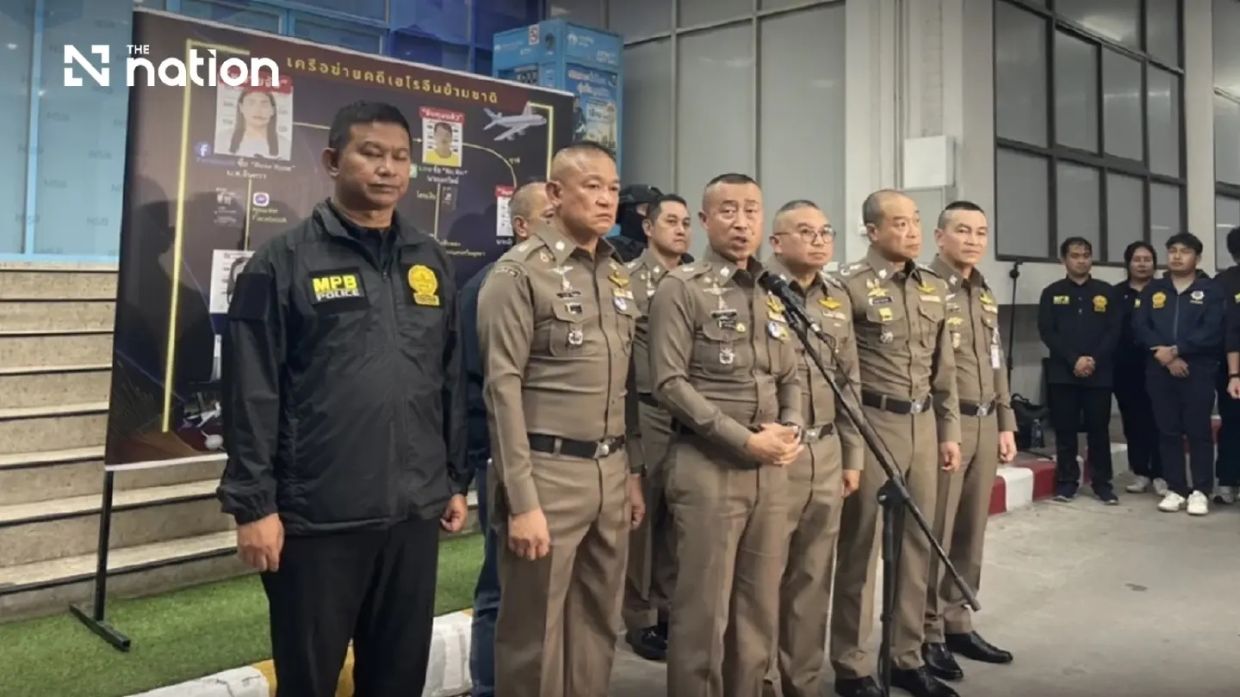
Thai authorities have launched an international manhunt for a woman identified as Chantra, believed to be the ringleader of a sophisticated cross-border heroin-trafficking network that operated across Southeast Asia and extended to Australia. Deputy National Police Chief Pol Gen Samran Nualma announced that the suspect, known online as "RoseRose", fled Thailand through an irregular border crossing after investigators significantly expanded their examination into the operation's structure and participants. Police intelligence suggests she escaped to a neighbouring country, triggering coordinated efforts by Provincial Police Region 5 officers to locate and apprehend her.
The investigation has unveiled a complex smuggling methodology that exploited commercial airline routes and personal courier networks. According to police findings, the operation acquired distinctive elephant-print bags in Chiang Mai—a city in northern Thailand known for traditional textile production—and used them as concealment vessels for heroin shipments. The network's defining characteristic involved recruiting unwitting or potentially complicit commercial air hostesses to transport these bags internationally, with at least one confirmed instance of such an arrangement targeting Australia. This approach represented a deliberate attempt to exploit the lower security scrutiny applied to airline personnel and their luggage.
Investigators have identified a second key suspect named Ekkawit, who allegedly operated the Line messaging account "Rin Rin" and functioned as an operational intermediary within the trafficking hierarchy. During questioning on July 10, Ekkawit reportedly confessed to receiving direct instructions from Chantra, who coordinated the broader operation through the RoseRose social media account. Police obtained corroborating evidence through Line Thailand's cooperation, establishing a documented link between Ekkawit and the Rin Rin account. The confession, combined with technical verification, enabled investigators to reconstruct the supply chain's mechanics and identify individual roles within the network.
Ekkawit's stated involvement encompassed the procurement phase of operations, with particular emphasis on acquiring the elephant-print bags from vendors in Chiang Mai. According to his account to investigators, he obtained these items and delivered them to RoseRose, subsequently receiving them back after heroin had been concealed within the bag's structure. This cycle allegedly repeated at least three times, suggesting an established operational pattern rather than isolated criminal incidents. The bags would then pass to an individual identified as Uthai, who assumed responsibility for coordinating onward distribution through unspecified channels.
The recruitment mechanism targeting potential couriers exploited social media communities designed specifically for individuals seeking income through goods transportation. Police allege that the RoseRose account actively engaged with members of Facebook groups specialising in courier services, subsequently sending private messages to individuals who demonstrated interest in such work. This digital marketing strategy enabled the network to identify targets across a wide geographical area without requiring in-person contact or establishing conventional criminal associates. The approach proved sufficiently effective that the network successfully placed heroin with at least one international commercial airline employee.
Regarding the Australian air hostess allegedly recruited to carry one of the elephant-print bags, investigators have deliberately refrained from reaching definitive conclusions about her awareness of the bag's contents or her intentions in transporting it. Thai police acknowledge significant evidentiary gaps surrounding her involvement and continue examining communications and contextual circumstances rather than making categorical assertions about her culpability. This cautious approach reflects recognition that courier recruitment sometimes targets genuinely deceived individuals, while in other cases participants possess full knowledge of illicit cargo. The ambiguity regarding her status carries substantial implications for Australian law enforcement's charging decisions and prosecutorial strategy.
Analysis of chat records across multiple platforms has revealed consistent communication patterns and participant connections that substantiate police assertions regarding the network's scope and organisational structure. Rather than representing isolated criminal transactions, the evidence demonstrates systematic coordination involving multiple individuals assuming complementary roles across different jurisdictions. The breadth of communications examined suggests a degree of operational sophistication exceeding basic street-level trafficking, with deliberate compartmentalisation of roles limiting exposure if individual network members faced apprehension.
Chantra emerges from investigative findings as an individual with substantial border-crossing experience, having frequently travelled between Thailand and Laos prior to her flight. This mobility pattern, combined with her apparent operational command authority within the network, has led investigators to suspect connections with international drug-trafficking organisations operating across mainland Southeast Asia. The heroin supplies allegedly originated from a neighbouring country and entered Thailand specifically through Phayao province in the north, indicating established supply route relationships and regional trafficking partnerships. Police intelligence suggests these arrangements operated independently from other major narcotics networks operating concurrently in Thailand.
The investigation has progressed sufficiently for law enforcement to identify alleged network leaders and document the primary trafficking route utilising Phayao as the entry point. However, investigators view this progress as initial rather than comprehensive, with ongoing interrogation of Ekkawit and broader network examination remaining essential to establishing complete accountability. On July 11, Narcotics Suppression Bureau officers were scheduled to present Ekkawit before the Criminal Court on Ratchadaphisek Road to petition for continued detention authorisation. Police explicitly intended to contest bail applications, emphasising the allegations' gravity and the investigation's continuing expansion into previously unidentified network participants.
The distinction between this investigation and concurrent trafficking cases reflects law enforcement's evolving understanding of Thailand's narcotics landscape. A separate investigation involving a married couple arrested in Loei province, examined by the Office of the Narcotics Control Board, operates along different trafficking routes and networks despite overlapping timeframes and substance types. This differentiation illustrates Thailand's fragmented narcotics infrastructure, with multiple competing organisations operating through geographically distinct distribution channels and recruitment strategies. Understanding these operational divisions assists regional law enforcement in targeting specific networks rather than implementing blanket enforcement approaches.
Thai authorities have signalled readiness for international cooperation should Australian law enforcement request evidence or investigative materials pertaining to the air hostess's involvement and the broader network's operations. Pol Gen Samran explicitly declined to comment on how Australian legal proceedings should conclude, deferring substantive matters to Australian judicial processes and prosecutorial discretion. This diplomatic restraint reflects recognition of Australian sovereignty while positioning Thai authorities as cooperative partners in transnational investigation. The case exemplifies the operational complexity inherent in modern drug trafficking, requiring coordination across multiple jurisdictions and involving sophisticated use of commercial airline personnel and social media recruitment mechanisms.

