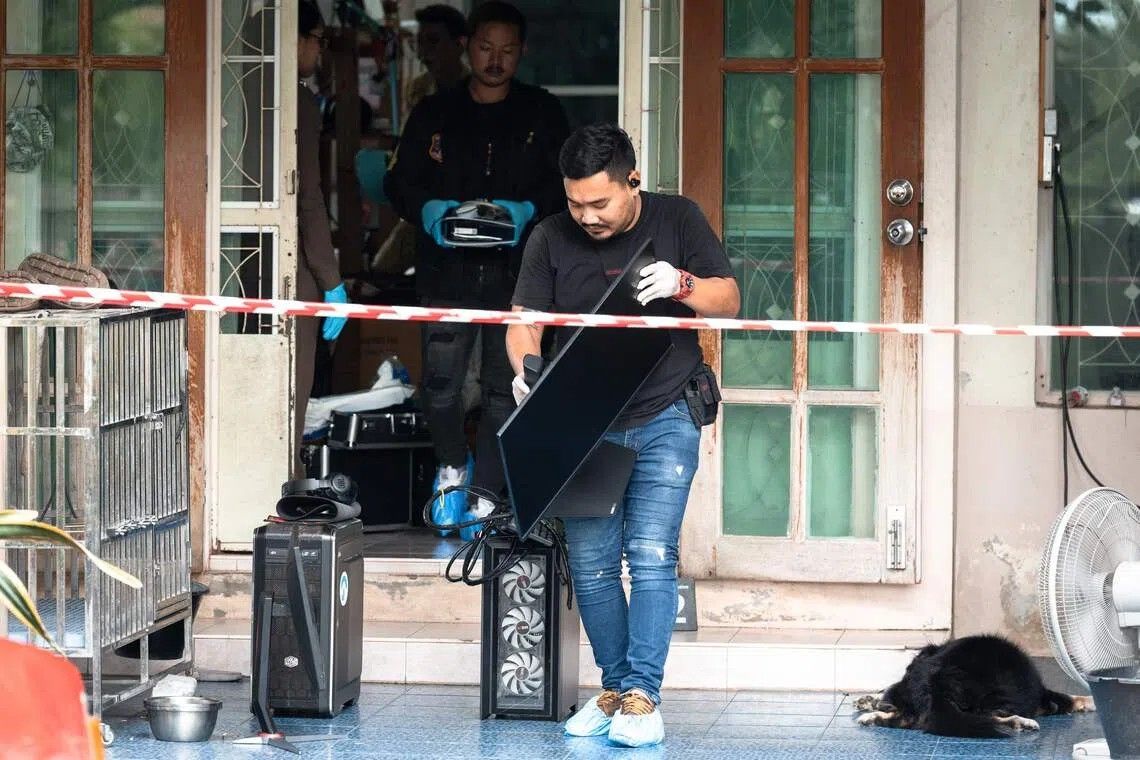
Law enforcement in Thailand is intensifying its investigation into a deadly shooting incident at Debsirin Nonthaburi School that unfolded on August 7, with authorities now focusing considerable attention on the digital footprint of the 14-year-old suspect. Thai police, led by Commissioner Wattana Yichin of Provincial Police Region 1, have discovered that the teenager conducted multiple internet searches about school shootings in the United States beginning around late July. The online activity has become a central line of inquiry as investigators attempt to piece together what motivated the tragic events that claimed multiple lives at the school.
The sequence of events reconstructed by law enforcement suggests a particularly disturbing narrative. Authorities believe that before arriving at the school on the morning of the shooting, the suspect was responsible for the deaths of his grandparents at their residence in Bang Khu Rat subdistrict, Bang Bua Thong district. Police officers and forensic teams discovered the bodies after gaining access to the locked property, where the front door had been secured from the outside. After leaving the house, investigators believe the teenager proceeded directly to Debsirin Nonthaburi School, where the fatal shooting subsequently occurred, marking a tragic escalation in what appears to have been a premeditated series of violent acts.
Digital forensics has become crucial to understanding the suspect's state of mind in the weeks preceding the incident. Computer analysis has revealed that the teenager engaged extensively with video games featuring violent content alongside his searches about American school shootings. These digital investigations, which police stress have not yet established causation, paint a picture of a young person deeply immersed in violent media. The searches spanning from approximately July 30 onwards suggest a period of sustained interest in similar real-world incidents, raising questions about what triggered such focused attention on school shooting events occurring thousands of kilometres away.
Accounts from the teenager's family provide important context about his isolated lifestyle and domestic situation. His uncle, speaking with police, described a boy who had lived with his grandparents throughout his childhood following his parents' separation. The relative characterised him as someone who spent considerable time engaged with computer games and largely withdrew from normal social interaction, spending most of his time at home rather than participating in typical adolescent activities. Significantly, the uncle reported observing no obvious warning signs of distress or conflict before the violence erupted, suggesting the teenager may have concealed whatever internal struggles he was experiencing.
Additional perspective comes from Thananyaporn, the 60-year-old sister of the boy's late grandfather and his relative by blood. She provided further details about the teenager's sheltered upbringing and daily routine. She noted that he was rarely permitted to venture outside the home, with his grandfather handling school transportation both morning and evening. Unlike many teenagers his age, the boy had not developed a circle of friends or engaged in the kind of unsupervised social activities common among adolescents, remaining largely confined to the family home where he spent his time on computer gaming rather than outdoor pursuits or peer interactions.
The family circumstances suggest a tightly controlled but emotionally supportive environment, according to Thananyaporn's account. She emphasised the closeness of the three-person household, with the grandmother working as a teacher and the grandfather, a retired bank manager, described as someone who communicated with gentleness and affection toward his grandson. The boy's demeanor within the family setting was consistently quiet and polite, giving no outward indication that such violence was possible. Thananyaporn stated firmly that she believed family discord was unlikely to be a contributing factor given the genuine warmth and care the elderly couple demonstrated toward their grandson.
The lawfully registered firearm used in the shooting belonged to the teenager's grandfather, according to police records. This detail raises questions about access and supervision of weapons within the household, though investigators have not yet released detailed information about how the teenager obtained or gained access to the gun. The grandfather's background as a bank manager suggests someone of respectable standing and presumably someone who would have been careful with weapon storage, yet this detail remains a crucial element in understanding how a 14-year-old was able to commit such a violent act.
Police have been careful to note that discovering violent video games and internet searches about American school shootings does not establish these as causative factors in the teenager's actions. Investigators are methodically examining multiple possible contributing elements, including whether the teenager experienced problems at school, social difficulties among classmates, or other stressors that may not have been apparent to family members. The police statement that the investigation remains focused on establishing a clear chronology of events underscores the complexity of determining what psychological or situational factors culminated in tragedy.
For Malaysian and broader Southeast Asian observers, this incident raises uncomfortable questions about the accessibility of violent media to young people and the challenge authorities face in identifying at-risk youth before tragedy strikes. Thailand's experience mirrors concerns across the region about the intersection of adolescent psychology, online activity, and access to weapons. The case also highlights how even apparently well-adjusted teenagers living in supportive family environments may harbour internal struggles invisible to those around them. As Thai police continue their investigation, the focus on understanding the teenager's digital world suggests that law enforcement across Southeast Asia increasingly recognises the need to examine online behaviour as a window into the minds of troubled young people.

