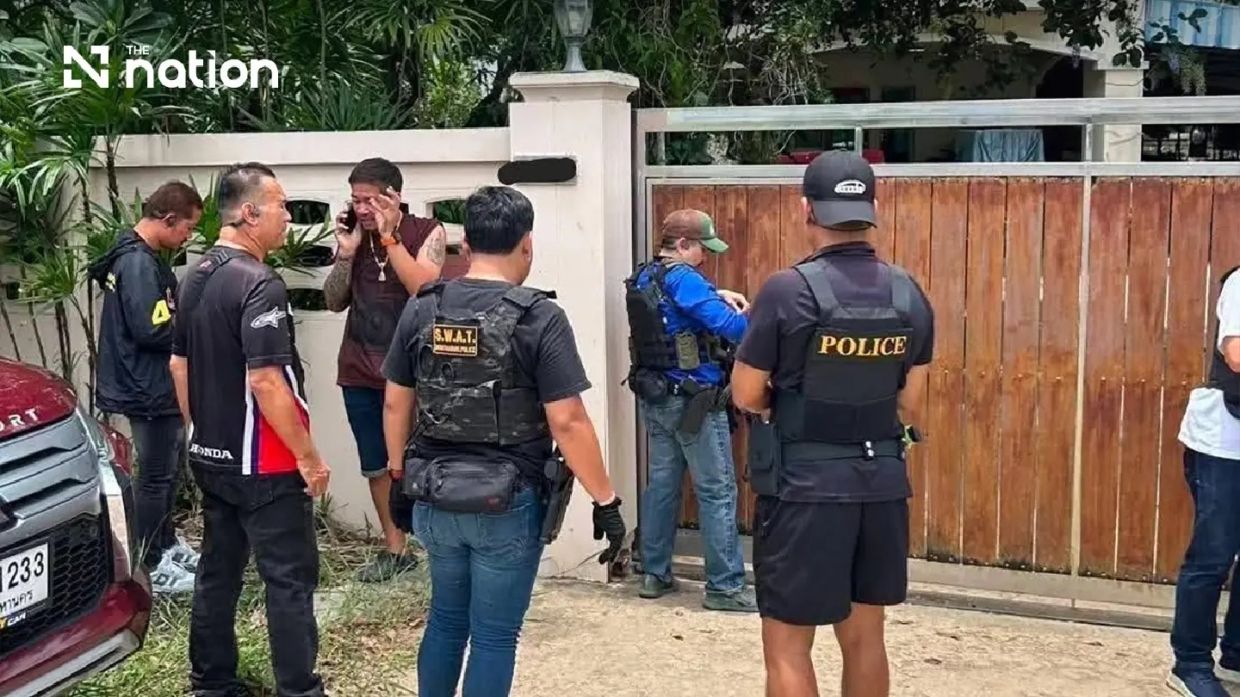
A Thai secondary school student allegedly killed his grandparents before carrying out a shooting spree at Debsirin Nonthaburi School that resulted in seven deaths and 15 injuries on Friday morning, according to Royal Thai Police investigators. The Mathayom 2 student, identified as a juvenile living with his paternal grandparents in a residential area of Bang Bua Thong district in Nonthaburi province, reportedly used a CZ 9mm handgun registered to his grandfather. Police discovered both grandparents dead at their home earlier that morning, with evidence suggesting they were killed with the same weapon later used in the school attack.
The sequence of events has sent shockwaves across Thailand and raised serious questions about gun safety within families and the mental state of adolescents with access to firearms. Officers brought the situation at the school under control following the shooting, and authorities immediately secured the premises and began gathering evidence. All injured victims and deceased individuals were removed from the school grounds, with national police chief Pol Gen Kitrat Phanphet ordering a comprehensive examination of the crime scene and detailed evidence collection procedures. The incident marks one of Thailand's deadliest school shootings in recent memory.
Police spokesman Pol Lt Gen Trairong Phiwphan indicated that determining the student's motive remains a priority, though authorities acknowledge that a thorough investigation into the suspect's behaviour, family circumstances, and personal background is necessary before conclusions can be drawn. The investigation has revealed that the juvenile had been residing with his elderly relatives, yet the specific triggers for the violence remain unclear. Officers have engaged with the student's guardians and are working to piece together the events that preceded the tragic incidents.
A central investigative focus concerns how the suspected attacker obtained access to the firearm and ammunition. Although the handgun was properly registered to a family member—the grandfather—investigators must establish the precise circumstances through which the student removed the weapon from the residence, how it had been secured or stored, and where ammunition was sourced. Police are examining the entire chain of custody and access to determine whether security protocols within the household failed to prevent misuse of the registered firearm.
The case highlights vulnerabilities in how firearms are stored and safeguarded within family homes across Thailand. The weapon's registration to the grandfather suggests legitimate ownership, yet the investigation will scrutinise storage practices and whether safety measures were adequate to prevent unauthorised access by a minor. Questions have emerged regarding whether warning signs or behavioural changes in the student were recognized or acted upon by family members or school officials prior to the violence.
Thailand's gun ownership regulations allow civilians to register and possess certain firearms for legitimate purposes, typically with background checks and licensing requirements. However, this incident underscores the gap between legal ownership frameworks and practical household security measures that prevent minors from accessing registered weapons. The investigation will likely inform policy discussions about mandatory secure storage requirements and training for gun owners on preventing youth access to firearms.
Responding to the psychological toll on survivors and the broader community, national police chief Phanphet dispatched mental health specialists and psychologists from Police General Hospital to the school and surrounding area. These professionals are tasked with providing counselling to teachers, students, and others directly affected by the violence, with the goal of mitigating immediate trauma and preventing long-term psychological consequences. Such support is critical following mass casualty incidents, particularly in educational settings where children constitute a significant portion of affected individuals.
The shooting raises broader concerns about adolescent mental health in Thailand and the adequacy of early intervention systems. Schools and families may lack sufficient tools or awareness to identify troubled youth before violence occurs. The investigation will include examination of whether the student exhibited any prior behavioural warning signs that could have prompted intervention by school counsellors, family members, or mental health professionals.
For Southeast Asian observers, the incident resonates as a reminder that mass shooting events are not confined to Western contexts. While exact prevalence data varies by country, armed violence involving youth has emerged sporadically across the region, prompting regional discussions about prevention strategies. Thailand's incident mirrors international patterns where perpetrators have close family connections and prior access to registered household firearms, suggesting that transnational approaches to gun safety and youth mental health support may offer valuable lessons.
The investigation continues as authorities work to complete forensic analysis, reconstruct the timeline of events, and establish definitive conclusions about the student's motive. Police have urged patience as the inquiry proceeds, emphasizing that preliminary information must be verified and contextualised through rigorous investigative protocols. The case will likely result in policy recommendations regarding firearm storage, mental health screening in schools, and family support mechanisms to prevent future violence.

