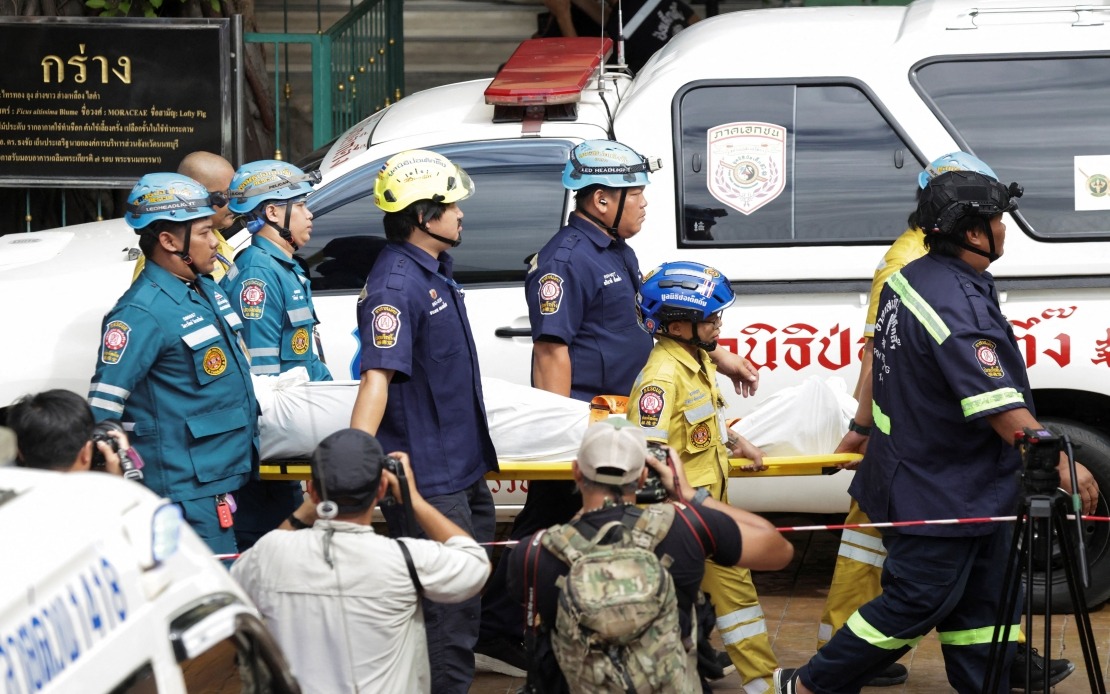
Thai authorities are investigating one of the country's deadliest recent school shootings after a student opened fire at Debsirin Nonthaburi School on Friday morning, killing six people and injuring 15 others. According to Royal Thai Police Deputy Inspector-General Trairong Piwpan, the tragedy unfolded in two stages, with preliminary findings suggesting the suspect first committed homicide at his residence before proceeding to the educational institution around 10am.
The dual nature of the violence emerged as investigators pieced together the timeline of events. Police discovered evidence at the suspect's home in Bang Bua Thong district indicating that the student had fired 26 rounds before even arriving at the school premises. This preliminary finding suggests a deliberate progression from one location to another, rather than an impulsive act confined to a single venue.
When officers searched the family residence, they made a grim discovery. The bodies of the suspect's grandfather and grandmother lay inside, both bearing fatal gunshot wounds to the head. Lieutenant General Trairong indicated that while investigators believe the student killed his grandparents before proceeding to the school, the exact sequence of events and precise timing of these killings remain subjects of ongoing investigation. The evidence collected at the home included a 9mm handgun and 34 additional rounds of ammunition found outside the magazine, painting a picture of premeditation and planning.
At the school itself, the attack proved devastating for the Nonthaburi community. Three teachers and three students were killed in the shooting, while 15 others sustained injuries in what unfolded as a rampage through the educational facility. The suspect, who was also a student at the school, was found dead at the scene, though authorities have not specified the exact circumstances of his death. The loss of both educators and younger pupils underscores the indiscriminate nature of such violence.
These tragic events carry profound implications for Thailand and the broader Southeast Asian region, where mass shootings remain comparatively rare compared to some other parts of the world. School safety has become an increasingly pressing concern across the region as societies grapple with how to protect vulnerable populations in educational settings. The incident raises urgent questions about how institutions can identify warning signs among students and implement preventive measures.
Police efforts are now concentrated on establishing the underlying motive that drove the suspect to commit such violence. Investigators are working methodically to reconstruct the sequence of events, examining any psychological, social, or personal grievances that may have contributed to the shooting. Understanding the motivation is critical not only for comprehending this particular tragedy but also for developing frameworks to prevent similar incidents in the future.
The discovery that the suspect killed his grandparents before attacking the school introduces additional complexity to the investigation. It suggests this was not a moment of sudden rage but rather a calculated action spanning multiple locations. Authorities must determine whether family conflict played a role in the motivations, and whether the school shooting represented an extension of domestic violence or a separate expression of violent impulses.
For Malaysia and other neighbouring nations, this incident serves as a sobering reminder of the gaps that can exist in youth mental health support and crisis intervention systems. The profile of a student committing such violence suggests the need for enhanced awareness among educators, parents, and counsellors about recognising distress signals in young people. Many regional countries have yet to develop comprehensive protocols for threat assessment in schools or systematic approaches to identifying students at risk of committing violence.
The availability of firearms, even where legal restrictions exist, remains a critical factor in the severity of such incidents. The 9mm handgun used in this attack represents a significant weapon in the context of a school environment, and the fact that the suspect possessed both the weapon and substantial ammunition raises questions about access and oversight. Different Southeast Asian nations maintain varying regulations regarding civilian gun ownership, and this tragedy may prompt policy discussions across the region.
Communities in Nonthaburi and throughout Thailand now face the collective trauma of processing such an event. Schools across the region may respond by reviewing their security protocols, emergency response procedures, and pastoral care systems. International organisations focused on child safety and school security will likely analyse this incident as part of broader efforts to understand and prevent school violence in Asia.
The investigation remains ongoing, with authorities committed to establishing a comprehensive account of events and the psychological or situational factors that precipitated the violence. As details emerge, the case will undoubtedly prompt broader conversations about mental health provision, threat assessment, and school safety not only in Thailand but across Southeast Asia, where education systems strive to balance openness with security.

