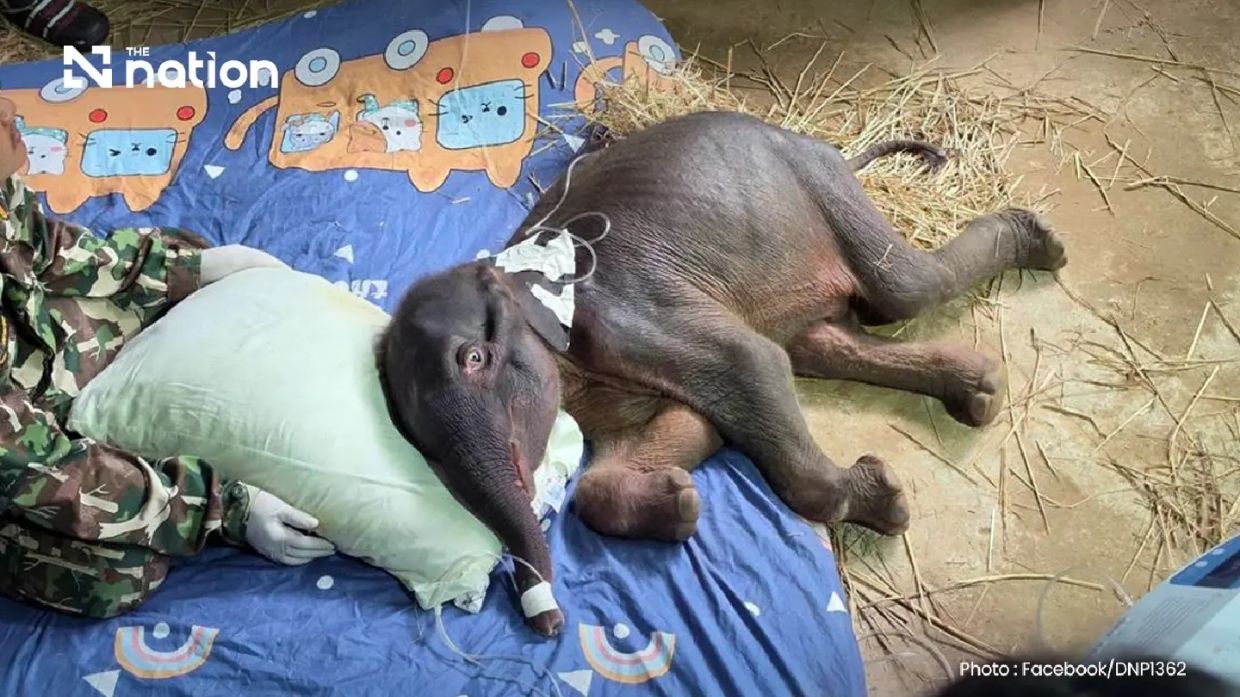
A young wild elephant separated from its herd in Thailand's Kanchanaburi province has died from what veterinarians believe was acute kidney failure, concluding a poignant week-long rescue operation that captivated officials and villagers alike. Jiew Sai Yok, named after the Sai Yok National Park where rescue efforts were coordinated, passed away peacefully around 2am on Tuesday, August 4, according to an announcement by the Department of National Parks, Wildlife and Plant Conservation (DNP). The calf's death marks an unfortunate outcome in a rescue scenario that initially appeared promising when villagers first spotted the distressed animal.
Villagers discovered the orphaned calf on July 30 near the Huai Mae Nam Noi riverbank, struggling alone in an isolated and difficult-to-access location within the national park. The remote terrain necessitated a water-based rescue, with officials and local residents boarding boats to reach the youngster. Upon arrival, rescuers found the calf in a weakened state with no adult elephants in the vicinity, suggesting it had been separated from its family group for approximately two days. Despite hopes that the mother or herd members might return during an overnight vigil, the calf continued calling out periodically without receiving any response from other elephants in the area.
A veterinary assessment conducted on July 31 revealed the extent of the calf's deteriorating health condition. The journey to examine the animal proved arduous, requiring a boat transit of one to two hours through rainswollen waterways where elevated water levels and forest runoff created additional hazards. Medical findings painted a troubling picture: the young elephant exhibited severe dehydration, oral wounds including a lesion approximately the size of a 10-baht coin, multiple sores inside its mouth, and what appeared to be canker-like infections. Additional complications included conjunctivitis caused by insects around its eyes, abdominal wounds at the navel site, and blisters with necrotic tissue along its trunk.
Physical symptoms extended beyond visible wounds and infections. The calf's urine displayed an abnormal dark yellow-red colouration suggestive of either urinary tract infection or severe dehydration, while its digestive system showed signs of distress through loose, foul-smelling stool. Despite these alarming indicators, the animal maintained some capacity to consume nutrition, though intake remained minimal. Veterinarians assessed the overall clinical presentation as deeply concerning, recognising the multiple compounding health crises the young elephant faced simultaneously.
Following the initial assessment, officials transported Jiew Sai Yok to Sai Yok National Park headquarters for intensive medical intervention. There, veterinary staff and park personnel provided round-the-clock care under controlled conditions that allowed for more comprehensive treatment protocols. Medical teams administered intravenous fluids to combat dehydration while simultaneously providing continuous oxygen support to stabilise respiratory function. The calf demonstrated resilience during the treatment period, managing to consume milk every two to three hours in quantities ranging between 350 and 500 millilitres, suggesting some will to survive despite its compromised physical state.
Throughout the night preceding its death, the calf continued exhibiting both encouraging and troubling signs. Periods of weakness alternated with attempts to stand, indicating fluctuating energy levels and neurological function. The persistent diarrhoea and dark-coloured urine suggested ongoing gastrointestinal and urinary system dysfunction that medical intervention had not fully resolved. This clinical picture likely reflected underlying organ dysfunction that extended beyond the immediately visible injuries and infections that rescue teams could directly address.
The elephant calf eventually succumbed around 2am on August 4, drifting into sleep before passing away peacefully. Veterinary staff initiated full resuscitation procedures upon recognising the cessation of vital signs, but these emergency interventions proved unsuccessful in reviving the young animal. Laboratory blood tests conducted prior to death had prompted initial suspicion of acute kidney failure, a diagnosis supported by the calf's clinical presentation of dark urine, dehydration, and progressive deterioration despite supportive care. Veterinarians additionally noted the possibility of congenital abnormalities affecting internal organs, which may have compounded the calf's medical crisis.
The death of Jiew Sai Yok underscores the profound challenges facing orphaned wild elephants, particularly young calves that depend entirely on maternal care and the social cohesion of family groups. In the context of Southeast Asian wildlife management, the case exemplifies both the commitment of conservation authorities and the inherent limitations of attempting to rescue severely compromised animals. Unlike human infants who might survive extended separation with adequate nutrition, elephant calves possess physiological requirements and immunological needs adapted to maternal milk composition and herd-based social structures that are extremely difficult to replicate in rescue scenarios.
The circumstances surrounding Jiew Sai Yok's separation from its herd raise broader questions about habitat fragmentation and wildlife corridor integrity in Thailand's national park system. Whether the calf became separated due to natural causes, illness of the mother, or environmental disruption remains undetermined. The DNP has indicated that a necropsy will be conducted with laboratory samples collected to establish definitive cause of death, findings that may provide insights into the health status of wild elephant populations in the Kanchanaburi region.
Veterinary teams and park officials have been commended by the DNP for their dedicated efforts and compassionate care throughout the rescue and treatment process. The acknowledgement reflects recognition that despite the tragic outcome, the attempted intervention represented a legitimate attempt to provide assistance to a vulnerable wild animal in distress. For regional conservation efforts, the episode serves as a reminder of the importance of maintaining viable elephant populations and migration corridors, as isolated individuals—particularly young calves—face overwhelming odds when separated from their protective family units.
The loss of Jiew Sai Yok comes amid broader regional concerns about elephant welfare and habitat conservation across Southeast Asia. Thai authorities continue grappling with the challenge of balancing human development with the survival needs of large wild animals whose ranges increasingly overlap with agricultural and residential areas. As Thailand and neighbouring countries implement conservation strategies, cases like this underscore the necessity of preventing human-wildlife conflict situations that result in separation of family groups and the cascade of medical and psychological consequences that follow. The young elephant's death, while individually tragic, contributes important data points for understanding the precarious position of wild elephants in the region.

