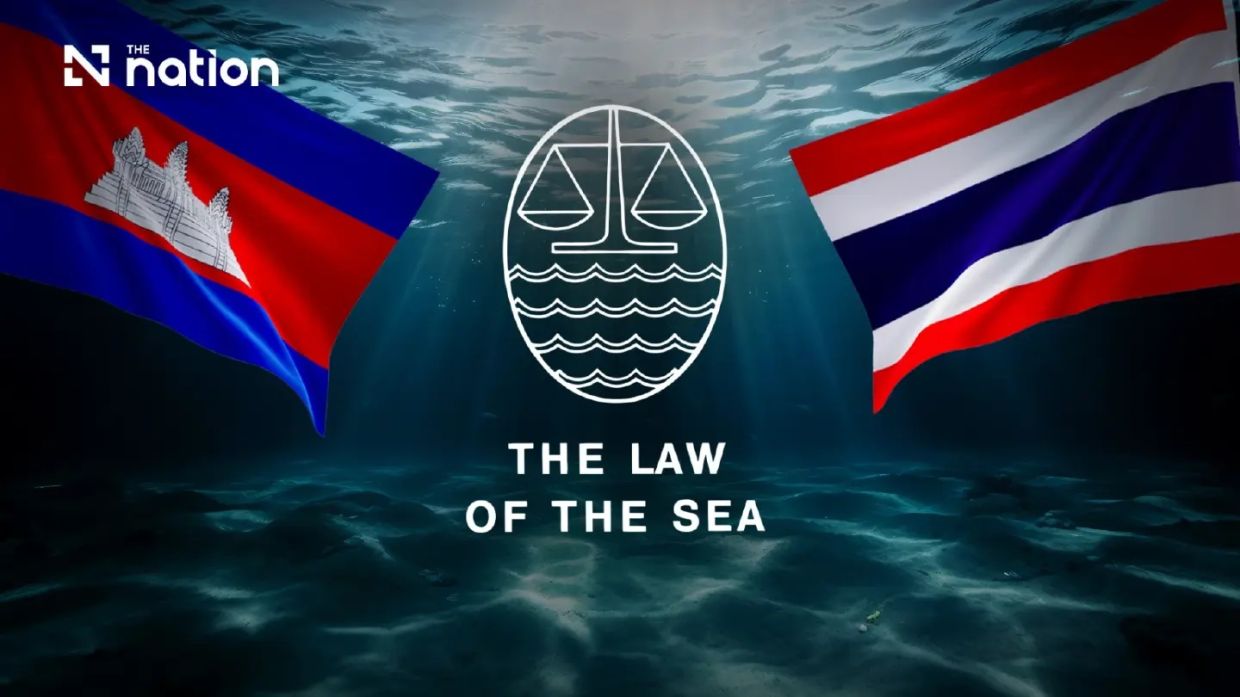
Thailand and Cambodia have taken a significant step towards resolving their long-standing maritime dispute by moving closer to establishing a five-member conciliation commission under the United Nations Convention on the Law of the Sea, or Unclos. However, a fundamental disagreement persists between the two nations regarding the true scope of the process: whether it should focus exclusively on delineating maritime boundaries or whether it should also encompass arrangements for jointly developing the substantial offshore energy reserves beneath the contested waters.
The conciliation framework requires each country to appoint two independent conciliators who must then jointly select a fifth neutral chair to oversee the commission. Thailand has named German jurist Rüdiger Wolfrum and South African jurist Albert J. Hoffmann, both former presidents of the International Tribunal for the Law of the Sea. Wolfrum presided over the tribunal from 2005 to 2008, while Hoffmann held the position more recently, from 2020 to 2023. Cambodia's selections include Danish diplomat Peter Taksøe-Jensen and French international-law academic Jean-Marc Thouvenin. Notably, Taksøe-Jensen chaired the Unclos conciliation that successfully resolved the maritime boundary dispute between Timor-Leste and Australia, making him a significant figure in establishing the procedural precedent now being applied to the Thai-Cambodian case.
The original July 19 deadline for appointing the commission chair has been extended to August 14 at the proposal of the four conciliators themselves. This additional time allows the group to identify a candidate with the necessary qualifications: expertise in international law, maritime law and diplomacy, coupled with absolute impartiality and familiarity with Thai-Cambodian relations. Once appointed, the chair will join the other four conciliators in establishing the commission's procedures and operational framework during an inaugural meeting. Thailand formally accepted participation on June 19, following Cambodia's submission of its notification on June 2. Bangkok has designated Deputy Prime Minister and Foreign Minister Sihasak Phuangketkeow as its agent in the proceedings, with Thailand's ambassador to Kuwait, Songchai Chaipatiyut, serving as deputy agent.
Crucially, the Unclos conciliation mechanism differs fundamentally from judicial proceedings. The commission will not issue a legally binding judgment or ruling. Instead, it will examine the dispute, consult both countries and submit non-binding recommendations designed to guide them toward a mutually negotiated settlement. Any final agreement must ultimately be approved by both Bangkok and Phnom Penh. The entire process typically requires approximately 12 months, though the countries may extend the timeline if additional deliberations prove necessary. The Timor-Leste-Australia precedent, which resulted in a treaty establishing permanent maritime boundaries in the Timor Sea, demonstrates that conciliation can succeed, but also illustrates that the mechanism's success depends heavily on genuine political willingness from both parties.
The disputed waters encompass between 26,000 and 27,000 square kilometres and are thought to contain somewhere between 11 trillion and 12 trillion cubic feet of natural gas, alongside substantial oil reserves. Some analyses have valued the total potential of these resources at approximately US$300 billion, making the stakes extraordinarily high for both nations. Cambodia views resolution of this boundary dispute as essential to unlocking these resources and securing their share of substantial wealth. Keo Rottanak, Cambodia's Minister of Mines and Energy, has articulated urgently that global energy security concerns, particularly those sparked by tensions involving Iran and disruptions around the Strait of Hormuz, have elevated the importance of resolving the Gulf of Thailand dispute with greater speed. The minister has warned that major international energy companies have a narrowing window for investment in fossil fuel projects, and that delays in settling the boundary dispute risk losing opportunities to attract the financing necessary for exploration and development.
Cambodia's energy situation underscores this sense of urgency. The kingdom currently depends substantially on hydropower generation and increasingly on growing solar capacity, yet the government views additional fossil-fuel resources as strategically important to supporting its longer-term industrial expansion and economic development objectives. Keo has noted publicly that even after a boundary agreement is reached, exploration and development of offshore reserves would require several years to materialise. This extended timeline has prompted Cambodia to advocate for resolution sooner rather than later, as the window for securing corporate investment appears to be closing. International energy companies, including TotalEnergies, have indicated awareness of the commercial opportunity, though TotalEnergies declined to disclose specific investment commitments when contacted by Reuters.
Thailand's position, however, diverges markedly from Cambodia's strategic vision. Bangkok maintains that the conciliation process should be restricted initially to establishing maritime boundaries and determining the limits of the continental shelf. Thai officials argue that discussions concerning joint development areas or the apportionment of offshore resources would be premature and potentially counterproductive before the maritime boundary and the extent of any overlapping claim have been precisely and legally established. Foreign Minister Sihasak has emphasised repeatedly that the commission's initial focus must remain strictly on maritime delimitation, with resource-sharing arrangements to be considered only after the legal and geographical position becomes entirely clear. This measured approach reflects Thailand's concern that sovereignty, territorial integrity and national interests must retain primacy throughout the negotiation process and not be compromised by discussions of resource sharing that might inadvertently prejudice Thailand's legal position.
The divergence between the two countries' objectives reveals a deeper strategic tension. Cambodia wants the conciliation commission to serve as a vehicle not merely for resolving boundary questions but for establishing a comprehensive framework that encompasses both delimitation and mechanisms for developing and sharing the disputed area's resources. This dual-track approach reflects Phnom Penh's anxiety about missing an opportunity to capitalise on energy resources before global investment trends shift further away from fossil fuels and before its own geopolitical leverage potentially diminishes. Thailand's narrower interpretation stems partly from legal caution—establishing boundaries first ensures that subsequent resource-sharing arrangements rest on unambiguous territorial foundations—but also reflects Bangkok's preference to preserve maximum flexibility in future negotiations.
This fundamental disagreement over process scope and objectives threatens to complicate the conciliation proceedings, even as both countries have demonstrated sufficient commitment to participate in the mechanism itself. The presence of experienced maritime law practitioners and diplomats among the appointed conciliators suggests that technical discussions on delimitation can proceed relatively efficiently. However, translating agreement on boundary principles into a settlement that also addresses Cambodia's energy aspirations will require careful diplomacy and potentially creative solutions that neither country has yet publicly outlined. The precedent of the Timor-Leste-Australia conciliation, while encouraging in demonstrating that the mechanism can produce results, did not require resolving competing claims regarding resource development, making the Thai-Cambodian case procedurally more complex.
Regionally, the resolution of this dispute carries implications extending beyond Thailand and Cambodia. Southeast Asia's energy security, maritime stability and investment climate all depend partly on how swiftly and comprehensively disputes in shared waters can be resolved. A successful outcome would signal that regional mechanisms for peaceful dispute settlement function effectively even when significant economic interests diverge. Conversely, prolonged disagreement or a failed conciliation could discourage investment in offshore energy projects across the region and potentially embolden other claimants in contested maritime areas. The Gulf of Thailand case therefore serves as a test of whether dialogue and institutional frameworks can bridge fundamental differences between neighbouring states when substantial resources hang in the balance.

