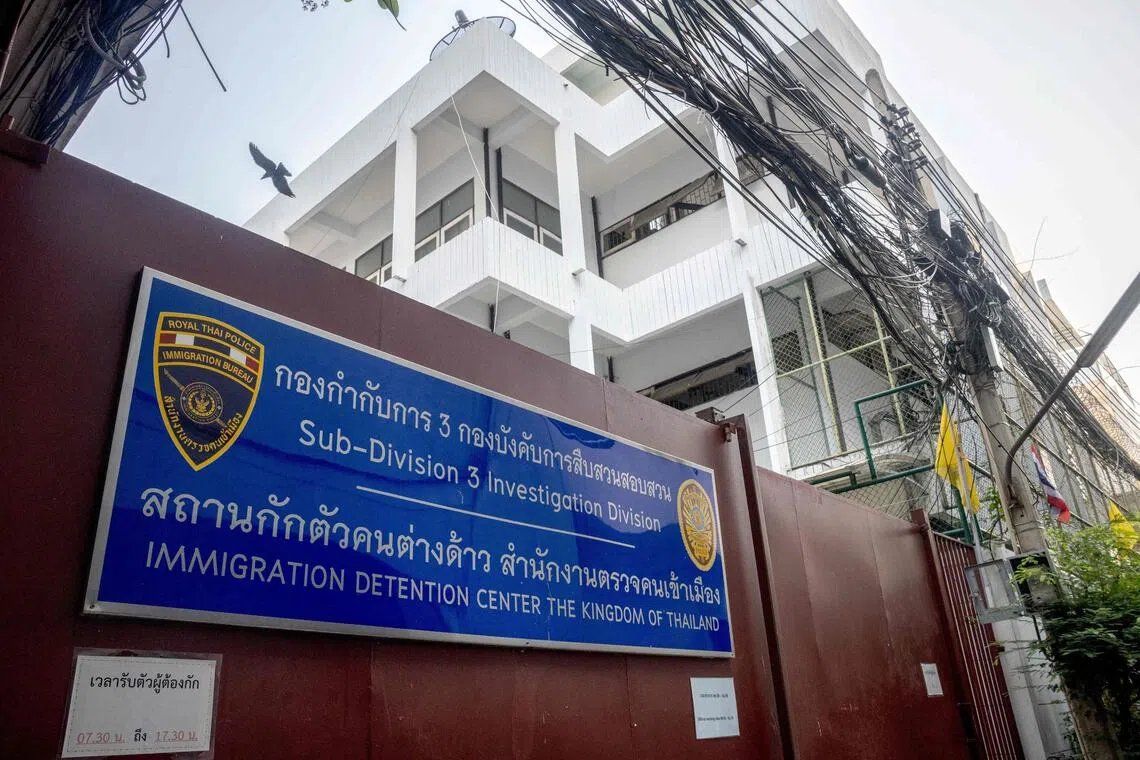
Prime Minister Anutin Charnvirakul has signed new deportation regulations that represent a significant tightening of Thailand's immigration enforcement framework. The Prime Minister's Office Regulation on Deportation B.E. 2569 was published in the Royal Gazette on August 27 and came into effect on August 28, establishing clearer procedures for removing foreign nationals who violate Thai law or conduct themselves in ways deemed injurious to public order and national welfare.
The regulation explicitly balances Thailand's welcoming stance toward legitimate foreign visitors and residents with its zero-tolerance approach toward criminal conduct. While the country actively encourages lawful entry for tourism, residence, employment, and business purposes, it acknowledges that some foreigners circumvent these systems through illegal entry, unlawful work, or conduct that undermines social stability. The new framework aims to address this problem through faster inter-agency coordination and more transparent decision-making processes, shifting away from ad-hoc determinations toward standardized procedures.
Under the regulation, the Interior Minister holds primary authority over deportation decisions and receives case referrals from the Interior Ministry's permanent secretary or authorized representatives. Cases typically originate when a foreign national's conduct is deemed contrary to public order, good morals, or public welfare—a broadly defined standard that encompasses not only direct offenders but also those acting as instigators or supporters of prohibited conduct. This approach allows authorities to pursue individuals engaged in ancillary roles within criminal enterprises, addressing gang recruitment, human trafficking networks, and organized crime structures that often depend on facilitators.
The regulation identifies six specific categories of offences that trigger mandatory deportation consideration once sentences have been finalized by courts. These categories encompass unauthorized entry or overstaying, unlawful employment, illegal business operations under the Foreign Business Act, document forgery, and crimes carrying prison sentences of five years or more. By anchoring deportation authority to completed court judgments rather than administrative determinations alone, the framework provides a layer of judicial oversight while simultaneously obligating correctional authorities to flag eligible cases well in advance of prisoner release.
The procedural architecture introduced here addresses a persistent administrative challenge: coordinating between Thailand's corrections, judiciary, and immigration systems. The Department of Corrections must now provide the Interior Ministry with detailed information—including names, nationality, and case records—at least fifteen days before a foreign prisoner's release. This advance notice period enables the Interior Minister to issue deportation orders without delay, preventing situations where individuals are released from prison only to disappear into the country's informal economy. Similarly, when courts suspend sentences or impose fines instead of imprisonment, the Judiciary must immediately notify the Interior Ministry so cases can be evaluated promptly.
For Malaysian and broader Southeast Asian observers, this regulation reflects Bangkok's broader immigration management strategy in an era of increasing cross-border mobility and transnational crime. Thailand hosts significant populations of foreign workers, many undocumented, alongside substantial tourist flows. The streamlined process addresses a chronic concern: foreign nationals convicted of crimes who either remained in Thailand post-release or exploited bureaucratic delays to evade deportation. By institutionalizing advance notification and establishing clear timelines, the regulation reduces opportunities for procedural evasion and signals Thailand's commitment to deterring criminal activity by foreign nationals.
The regulation contemplates human rights protections that reflect Thailand's international obligations. Deportation decisions must account for applicable domestic laws, Cabinet resolutions, and Thailand's treaty commitments. Crucially, the framework includes provisions addressing refugee and asylum protections. Other countries or international organizations may submit diplomatic requests within seven days of a deportation order to receive the individual in their jurisdiction or a third country if genuine safety concerns exist. These concerns encompass torture, cruel or inhumane treatment, violations of human dignity, and enforced disappearance—standards aligned with international human rights conventions.
The mechanics of alternate deportation routes reveal sophisticated consideration of practical constraints. If a deportee's destination country cannot be established, authorities may send them to their last country of residence before entering Thailand. If an alternate country or international body requests custody, that party must agree to assume all costs for care and transportation, while the deportee must provide written consent. Such transfers must be completed within thirty days, with the Interior Minister authorized to grant up to two thirty-day extensions. If a transfer cannot materialize within the permissible timeframe, deportation proceeds through standard repatriation to the person's country of nationality. This layered approach acknowledges that international transfers are logistically complex and diplomatically sensitive while preventing indefinite administrative limbo.
For regional context, this regulation positions Thailand within a spectrum of Southeast Asian immigration enforcement regimes. While Singapore operates one of Asia's strictest immigration systems, and Malaysia frequently grapples with irregular migrant populations, Thailand's approach suggests a middle path: welcoming legitimate foreign engagement while deploying relatively efficient removal mechanisms for those who violate the social contract. The regulation's focus on final court judgments and formal procedures distinguishes it from purely administrative removal systems, potentially appealing to legitimate foreign investors and professionals concerned about arbitrary enforcement.
Implementation will likely reveal the regulation's practical efficacy and any unintended consequences. Cooperation between the Department of Corrections, Interior Ministry, and courts will be essential, requiring adequate staffing and information-sharing protocols. The definition of conduct "contrary to public order" remains somewhat elastic, potentially enabling overly broad application or creating inconsistent enforcement across provinces. Additionally, cases involving stateless individuals or those from countries unwilling to accept deportees could create prolonged detention scenarios despite the regulation's stated purpose of expediting removals.
The regulation also implicitly raises questions about Thailand's capacity to absorb and process deportees arriving in neighboring countries, particularly Malaysia and Cambodia, which may receive increased inflows. Regional cooperation frameworks addressing burden-sharing and deportee reintegration may become necessary to prevent destabilization. For Malaysian policymakers, the regulation underscores the importance of bilateral coordination on deportation procedures and suggests that proactive engagement with Thai authorities on migrant management could reduce unexpected arrivals and facilitate smoother inter-agency communication.
Beyond its administrative dimensions, the regulation reflects Thailand's broader governance priorities under Prime Minister Anutin's administration. By formalizing enforcement procedures, the government signals enhanced rule-of-law commitment while simultaneously demonstrating strong-hand responses to criminality—messaging resonant with conservative constituencies concerned about foreign crime. The regulation's publication in the Royal Gazette and the precise dating of enactment suggest institutional attention to legal formality, though implementation outcomes will ultimately determine whether procedural sophistication translates into more effective foreign offender removal and crime deterrence.

