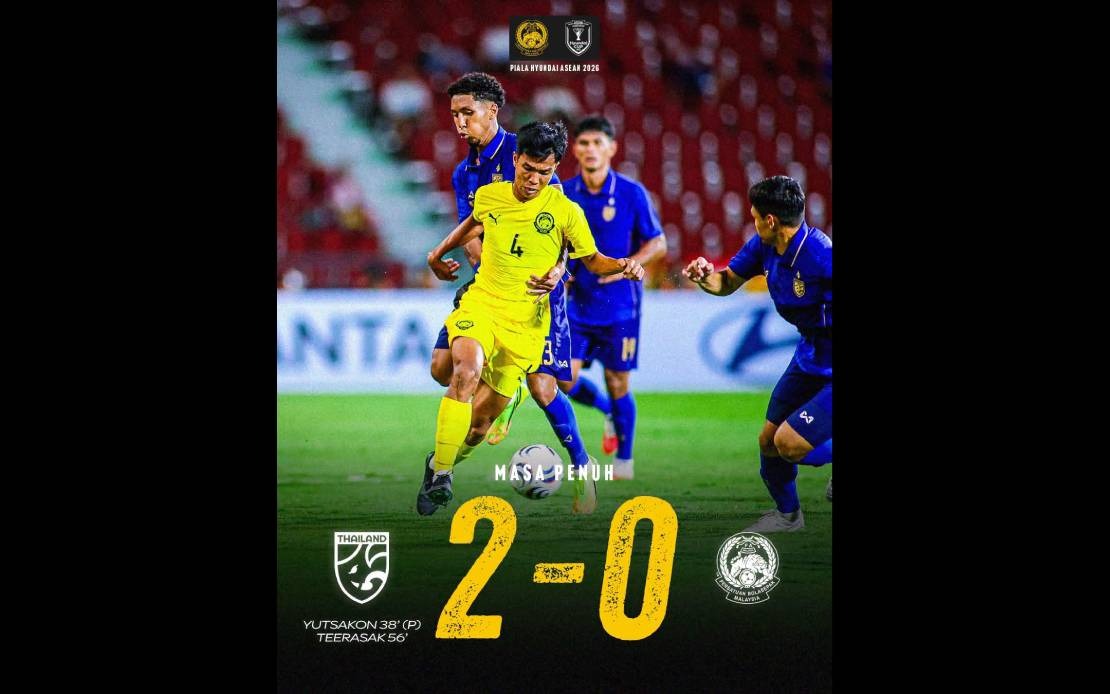
Malaysia's impressive unbeaten streak at the 2026 ASEAN Cup came to an emphatic end on Saturday when they fell to a 2-0 defeat against Thailand at the Rajamangala Stadium in Bangkok. The loss in this critical Group B encounter reshapes the tournament dynamics and reignites the competition for group dominance between two regional football powerhouses, each pursuing semifinal qualification.
The match began with both nations exercising caution, though Malaysia's attacking players initially posed considerable problems for their opponents. Paulo Josue and Muhammad Syafiq Ahmad worked tirelessly to create openings early in proceedings, but Thailand's goalkeeper Kampon Phatomakkakul stood resolute between the posts, producing a succession of crucial interventions to thwart Malaysian scoring opportunities. The early tactical restraint suggested both teams understood the significance of the result for their tournament aspirations.
Thai defending proved equally formidable throughout the opening period, with centre-backs Nattapong Sayriya and Manuel Tom Bihr executing a disciplined approach that neutralized Malaysia's forward threats systematically. Their organizational excellence limited the space available for Malaysian attackers to exploit, forcing Harimau Malaya into an increasingly frustrated search for breakthrough opportunities. This defensive solidity would ultimately prove instrumental in Thailand's triumph.
The deadlock fractured catastrophically for Malaysia in the 32nd minute when centre-back Muhammad Ubaidullah Shamsul Fazili committed a costly defensive error. His mistimed challenge brought down Kakana Khamyok inside the penalty area, presenting Thailand with a straightforward chance to open the scoring. Following intervention by the Video Assistant Referee system, South Korean referee Kim Woosung confirmed the penalty decision, offering no ambiguity about the infringement.
StrikerYotsakon Burapha demonstrated composure under pressure by converting the subsequent penalty in the 38th minute, dispatching the ball with clinical precision to secure Thailand a halftime advantage. The goal fundamentally altered the match's complexion, leaving Malaysia facing the prospect of overturning a deficit against opponents increasingly confident in their defensive organization.
Thailand emerged after the interval with renewed attacking intent, systematically pressing forward while maintaining their rearguard discipline. Malaysian goalkeeper Muhammad Azri Ab Ghani encountered several testing moments as the hosts manufactured additional scoring opportunities, reflecting their improved second-half control. The momentum appeared firmly established in Thailand's favor as they continued accumulating pressure.
Thailand's advantage doubled decisively in the 56th minute through substitute Worachit Kanitsribumphen, whose perfectly weighted pass released Teerasak Poeiphimai into space. The Thai forward demonstrated clinical finishing by converting his unmarked opportunity into the second goal, effectively settling the contest and extending Thailand's lead to a commanding 2-0 margin. This insurance goal provided psychological comfort for the hosts while draining Malaysian hopes of a comeback.
Despite the deficit, Malaysia refused to surrender entirely, continuing their attempts to breach Thailand's defensive wall throughout the remainder of the match. However, their late endeavors proved insufficient against opponents who maintained their concentration and organizational structure admirably. Thailand's backline preserved their clean sheet convincingly, enabling the holders of seven ASEAN Cup titles to secure the full three points they required.
The victory repositions Thailand atop Group B standings on goal difference, both nations accumulating six points from their respective encounters. Thailand's superior positioning reflects having played one fewer match, suggesting potential advantage in the ongoing battle for group supremacy. Meanwhile, Myanmar and the Philippines occupy third position with three points each, while Laos remain pointless in the group standings. These results confirm that semifinal qualification remains contested across all five competing nations.
Malaysia's subsequent fixture presents both challenge and opportunity when they confront the Philippines on August 8 at the Kuala Lumpur Football Stadium in Cheras. This encounter assumes heightened importance following their Bangkok setback, necessitating victory to maintain serious title contention. The geographic advantage of playing at home could prove decisive in Malaysia's efforts to recover from their first tournament defeat and reassert themselves within their group's competitive hierarchy.
Thailand's triumph vindicated their historical pedigree and championship mentality when circumstances demanded maximum concentration and clinical execution. The victory demonstrated why seven-time champions consistently perform effectively during tournament football's decisive phases. However, Malaysia's competitive display suggests their campaign remains far from concluded, with realistic pathways toward both group progression and ultimately the continental trophy still available should they capitalize on remaining opportunities effectively.

