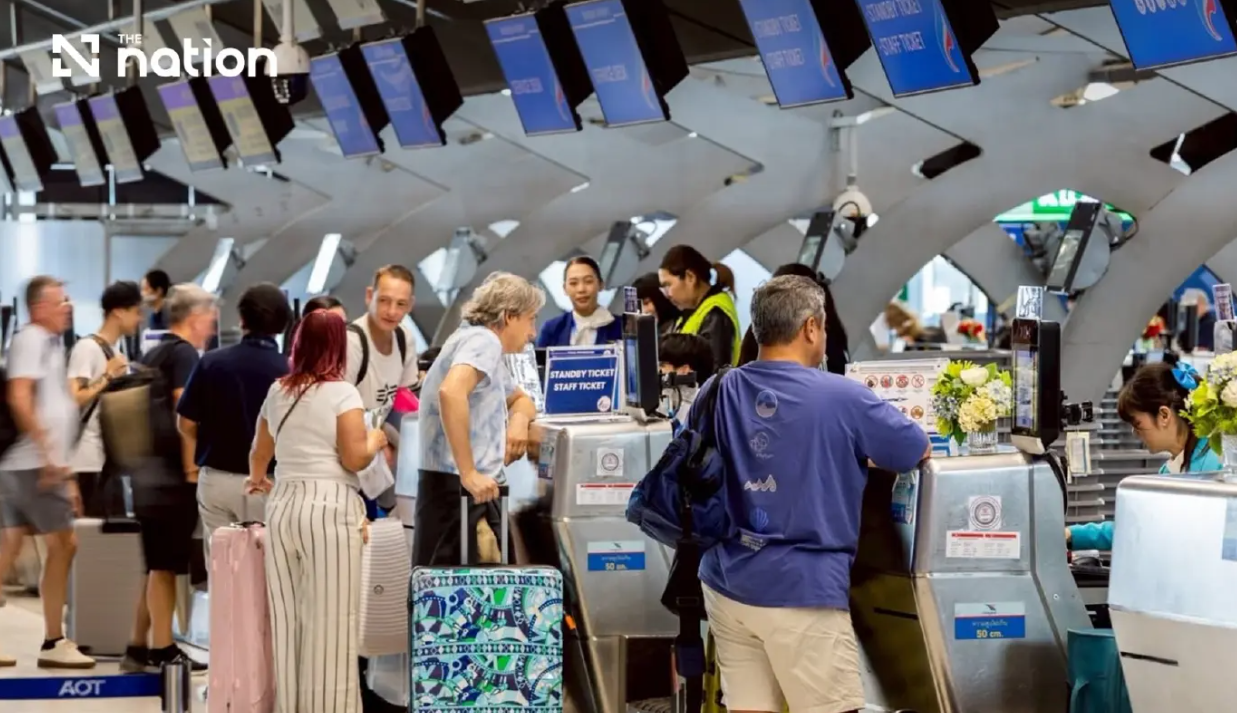
Thailand's government is preparing a two-pronged approach to revitalise its tourism sector, combining domestic stimulus with revenue-raising measures from international arrivals. The strategy reflects Bangkok's determination to distribute tourism benefits more equitably across the country while addressing the environmental and safety challenges that mass tourism has created. Tourism and Sports Minister Surasak Phancharoenworakul unveiled the plans at a recent subcommittee meeting chaired by Deputy Prime Minister Suphajee Suthumpun, signalling high-level commitment to the initiative.
The Thai Travel Thai Plus programme represents the centrepiece of the domestic component, scheduled to commence in September during the Green Season when leisure travel traditionally picks up. The scheme allocates a preliminary 1.75 billion baht budget to subsidise domestic tourism spending, with the government covering half of eligible expenses up to a ceiling of 3,000 baht per entitlement. Participating Thai citizens can receive up to five entitlements through the Pao Tang application via Krungthai Bank, creating a potential pool of 500,000 beneficiaries. Officials estimate the programme could generate more than 26 billion baht in economic circulation, a multiplier effect that would benefit hotels, restaurants, attractions, and transport operators nationwide.
Crucially, the revised structure deliberately broadens the scope of eligible spending beyond traditional tourism staples like food and lodging. The government has expanded the 500-baht voucher attached to each entitlement to 1,000 baht and opened eligibility to encompass admission fees, tourism products, community goods, guided tours, and vehicle rental. This deliberate expansion addresses concerns that previous subsidy programmes concentrated benefits among major hospitality chains. By explicitly including smaller operators and community-based tourism enterprises, Bangkok aims to ensure that secondary destinations and grassroots tourism businesses gain meaningful revenue streams.
The funding mechanism for Thai Travel Thai Plus—borrowing from public sources—remains under discussion between the Tourism and Sports Ministry and the Finance Ministry. Officials acknowledge that several implementation details still require resolution, particularly regarding how operators across different tourism sectors will participate in the programme and what conditions they must meet. The government has scheduled further talks with industry representatives and tourism agencies to finalise these particulars, with clearer conclusions expected within a week of the announcement. This consultation approach suggests recognition that buy-in from private-sector stakeholders will prove essential for successful rollout.
The complementary foreign visitor fee proposal aims to establish a dedicated revenue stream for tourism-related investments and environmental remediation. The Thailand Tourism Promotion Fund would receive collected fees and direct them toward three principal objectives: developing and upgrading existing attractions and constructing new purpose-built facilities, particularly in secondary tourism cities; financing visitor insurance and safety arrangements; and rehabilitating natural environments degraded by tourism activity. This framework acknowledges that popular destinations like Phuket, Krabi, and the Andaman coast have experienced strain from overcrowding and environmental degradation, issues that Southeast Asian tourism authorities increasingly recognise as threatening long-term competitiveness.
Notably, the foreign visitor fee remains at an embryonic stage with no proposed rate, collection methodology, or implementation timeline announced. Such vagueness suggests the government is still exploring technical and political considerations—including how to set a fee that generates meaningful revenue without deterring visitors in a competitive regional market where Bali, Vietnam, and Cambodia offer alternative destinations. Malaysia's own experience with tourism taxation, including the departure levy and various state-level tourism taxes, provides relevant regional precedent that Thai policymakers may study.
The timing of these proposals reflects Bangkok's broader economic strategy under Deputy Prime Minister Suphajee's framework for supporting growth through trade and services. The Tourism and Sports Ministry's focus extends beyond immediate revenue and subsidy measures to encompassing confidence-building in visitor safety, developing secondary destinations as "Must-Visit Cities" to distribute tourism geographically, and ensuring local communities benefit from sustainable tourism development. This holistic approach acknowledges that tourism's social and environmental externalities have generated political pressure across Southeast Asia.
For Malaysia and other regional competitors, Thailand's two-tier approach warrants close attention. The domestic subsidy programme essentially represents counter-cyclical stimulus designed to maintain domestic spending during seasonal fluctuations and amid broader economic uncertainty. The foreign visitor fee, by contrast, represents an attempt to monetise tourism's externalities—a trend increasingly visible across the region as destinations grapple with overtourism impacts. Both approaches carry implications for regional tourism flows and competitive positioning.
The programme's first phase runs for four months with government consideration of extension contingent on uptake and economic impact. This iterative approach allows authorities to assess effectiveness before committing to longer-term expenditure. The ministry's expectation that smaller operators will benefit broadly from the expanded voucher system will be observable in implementation data, offering valuable lessons for similar initiatives elsewhere in Southeast Asia where income inequality and uneven regional development remain persistent challenges.
The involvement of the Creative Economy and Visitor Economy working group, chaired by Weerasak Kowsurat, indicates integration with Thailand's broader creative and visitor economy agenda. This group has been tasked with delivering "quick win" results within six months to one year, focusing on regulatory streamlining and competitiveness improvements that do not require legislative amendments. Such an approach bypasses Thailand's notorious legislative delays while demonstrating pragmatism about implementation constraints.
Underlying these proposals lies recognition that Thailand's tourism sector, while economically vital, faces structural challenges requiring both short-term stimulus and long-term investment in infrastructure, safety, and environmental stewardship. The dual initiative attempts to address immediate economic recovery while building foundations for sustainable tourism that can withstand regional competition and global travel pattern shifts. Success will depend on execution quality, stakeholder cooperation, and whether the fee mechanism proves politically viable—questions that will become clearer in coming months as Bangkok finalises details and approaches implementation.

