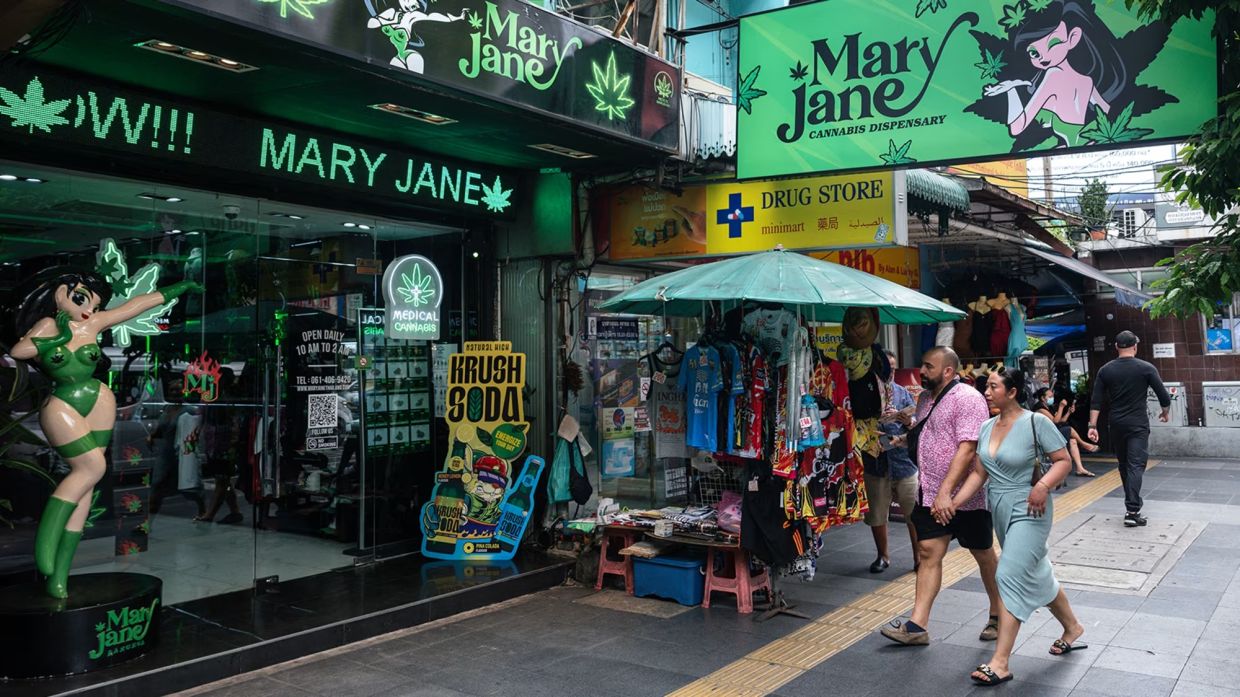
Thailand's approach to cannabis regulation faces mounting pressure as lawmakers confront a deepening crisis of compliance and control. The House Public Health Committee convened on June 18 to deliberate whether the country should reverse its 2022 liberalisation and reclassify cannabis as a controlled narcotic, a move that would represent a dramatic policy reversal just three years after the initial decriminalisation. The debate has exposed fundamental tensions between public health imperatives, economic development, and the rights of farmers and legitimate operators attempting to navigate an unstable legal environment.
The liberalisation of cannabis in June 2022 was intended to open opportunities for medical research and agricultural development, positioning Thailand as a regional hub for cannabis-based therapeutics. However, the intervening years have revealed significant implementation challenges. Dr Tewan Thaneerat, deputy director-general of the Department of Thai Traditional and Alternative Medicine, acknowledged persistent concerns since the policy shift. Currently, cannabis operates as a controlled herb under the 1999 Protection and Promotion of Thai Traditional Medicine Wisdom Act, a framework designed for traditional remedies rather than modern cannabis commerce. The June 2025 regulations from the Public Health Ministry attempted to impose stricter oversight on research, sales, processing, and exports in alignment with international standards, yet enforcement remains inconsistent and fragmented across multiple government agencies.
The government is drafting comprehensive cannabis legislation to replace the patchwork of existing controls. The proposed cannabis and hemp bill, developed jointly by the Department of Thai Traditional and Alternative Medicine, the Food and Drug Administration, the Department of Health Service Support, and the Office of the Permanent Secretary for Public Health, represents an acknowledgment that current arrangements are inadequate. The draft was submitted to the Cabinet under a previous administration but failed to reach Parliament before dissolution. The current Public Health Ministry remains committed to advancing the legislation, with public hearings expected to conclude by late July before resubmission to Cabinet. This timeline, however, leaves a regulatory vacuum during which unlicensed operations can proliferate.
Proponents of returning cannabis to the narcotics list argue the measure is necessary while proper legislation is finalised. Ekkapop Sittiwantana, deputy chairman of the House Public Health Committee from the People's Party, contends that unregistered cultivation and informal direct sales have become endemic, creating commercial loopholes that sophisticated operators exploit. He advocates for mandatory plant registration to close these gaps. Assoc Prof Dr Smith Srisont, representing a coalition of doctors, academics, and civil society groups focused on drug harm reduction, reinforced this argument by questioning the original decision to remove cannabis from the Narcotics Code. Although cannabis extracts exceeding 0.2 percent THC remain classified as narcotics, he emphasised that the real-world consequences of widespread availability are already evident in clinical and community settings. He proposes a sequential approach: reclassify cannabis as a narcotic immediately, then introduce separate regulatory legislation to permit legitimate activities under strict oversight.
A critical structural weakness exists in the current framework. While cannabis flowers are designated as controlled herbs subject to supervision, other plant components—stems, seeds, roots—fall outside criminal regulations when cultivated, creating perverse incentives for operators to exploit botanical technicalities. This regulatory arbitrage has proven difficult for enforcement agencies to counter, particularly when operators claim they are processing only non-prohibited plant parts. The lack of unified botanical classification across Thailand's regulatory agencies means different authorities may reach contradictory conclusions about the same product.
The Food and Drug Administration briefed the committee on existing oversight mechanisms covering licensed production facilities, processing plants, imports, and retail outlets through certified shops. The agency conducts continuous inspections of cannabis-based products to verify compliance with labelling standards and test raw materials for contaminants and potency. Initial inspection results indicate most tested products meet regulatory standards. However, the FDA acknowledged that the fundamental challenge is not laboratory compliance among licensed operators but rather the proliferation of sales channels operating entirely outside the legal system. Street vendors, online platforms, and informal networks distribute cannabis products with no oversight whatever.
Legal cannabis operators face an existential business crisis. The Thai Cannabis Future Network presented testimony emphasising that licensed businesses cannot compete against the underground market, smuggled imports, and the perpetual uncertainty created by shifting legal interpretations. Operators reported additional pressures including allegations that some officials demand improper benefits in exchange for licensing approvals, and dysfunctional prescription systems that impose prohibitive costs on cultivators or are undermined when prescriptions are traded through non-medical channels. These accounts suggest regulatory capture and corruption threaten the integrity of the licencing regime itself. The network contends cannabis possesses broader traditional and economic value beyond mainstream medical applications and should not be confined to pharmaceutical uses. They argue for transparent, participatory lawmaking that does not concentrate benefits among large corporate investors at the expense of smallholder farmers and early-stage entrepreneurs.
The divergence between these positions reflects a genuine policy dilemma without obvious resolution. Public health authorities prioritise youth protection and prevention of uncontrolled access, pointing to concerns that cannabis has become too readily available through unregulated channels. Medical professionals worry about inadequate counselling and screening for vulnerable populations, particularly adolescents whose developing brains may be harmed by THC exposure. Yet restrictions that reimpose criminal penalties risk dismantling legitimate agricultural and medical supply chains, penalising operators who invested substantially in compliance, and driving economic activity underground where it escapes all oversight.
Committee chairman Sakoltee Phattiyakul responded to these competing claims by directing officials to compile comprehensive data on legally licensed cannabis retailers in Bangkok and FDA-certified cannabis products. He emphasised that cannabis accessibility has become excessive and insisted that future legislation must include provisions mandating minimum distances between cannabis outlets and educational institutions. The committee also tasked researchers with conducting broader epidemiological studies of cannabis-related harms and identifying vulnerable population groups most affected by current policies. Sakoltee indicated willingness to consider alternative draft legislation from public sector sources alongside the Public Health Ministry's bill, suggesting the committee recognises that a single governmental proposal may not capture the necessary complexity.
The unfolding cannabis debate will test whether Thailand's political institutions can accommodate legitimate economic interests, support for agricultural producers, and genuine public health protection simultaneously. The window for policy adjustment is narrowing as the regulatory vacuum extends. Without swift passage of comprehensive legislation, operators will continue to exploit ambiguities, public health risks will accumulate, and farmer confidence in the legal framework will erode further. Southeast Asian nations watching Thailand's experience—including Cambodia, Laos, and potentially others—will closely monitor whether Thailand can construct a regulatory model balancing these demands or whether uncontrolled access and underground commerce become the de facto outcome of incomplete policy reform.