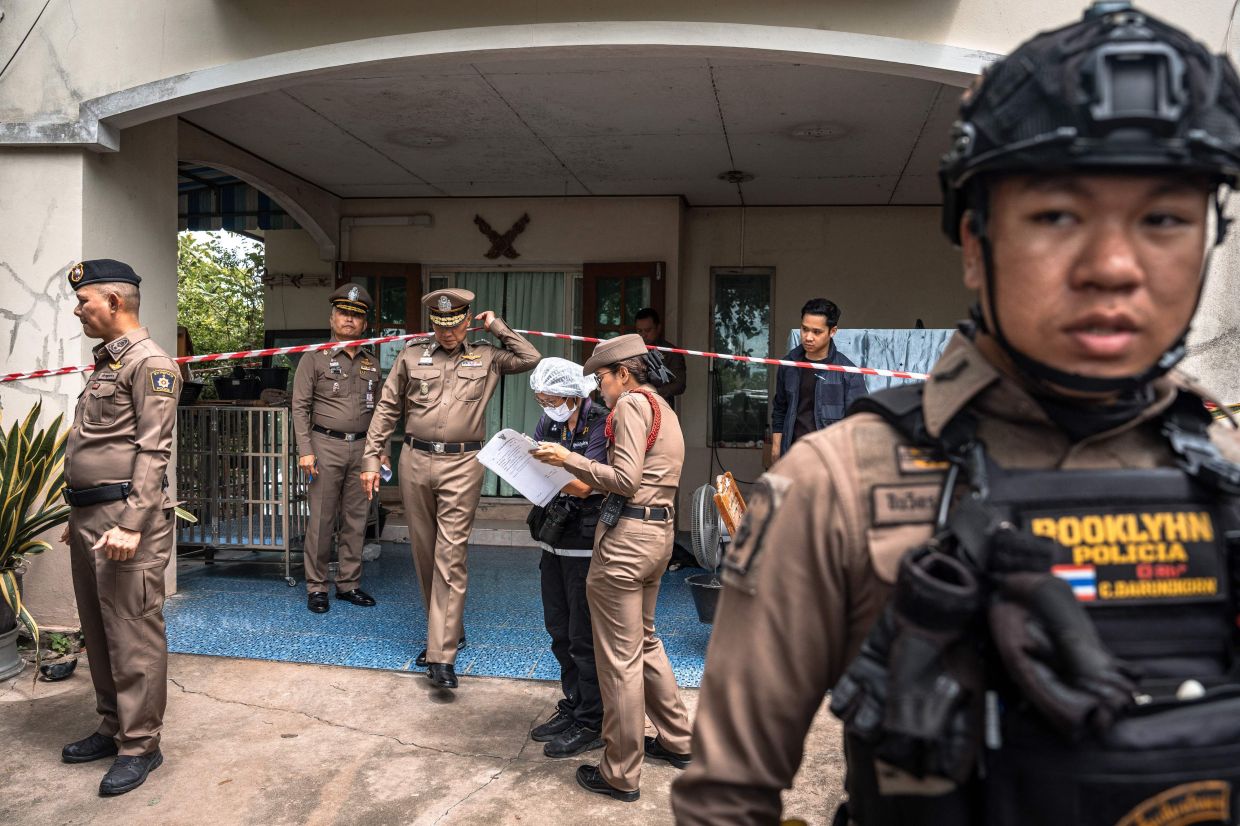
Thailand's Department of Provincial Administration has mandated an extensive nationwide security operation targeting firearm regulation and violent crime prevention in response to a shooting incident at Debsirin Nonthaburi School in Bang Kruai district. Director-general Narucha Kosacivilize announced the coordinated enforcement measures on Friday, August 7, emphasizing the government's commitment to safeguarding public order and preventing similar incidents from occurring elsewhere in the country.
The incident at the Nonthaburi school, which claimed lives and left others injured, has prompted Thai authorities to treat firearm violence as a systemic concern requiring immediate and sustained intervention across all provinces. Rather than responding with isolated measures, officials have framed this as an opportunity to overhaul how Thailand manages civilian weapons ownership and public safety protocols, recognizing that school shootings represent a breach in the protective systems that should exist around vulnerable institutions and populations.
A central pillar of the directive involves substantially tightening controls over civilian firearm possession and use. Provincial authorities have been instructed to conduct comprehensive inspections of how weapons are held and transported within their jurisdictions, with enforcement personnel empowered to take decisive action against violations. This represents a shift toward more proactive rather than reactive policing, with officials expected to identify and address compliance issues before they escalate into violence.
Firearm registrars throughout the country now face enhanced responsibility for monitoring licensed gun owners. The government has specifically directed these officials to ensure that weapon proprietors maintain secure storage practices and prevent unauthorized access by household members or other individuals who might use the weapons dangerously. This emphasis on secure storage addresses a common pathway through which school-age individuals gain access to family firearms, a vulnerability Thailand apparently seeks to eliminate through stricter administrative oversight.
District administrators have been tasked with orchestrating coordinated patrol operations involving multiple layers of local government. These include assistant district chiefs, subdistrict leaders, village authorities, volunteer defense corps members, and community security teams working in concert to establish checkpoints and increase visibility in public spaces, entertainment districts, and areas identified as higher-risk. The strategy assumes that visible law enforcement presence combined with systematic inspection points will deter individuals from carrying weapons illegally and identify those attempting to transport firearms improperly.
Schools and educational institutions have become the explicit focus of enhanced security architecture. The directive mandates that authorities strengthen protective measures at academic facilities alongside religious sites, shopping centers, and other congregation points. Critically, the government has also ordered emergency response training and public awareness campaigns so that both officials and civilians understand how to recognize threats and respond appropriately during violent incidents. This dual approach acknowledges that prevention through deterrence must be accompanied by readiness drills that could minimize casualties should an incident occur despite preventive efforts.
The government's framework specifically addresses the psychological dimension of mass violence through proactive monitoring of high-risk individuals. District chiefs have been instructed to identify persons whose behavior patterns or history suggest potential for violence, creating an intelligence-gathering system designed to disrupt planned violence before execution. Simultaneously, the directive appeals to parents to exercise heightened supervision of young people, recognizing that family-level oversight can serve as a crucial early intervention point when warning signs emerge.
For Southeast Asia and Malaysia particularly, Thailand's response model carries significant relevance. Regional nations have experienced varying degrees of gun violence within educational settings, and Thailand's systematic approach demonstrates how administrative decentralization combined with coordinated national direction can address security challenges. The framework emphasizes leveraging existing local governance structures rather than creating entirely new security apparatuses, a practical consideration for countries throughout the region managing comparable challenges with limited budgets.
The inclusion of victim support and psychological assistance within the government's response framework indicates Thai authorities recognize that shooting incidents create long-term community trauma requiring sustained intervention. By mandating that authorities expedite investigations, coordinate cross-agency responses, and ensure victims receive full legal entitlements and counseling support, the government demonstrates awareness that recovery from mass violence extends far beyond immediate law enforcement actions.
Official rhetoric from the Department of Provincial Administration emphasizes continuous, decisive implementation across administrative hierarchies, suggesting the government views this as a sustained commitment rather than a temporary response to isolated circumstances. Narucha Kosacivilize's reiteration that the department will work across sectors implies coordination between provincial governments, federal authorities, educational institutions, and community organizations in what appears to be Thailand's most comprehensive firearms regulation initiative in recent years.
The effectiveness of these measures will likely depend on implementation consistency across Thailand's diverse provinces, where administrative capacity, resource availability, and security challenges vary considerably. Districts with robust local governance and adequate personnel may execute directives effectively, while others facing resource constraints could struggle with checkpoints, inspections, and monitoring operations. The government's emphasis on decisiveness and strictness suggests Thai officials recognize that inconsistent application would undermine the entire system's credibility and protective capacity throughout the country.

