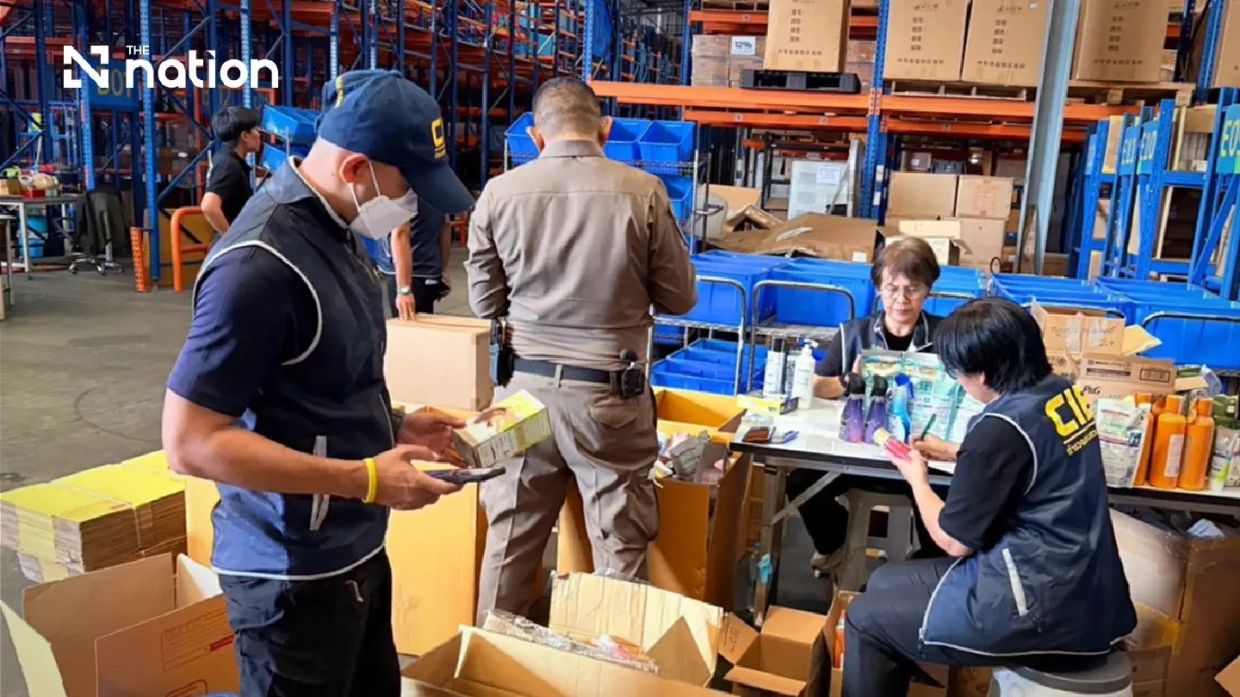
Thai police have dismantled a significant illegal product distribution network operating out of Samut Prakan province, seizing 83,483 unapproved Japanese items in a coordinated warehouse raid conducted on Thursday. The Consumer Protection Police Division (CPPD), acting under orders from Pol Maj Gen Kongkrit Lertsittikul, discovered cosmetics, dietary supplements, and medicinal products valued at more than 8.34 million baht stored in the Bang Phli district facility. The discovery represents a substantial blow against the underground trade in counterfeit and uncertified goods that has flourished across Southeast Asian e-commerce platforms in recent years.
The investigation that led to the raid began with consumer complaints regarding the proliferation of unlabelled Japanese cosmetics, supplements, and household hazardous substances being marketed across Thailand's thriving online retail ecosystem. Complainants noted that products lacked mandatory Thai-language labelling and appeared to circumvent official import procedures, raising serious questions about product safety and authenticity. Investigators from the CPPD systematically traced the supply chain backwards through multiple online platforms, eventually identifying the warehouse in Bang Phli as the central hub distributing these goods to numerous independent sellers operating across social media and e-commerce sites.
During their investigation, police uncovered a sophisticated operation that had been functioning with considerable scale for more than four years. The warehouse had originally begun as a simple storage facility for imported goods but had evolved into a comprehensive fulfillment centre serving multiple online businesses. Daily operations involved processing between 200 and 300 items for shipment, with the operators charging between 10 and 12 baht per box for packing and distribution services. This business model effectively insulated the warehouse operators from direct retail responsibility, complicating enforcement actions and allowing them to maintain plausible deniability regarding the legality of products passing through their facility.
The confiscated goods comprised 116 distinct product types, predominantly Japanese cosmetics and dietary supplements that had entered Thailand without undergoing mandatory safety checks or obtaining certifications from competent Thai authorities. Investigators determined that most items had been imported directly from Japan and routed through the warehouse without documentation demonstrating compliance with Thai regulatory requirements. The absence of Thai-language labels on packaging constituted an immediate regulatory violation, as Thai law mandates that all consumer products sold domestically must include comprehensive Thai-language information regarding ingredients, usage instructions, safety warnings, and manufacturer details.
This case highlights a persistent vulnerability within Thailand's regulatory framework that extends across Southeast Asia. E-commerce platforms have created unprecedented challenges for consumer protection authorities, who struggle to monitor the astronomical volume of transactions occurring daily across digital marketplaces. The distributed nature of online retail, combined with the pseudonymity of many sellers, allows problematic goods to reach consumers with minimal friction. Small independent sellers may purchase from intermediaries like the Bang Phli warehouse without independently verifying product legitimacy, creating layers of insulation that obstruct accountability.
The potential health implications of this operation cannot be understated. Unapproved cosmetics and supplements may contain prohibited ingredients, harmful contaminants, or incorrect dosages that pose genuine risks to consumer wellbeing. Without proper certification and testing, products cannot be verified as safe for use by Thai consumers. Medicines represent an even graver concern, as unverified pharmaceutical products could prove dangerous or ineffective, potentially compromising treatment outcomes for individuals relying upon them. The scale of this operation—with tens of thousands of items distributed over years—suggests that a substantial consumer population may have unknowingly purchased unsafe products.
Those implicated in the operation now face legal proceedings under multiple Thai statutes, including the Cosmetics Act, Food Act, Drug Act, and Hazardous Substances Act. These comprehensive legal frameworks provide authorities with substantial enforcement tools to prosecute individuals involved in importing, storing, and distributing unapproved goods. The multi-statute approach reflects Thai legislative recognition that products marketed as cosmetics may function as medicines, or that supplements sold as foods may contain pharmaceutical ingredients requiring medical oversight. Penalties under these acts can include substantial fines and imprisonment, providing genuine deterrent effect against future violations.
For Malaysian readers, this case carries particular relevance given the substantial cross-border e-commerce activity connecting Thailand, Malaysia, and other Southeast Asian nations. Malaysian consumers similarly purchase cosmetics and supplements from online platforms without consistently verifying regulatory status. The Bang Phli operation demonstrates how warehouse hubs can distribute products across multiple countries, potentially reaching Malaysian markets through online retail channels. Malaysian consumers purchasing from Thai sellers or through regional logistics networks should exercise caution regarding product authenticity and certification, particularly for health-related items where regulatory compliance directly impacts safety.
The raid also underscores broader challenges confronting consumer protection authorities throughout the region. As e-commerce growth continues accelerating across Southeast Asia, enforcement capacity has not expanded proportionally. Governments struggle to allocate sufficient resources to monitor digital marketplaces effectively, creating enforcement gaps that determined traffickers readily exploit. Regional coordination among Thai, Malaysian, Singaporean, and other relevant authorities could enhance detection and prosecution capabilities, though such cooperation remains inconsistent and underutilised across the sector.
Looking forward, this case may catalyse enhanced scrutiny of warehouse operators and fulfillment centres servicing online retailers. The Bang Phli facility's business model—providing packing and distribution services while maintaining distance from product selection—previously afforded substantial legal protection. If courts determine that operators bear responsibility for verifying product legality before processing items, this could fundamentally reshape the third-party logistics industry supporting e-commerce in Thailand and potentially across Southeast Asia. Such clarification would place additional compliance obligations on warehouse operators, though it would also enhance consumer protection by creating additional gatekeepers within distribution networks.
The investigation also identifies a critical enforcement avenue that Thai authorities and potentially their regional counterparts can exploit systematically. Rather than pursuing countless individual sellers across fragmented online platforms, targeting the centralised warehouse facilities that supply these networks proves substantially more efficient. This intelligence-led approach, focusing resources on distribution hubs rather than attempting to monitor millions of individual transactions, represents a more sustainable enforcement model for resource-constrained regulatory agencies.

