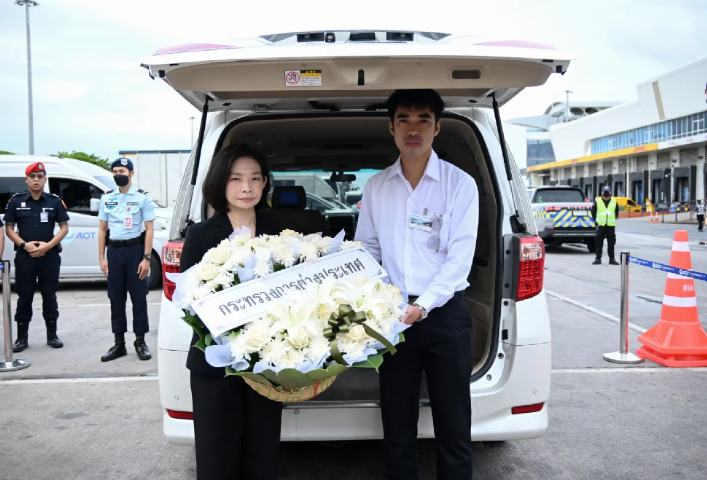
Thailand's Ministry of Foreign Affairs has successfully orchestrated the return of travel YouTuber Bavorntat Pengsuk, whose online persona "Hlun Solo" earned him a substantial following across Southeast Asia, following his death in Tbilisi, Georgia, on July 14, 2026. The 27-year-old content creator, who documented his journeys across diverse destinations for his audience, passed away in the Georgian capital last month, prompting swift diplomatic intervention to bring his remains home.
Foreign Minister Sihasak Phuangketkeow delegated the coordination of repatriation efforts to Prathuangtip Sirivithes, acting director-general of the Department of Consular Affairs, ensuring official representation upon the body's arrival in Thailand. The decision to appoint a senior official underscores the heightened public interest in the case, particularly given Hlun Solo's prominence within Thailand's digital content creation community. Department of Information director-general Jaithai Upakarnitikaset announced the development on Thursday, August 6, confirming that diplomatic channels had prioritised the matter throughout the process.
The Royal Thai Embassy in Ankara had maintained continuous engagement with Bavorntat's family members, Georgian state authorities, and Thai officials from the moment the tragic incident was reported. This coordinated approach allowed Thai diplomats to monitor developments closely and respond to bureaucratic obstacles that occasionally complicated international repatriation procedures. The embassy's proactive stance reflected standard protocol for Thai nationals facing emergencies abroad, ensuring that family interests remained protected whilst navigating foreign legal systems and administrative requirements.
Emergency personnel from the Thai mission in Tbilisi were deployed immediately to accelerate the investigation into circumstances surrounding Bavorntat's death, manage the complex logistical requirements of transferring human remains across international borders, and encourage Georgian officials to expedite proceedings. Such delays sometimes occur when deaths involve foreign nationals in unfamiliar jurisdictions, requiring clarification of documentation and coordination between multiple agencies. Thailand's diplomatic presence on the ground facilitated smoother communication and helped prevent the extended waiting periods that can compound family distress during such circumstances.
Upon the remains' arrival in Thailand, Bavorntat's family opted to commission a comprehensive forensic examination within the country, a common practice that allows families to obtain independent verification of findings whilst ensuring procedures align with Thai medical and legal standards. This examination will likely illuminate details regarding the cause and circumstances of death, providing clarity to grieving relatives and potentially addressing questions raised by the online community who had followed his adventures.
Following completion of the forensic procedures, authorities will release Bavorntat's remains to his family for final arrangements. His body will then be conveyed to his native Somdet district in Kalasin province, located in Thailand's northeastern region, where his family will conduct traditional Buddhist funeral observances. These religious ceremonies hold profound cultural significance in Thai society, allowing extended family, friends, and community members to pay respects and participate in merit-making activities believed to benefit the deceased's spiritual journey.
The case highlights vulnerabilities faced by content creators who travel extensively, often to remote or less developed regions, in pursuit of compelling material for their audiences. Travel vlogging has emerged as a lucrative and popular career path across Southeast Asia, attracting young professionals who document their experiences for platforms like YouTube. However, the inherent risks of constant travel—including unfamiliar environments, variable healthcare infrastructure, and potential accidents—remain substantial concerns for families and platforms alike.
Hlun Solo's death has resonated particularly strongly within Thailand's digital community, where travel content represents one of the most engaging and widely consumed genres. His followers, many from across ASEAN nations who consume Thai-language content, expressed shock and mourning through social media platforms. The incident underscores the human dimension often obscured by the glamorous portrayal of travel lifestyle content, reminding audiences that content creators navigating distant locations face genuine physical risks.
Thailand's handling of the repatriation demonstrates the Foreign Ministry's capacity to manage consular cases involving deceased nationals abroad, coordinating across multiple agencies and international partners to deliver outcomes that respect both diplomatic protocols and family dignity. For Malaysian and other Southeast Asian readers, the case serves as a reminder of the importance of registering travel plans with diplomatic missions and maintaining clear communication channels when nationals undertake extended journeys to unfamiliar destinations. The Ministry of Foreign Affairs' involvement also reflects broader regional cooperation mechanisms that facilitate smoother resolution of such tragic incidents affecting citizens across ASEAN member states.

