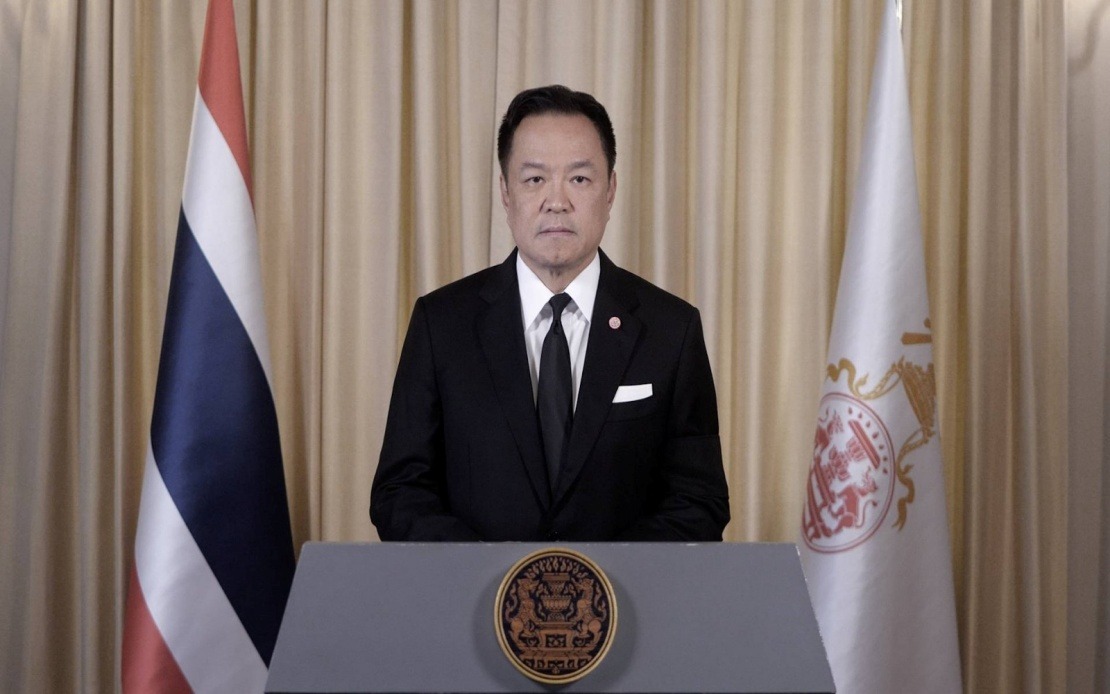
Thailand stands to gain economically if tensions between the United States and Iran ease, according to senior government officials who have welcomed recent reports of a potential ceasefire agreement between the two countries. Prime Minister Anutin Charnvirakul stated on Monday that any resolution to conflict in West Asia would represent a significant positive development, particularly for addressing global economic challenges and stabilising energy markets that have been roiled by geopolitical uncertainties.
US President Donald Trump announced on Sunday that an agreement with Iran had been finalised, with plans to reopen the Strait of Hormuz and lift a naval blockade that has constrained regional shipping. The Strait of Hormuz is one of the world's most critical maritime chokepoints, through which roughly one-fifth of global oil shipments pass, making developments there consequential for energy-dependent economies throughout Asia including Thailand.
Anutin told reporters at Government House that the Thai administration is sufficiently fortified against external shocks and international volatility, emphasizing that the nation has demonstrated resilience in adapting to disruptions in worldwide supply chains. Rather than operating reactively to short-term events, the government pursues comprehensive strategic planning that allows Thailand to navigate complex global conditions with greater stability. This preparedness reflects lessons learned from previous international crises that exposed vulnerabilities in supply chain dependencies.
Deputy Prime Minister and Finance Minister Ekniti Nitithanprapas elaborated on the concrete benefits a West Asian settlement would deliver. He explained that terminating conflict in the region would constitute a constructive signal for both the international economy and Thailand specifically, with particular emphasis on moderating energy costs that have constrained growth prospects. Lower energy prices would reduce production costs across multiple economic sectors, potentially allowing businesses to pass savings to consumers and alleviate inflationary pressures that have weighed on purchasing power.
The Thai government recognizes that sustained inflation and elevated energy expenses have created difficulties for households and smaller enterprises that lack the scale to absorb cost increases. Ekniti noted that officials would maintain vigilance over inflationary trends and monitor how rising expenses affect vulnerable segments of the population. This targeted focus reflects awareness that while macroeconomic aggregates may appear stable, distributional impacts can be severe for lower-income groups and small-scale operators.
Ekniti expressed cautious optimism that improvements in the global operating environment could generate stronger economic growth than currently anticipated by official forecasters. Should international tensions diminish and energy prices decline, there exists potential for economic activity to accelerate beyond baseline projections. However, officials have maintained realistic expectations rather than assuming transformative changes, recognizing that multiple factors beyond geopolitical considerations influence growth trajectories.
Remarked notable is that Thailand intends to proceed with its 200-billion-baht energy transition programme irrespective of expectations for lower crude oil prices. This commitment underscores that the government views the energy transition as a structural necessity rather than a response to cyclical price movements. Thailand remains heavily dependent on imported petroleum and natural gas, making the nation vulnerable to supply disruptions and price volatility. Reducing this import dependence through renewable energy expansion, efficiency improvements, and fuel diversification represents a long-term imperative that transcends short-term price fluctuations.
The energy transition initiative holds particular significance for Southeast Asian readers and policymakers. As regional economies grapple with climate commitments, energy security concerns, and the need to reduce import vulnerabilities, Thailand's approach offers a model of balancing immediate economic considerations with longer-term structural transformation. The programme's continuation despite falling oil price expectations demonstrates that transition investments are justified by considerations extending beyond conventional cost-benefit analysis, encompassing supply security, environmental obligations, and technological competitiveness.
For Malaysia and other ASEAN nations similarly dependent on energy imports, Thailand's stance carries broader implications. The region collectively faces pressure to transition away from fossil fuels while managing the economic consequences for incumbent energy sectors and vulnerable populations. Thailand's willingness to invest substantially in energy transition despite near-term commodity price declines suggests regional policymakers may be hardening their commitment to climate and energy security objectives.
The geopolitical dimension merits consideration as well. A US-Iran ceasefire would reduce one major source of uncertainty affecting shipping routes, insurance costs, and overall business confidence throughout Asia. The Strait of Hormuz closures or threats of closure have periodically spiked energy prices and disrupted supply chains. A durable agreement reducing such risks would provide breathing room for economies like Thailand that lack significant domestic energy resources and depend heavily on uninterrupted global trade.
Thailand's positioning itself as prepared for continued external uncertainties while simultaneously celebrating potential breakthroughs suggests officials believe the kingdom possesses sufficient institutional capacity and foreign exchange reserves to weather further shocks if they materialise. This confidence likely reflects Thailand's experience managing previous crises and its development of emergency response mechanisms. However, such confidence should not breed complacency, as multiple unresolved geopolitical tensions remain in the Middle East and beyond.
The government's dual messaging—welcoming the ceasefire while maintaining that Thailand is prepared regardless—reflects prudent risk management. Officials are not betting Thailand's economic outlook on the assumption that peace will hold indefinitely. Instead, they position the nation as capable of benefiting from improved circumstances while remaining insulated against deterioration. This balanced approach acknowledges both the potential upside of de-escalation and the reality of persisting fragilities in global governance.
Looking forward, sustained monitoring of implementation details regarding the US-Iran agreement will prove essential for Southeast Asian policymakers. Should the ceasefire hold and energy prices moderate, regional economies stand to benefit from reduced costs and improved business sentiment. Conversely, if the agreement unravels, Thai and Malaysian officials must be prepared with contingency plans. The energy transition investments Thailand is pursuing represent insurance policies against future energy price volatility, making such programmes economically rational regardless of near-term geopolitical developments.