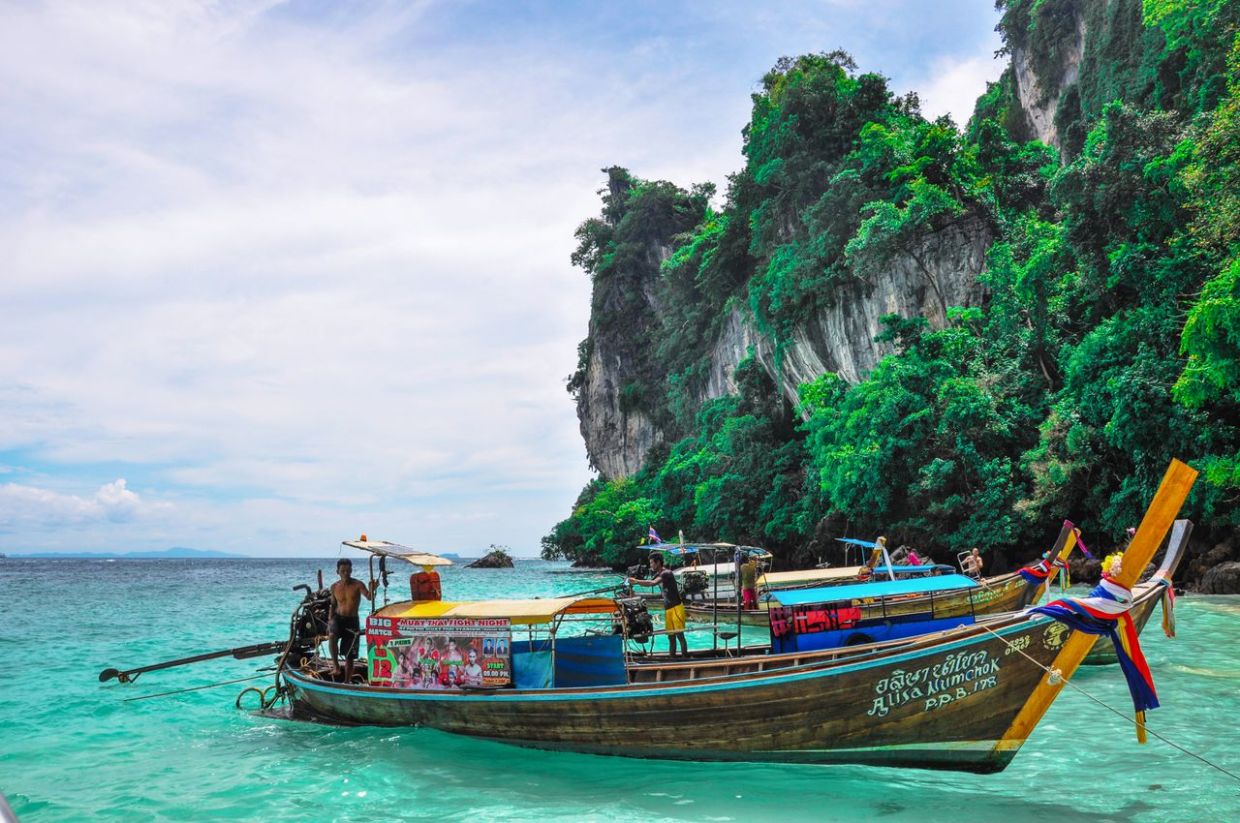
Thailand has declared an end to its long-standing obsession with accumulating tourist arrivals, marking a fundamental pivot in how the government measures and pursues tourism success. For the first time in nearly three decades, Bangkok is prioritising visitor spending over raw arrival figures, a reversal that signals both confidence in rebranding and acknowledgment that the old model no longer works. The Tourism Authority of Thailand has set a modest target of 33 million foreign visitors for this year, substantially below the pre-pandemic peak of nearly 40 million in 2019 and potentially lower than last year's 32.97 million arrivals. Should numbers decline further, it would represent Thailand's first consecutive annual drop outside the pandemic era since at least 1995, a threshold that underscores how dramatically the nation's tourism calculus has shifted.
The recalibration reflects broader headwinds buffeting Thailand's tourism industry and the wider Southeast Asian region. Intensifying geopolitical tensions, intensifying regional competition from neighbours offering similar attractions at lower prices, and a stronger Thai baht that has eroded the kingdom's traditional cost advantage have all conspired to make the old mass-tourism playbook unworkable. Nithee Seeprae, Deputy Governor of the Tourism Authority of Thailand, articulated the new philosophy in blunt terms, explaining that the government has little concern about failing to hit visitor number targets because the focus has shifted entirely to revenue per tourist. By concentrating efforts on what the authority terms "quality markets," Thai officials believe they can achieve superior economic outcomes with fewer people crossing the border, allowing infrastructure and communities breathing room while capturing higher spending.
The pivot manifests most visibly in Thailand's marketing strategy, which has undergone a comprehensive reorientation toward affluent and experience-focused demographics. Recent promotional campaigns in British cities including Oxford and Manchester exemplify this approach, targeting travellers specifically attracted to medical tourism, wellness retreats, cultural events, golf tourism, and organised sporting activities such as marathons. These visitor segments possess characteristics highly valued under the new model: they tend to extend their stays beyond typical leisure tourists, concentrate spending in premium accommodations and restaurants, and participate in high-margin experiences. The Tourism Authority has revamped its digital presence to emphasise luxury and wellness narratives, with official promotional materials now explicitly positioning Thailand as a destination where visitors can "heal and become a warmer, happier you," language calculated to appeal to affluent Western and developed Asian markets seeking rejuvenation rather than party-focused tourism.
Translated into financial terms, this reorientation aims to raise average visitor expenditure from the current approximate level of US$1,500 (RM6,141) per trip to around US$2,400 (RM9,826), a 60 percent uplift that would dramatically reshape the economics of Thai tourism even with substantially lower visitor volumes. Yet despite these ambitious targeting goals, international tourism receipts are projected to increase only marginally this year, from THB1.54 trillion (RM188.95 billion) in 2025 to THB1.55 trillion (RM190.17 billion), suggesting the transition remains incomplete and the hoped-for spending boost has yet to materialise at scale. This measured growth outlook reflects the genuine difficulty of rapidly retooling an entire tourism ecosystem built over decades around volume economics, as well as the lag time required for strategic repositioning to yield results.
Perhaps the starkest indication that Thailand has genuinely abandoned its historical approach concerns visa policy. In the immediate post-pandemic recovery period, Thai authorities loosened entry requirements through various schemes designed to stimulate rapid tourism recovery. Those measures have now been systematically rolled back as government officials linked liberalised visa policies to demonstrable increases in illegal employment, visa overstaying, and crimes perpetrated by foreign nationals. This reversal carries significant practical implications, particularly for budget and backpacker tourism segments that had expanded under pandemic-era incentives. The decision reflects a calculation that the economic and social costs of uncontrolled visitor flows outweigh the benefits, and that a more restrictive entry posture better serves national interests than open-door tourism maximisation.
Recent criminal cases have crystallised public and official concern about security implications of mass tourism. Thai police arrested an Australian man at Bangkok's Suvarnabhumi Airport after authorities accused him of murdering a 17-year-old Thai girl in Pattaya and concealing her body in a suitcase while attempting to flee the country. Such incidents, while individual cases, have reinforced official conviction that quality screening and deliberate visitor reduction serve public safety alongside economic goals. This security dimension adds weight to the strategic shift, providing justification beyond purely economic reasoning for restricting entry and targeting specific visitor demographics less associated with criminal activity.
However, executing this strategy confronts formidable structural obstacles rooted in Thailand's tourism geography and competitive position. Tourism represents approximately one-fifth of the Thai economy, sustaining sprawling ecosystems of hotels, restaurants, food markets, transport operators, dive operations, and tour companies that have evolved entirely around assumptions of high-volume throughput. Major destinations including Phuket and Chiang Mai were conceived and constructed specifically to accommodate large numbers of visitors, with pricing structures, labour models, and infrastructure designed for scale rather than exclusivity. Rapidly pivoting these communities toward fewer, higher-spending travellers requires not merely marketing adjustments but fundamental reconstruction of pricing, service standards, and operational models—a transformation that cannot occur overnight and will inevitably generate resistance from businesses accustomed to volume-based profitability.
Thailand's competitive position has simultaneously deteriorated relative to neighbouring destinations, particularly regarding the value-for-money positioning that once defined its unique market appeal. Vietnam and Indonesia have developed increasingly competitive tourism offerings, leveraging lower labour costs, untapped destinations, and aggressive marketing to capture the budget and mid-range segments Thailand has now abandoned. Simultaneously, the Thai baht's appreciation in recent years has eliminated currency advantages that historically made Thailand attractive to cost-conscious international travellers. These structural changes mean Thailand cannot simply return to its historical competitive strategy even if officials desired to do so, forcing genuine repositioning toward higher-value market segments out of necessity rather than pure choice.
Thailand's tourism transformation must also be understood against the trajectory of the past two decades. The kingdom invested enormous effort constructing one of the world's largest mass-tourism industries through strategic leveraging of cost advantages, currency undervaluation, global media exposure from films and television productions, and a massive influx of Chinese visitors that peaked before the pandemic disrupted international travel. Recovery since COVID-19 has proved elusive, with arrival numbers failing to approach pre-pandemic levels despite improving global travel conditions, suggesting structural shifts in tourist patterns rather than temporary disruption. The officials' insistence that the new strategy does not represent abandonment of budget travellers, but rather a redefinition of "luxury" centred on "meaningful experiences and exclusive experiences," reflects an attempt to reframe strategic necessity as deliberate choice. Whether this rhetorical repositioning can satisfy stakeholders dependent on high tourism volumes remains uncertain, particularly as the economic benefits of the new model take time to accumulate.

