Thailand is preparing to use its decades-long security partnership with the United States as leverage in ongoing trade negotiations, warning that punitive American tariffs could prompt Bangkok to scale back military cooperation if economic damage becomes severe. The strategy represents a calculated move by Thai officials to remind Washington of the mutual benefits that flow from their alliance, with the defence establishment prepared to reference reduced participation in joint military activities if trade terms become untenable. This signals a harder negotiating stance than Thailand has historically adopted, reflecting the economic pressure the country faces under the Trump administration's trade policies.
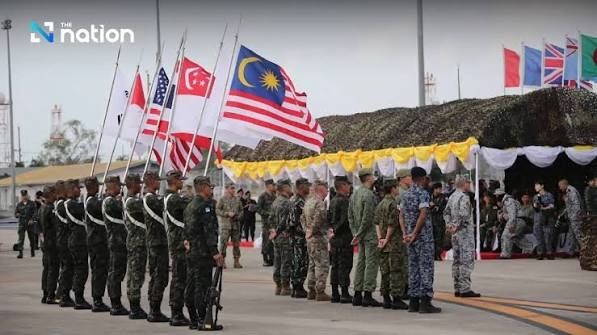
The Thai government plans to embed this warning in a counterproposal it will present when reciprocal-trade discussions resume later this month, according to an official briefed on the matter who spoke under condition of anonymity. While the language will remain broadly framed, Thai negotiators intend to make clear that Cobra Gold, the flagship annual military exercise hosted jointly by Thailand and the United States, and other defence collaborations could face reconsideration if tariffs inflict substantial economic hardship. This linkage between trade and security represents an unusual tactic for Bangkok, which has long kept military and commercial dealings in separate spheres.
Thailand entered into negotiations from a position of significant trade strength. Last year the kingdom recorded a trade surplus of US$51.4 billion with the United States, making it one of dozens of nations seeking relief from Washington's aggressive tariff regime. The Trump administration has imposed a blanket 12.5 per cent tariff on most exports under Section 301, a trade law designed to counteract what American officials characterise as unfair trading practices. Thailand's substantial surplus makes it a natural target for further escalation, particularly as Washington broadens investigations into what it views as global manufacturing overcapacity.
To address American concerns and secure better terms, Bangkok has already tabled a series of concessions. Thai negotiators have offered to eliminate tariffs on certain American goods and to adopt United States standards for imports of beef, lamb and alcoholic beverages—sectors where American producers face market access challenges. The government is simultaneously pledging to accelerate domestic legislation banning the import of goods manufactured using forced labour, an initiative designed to align Thai practice with American values-based trade standards. Commerce Minister Suphajee Suthumpun has emphasised that Thailand merits preferential treatment due to its strategic alliance with Washington, the longstanding Treaty of Amity, and substantial Thai investment in the American economy.
The Thai government has signalled that trade negotiations now operate as whole-of-government efforts, with the commerce ministry working in tandem with the foreign affairs and defence establishments plus major business associations. This coordinated approach suggests Bangkok is treating the tariff question as a matter of strategic importance rather than routine commercial dispute. The government is specifically seeking to keep any tariff rate at no higher than 19 per cent, the ceiling discussed in earlier frameworks, a target that would require substantial movement from Washington.
The Thai-US security partnership provides genuine strategic value to both nations and has weathered significant political turbulence in the past. Thailand and the United States are co-hosts of Cobra Gold, which the Pentagon describes as the largest multinational military exercise conducted annually on mainland Asian soil. Last year's iteration alone attracted approximately 8,000 personnel representing 30 countries, demonstrating the exercise's regional importance and the centrality of Thai territory to American military training operations throughout Southeast Asia. When Thailand experienced a military coup in 2014, Washington scaled back Cobra Gold participation and suspended several other military engagements, only gradually rebuilding defence ties as political conditions stabilised. This history demonstrates that American decision-makers understand security cooperation can be adjusted in response to political circumstances.
The alliance itself remains one of Washington's most enduring partnerships in Asia, predating most other American security arrangements in the region and providing the United States with a crucial strategic foothold precisely as Chinese influence has expanded dramatically across mainland Southeast Asia. Thailand remains one of only two formal US treaty allies in Southeast Asia, the other being the Philippines, a distinction that historically has conveyed both privilege and responsibility. The depth and longevity of this relationship means that both capitals understand the potential costs of allowing trade disputes to metastasise into broader security disagreements.
Thailand's Defence Ministry has maintained official opacity regarding the reported tariff-security linkage, with Defence Ministry spokesman Surasant Kongsiri declining to confirm or verify the strategy. He suggested instead that any negotiations are more likely to emphasise enhanced cooperation rather than conditional threats, a statement that may represent diplomatic positioning rather than genuine disinterest in deploying security considerations as negotiating leverage. The Thai armed forces' spokesperson did not respond to requests for comment, while neither Thailand's Commerce Ministry nor the Pentagon immediately provided responses to enquiries about the proposed strategy.
During a recent visit to Bangkok, Pentagon Undersecretary of Defense Elbridge Colby publicly reaffirmed the strength of the alliance with Thai Permanent Secretary for Defence General Tharapong Malakam, emphasising the "renewed strength of the US-Thai alliance." This high-level reassurance suggests the Pentagon remains committed to the relationship, though such statements also serve as diplomatic cover for negotiations occurring behind closed doors. For Thailand, the challenge lies in calibrating its warning about military cooperation carefully—too heavy-handed and it risks antagonising Washington; too subtle and it fails to convey the genuine economic stakes involved. The coming weeks will reveal whether Bangkok's strategy of invoking security concerns alongside trade concessions succeeds in extracting better terms from an administration that has demonstrated little patience for traditional alliance considerations in its pursuit of bilateral trade advantage.

