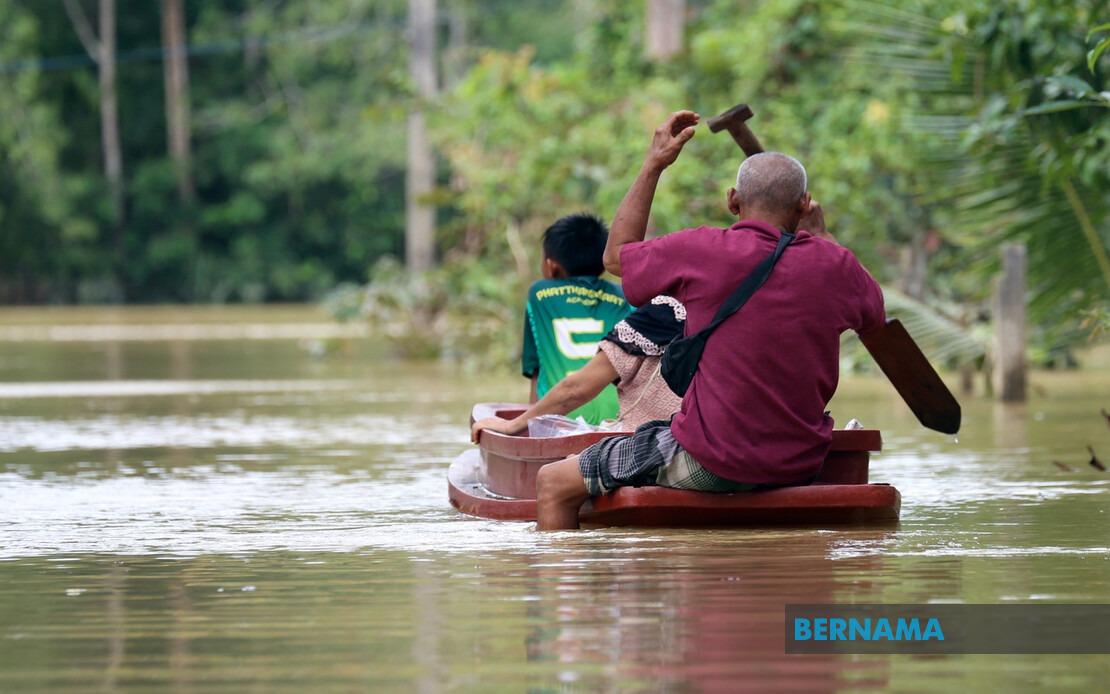
Thailand has implemented a comprehensive overhaul of its disaster management infrastructure, signalling heightened concern about converging climate risks that could devastate the nation's agriculture and water security. The initiative, unveiled on Tuesday, reflects growing anxiety within Bangkok's administrative circles about managing both immediate flooding hazards and longer-term drought exposure across multiple regions simultaneously. Deputy government spokeswoman Capt Patdarasm Thongsaluaykorn disclosed that authorities are presently tracking 1,363 locations at significant flood risk and an additional 444 areas vulnerable to extended dry periods, representing an unprecedented level of environmental monitoring for the Southeast Asian kingdom.
Central to this preparedness effort is the establishment of four regional committees designed to streamline decision-making and ensure rapid deployment of resources to affected communities. These bodies represent a structural departure from Thailand's previous disaster response architecture, consolidating authority and accountability within geographically defined zones rather than dispersing responsibilities across fragmented bureaucratic channels. The arrangement enables faster coordination between government agencies, more unified command structures during emergencies, and substantially improved information sharing among departments that historically operated in silos. Patdarasm emphasised that this restructuring aims to guarantee that assistance reaches vulnerable populations swiftly and efficiently, protecting both lives and economic assets during crisis periods.
The expanded mandate of these regional committees encompasses substantially broader responsibilities than traditional emergency response frameworks typically encompass. Beyond merely reacting to immediate disasters, the committees are tasked with continuous environmental monitoring—tracking weather systems and water availability—alongside coordinating actual emergency operations when threats materialise. Their authority extends to overseeing relief distribution networks, administering compensation programmes, and directing comprehensive post-disaster recovery initiatives that address long-term community reconstruction. Additionally, these committees possess direct command over government agencies operating within their respective regions, enabling swift deployment of personnel and resources without navigating protracted administrative approval hierarchies. They are also responsible for public communication, tasked with disseminating timely and accurate information to prevent panic and ensure communities receive actionable guidance during emergencies.
The northern regional committee, chaired by Deputy Prime Minister and Minister of Higher Education, Science, Research, and Innovation Yodchanan Wongsawat, convened its inaugural session at the Department of Disaster Prevention and Mitigation on Tuesday, establishing operational precedent for the remaining three regional bodies. This high-level leadership underscores the Thai government's assessment of disaster risk as a matter demanding ministerial attention rather than routine administrative handling. The committee's composition likely includes senior officials from relevant departments, enabling coordinated policy implementation and resource allocation at the highest decision-making levels.
Immediate meteorological concerns have catalysed this institutional reorganisation. Thailand's meteorological authorities have issued warnings of substantial rainfall across northern, northeastern, and eastern regions, with particular anxiety regarding flash flooding and waterway inundation. These warnings have prompted precautionary maritime measures, with small vessels advised to remain in port across the upper Andaman Sea from August 4 to 9 and throughout the upper Gulf from August 6 to 9. Such measures represent standard protocol when tropical systems threaten coastal regions, yet their activation during this restructuring period underscores that the new mechanisms are being tested against near-term environmental pressures.
Beyond these immediate hydrological threats lies a more structurally concerning challenge: anticipated longer-term rainfall deficits stemming from climatic patterns operating on multi-year timescales. The Thai Meteorological Department has warned that a Super El Niño phenomenon, projected to commence in October and persist through the early phases of the 2027 rainy season, could suppress precipitation by at least ten percent across affected regions. This magnitude of rainfall reduction, while seemingly modest in percentage terms, translates into severe consequences for Thailand's agricultural economy and freshwater security infrastructure. Rice cultivation, which remains economically and culturally central to Thai society, faces particular vulnerability to precipitation deficits, as the crop depends upon reliable monsoon moisture during critical growth phases.
For Southeast Asia more broadly, Thailand's drought concerns resonate across the region's interconnected river systems and shared water resources. The Mekong River, which originates in Tibetan highlands and flows southward through Laos, Cambodia, and Vietnam before reaching the sea, constitutes the civilisational foundation for the entire Lower Mekong Basin. Extended dry periods in Thai territory translate into reduced water availability throughout downstream territories, complicating irrigation demands in Cambodia and Vietnam whilst simultaneously threatening fisheries and navigation corridors essential to regional commerce. Similarly, transboundary aquifers and groundwater resources respect no political boundaries, meaning that unsustainable extraction patterns in one nation create cascading effects for neighbouring territories.
The dual-threat scenario Thailand faces—managing acute flooding hazards whilst simultaneously preparing for prolonged drought—exemplifies the complexity of climate adaptation in tropical Asia. Rather than experiencing wet and dry seasons as distinct, non-overlapping periods, contemporary climate variability increasingly produces conditions where both extremes threaten simultaneously: some regions experience devastating deluges whilst neighbouring areas suffer moisture stress. This pattern complicates water resource management, confounds agricultural planning, and strains infrastructure designed for historical precipitation patterns rather than emerging climate realities. Thailand's new institutional framework attempts to address this paradox by maintaining heightened vigilance across both flooding and drought scenarios, recognising that abandoning preparedness for either threat creates unacceptable vulnerability.
The establishment of these regional committees also carries implicit acknowledgment that disaster management cannot remain centralised within Bangkok bureaucracies disconnected from ground-level realities. Effective response requires devolved decision-making authority, enabling provincial and local officials to implement context-appropriate measures that account for regional geographic and demographic variations. Flooding management in the agriculturally intensive Chao Phraya Delta demands fundamentally different strategies than drought management in the water-scarce northeastern plateau, yet both demand coordinated national policy frameworks that establish standards, fund operations, and ensure equitable resource distribution.
For Malaysian policymakers and regional observers, Thailand's institutional response offers instructive lessons regarding disaster governance evolution. Malaysia's own exposure to monsoon flooding, particularly in peninsular regions during northeast monsoon seasons, and its vulnerability to transboundary haze and environmental degradation, suggests that comparable integrated disaster management mechanisms merit consideration. The Thai model demonstrates that effective climate adaptation increasingly requires abandoning siloed departmental approaches in favour of unified command structures capable of simultaneously managing multiple hazard categories and implementing decisions rapidly at scale.
The ultimate efficacy of Thailand's reformed disaster management apparatus will become evident only through operational testing against actual extreme events. However, the government's proactive institutional restructuring before the anticipated Super El Niño period demonstrates recognition that reactive crisis management has become inadequate. Building surge capacity, establishing clear command hierarchies, and pre-positioning resources before disaster strikes represents fundamentally more sound governance than improvisation amid emergencies. Thailand's experience will likely shape how other Southeast Asian nations approach similar climate challenges in coming years.

