Thailand's government has moved swiftly to tighten its firearms regulations in response to a tragic school shooting, with Prime Minister Anutin Charnvirakul announcing a complete suspension of new carry permits lasting one year. The decision, announced on Tuesday, represents a significant hardening of the nation's stance on civilian gun ownership and reflects mounting public concern over firearm-related violence. Officials have framed the suspension as essential to maintaining social stability and rebuilding citizen confidence in state institutions' ability to protect vulnerable populations from armed violence.
The deadly incident that prompted this dramatic policy shift occurred on Friday at a school, claiming nine lives including the grandparents of the student who carried out the attack. The tragedy has reverberated through Thai society and prompted urgent action from multiple government agencies tasked with public safety. The shooter subsequently took his own life, leaving a devastating aftermath that has catalysed the most significant firearms policy intervention in recent Thai governance.
Beyond the one-year moratorium on new permits, Thailand's Ministry of Interior has directed the Department of Provincial Administration to implement substantially more rigorous assessment procedures for those seeking to purchase firearms. These enhanced protocols mandate comprehensive background investigations conducted under the framework of the Firearms Act, moving beyond previous screening standards. The tightened vetting process signals recognition that existing safeguards proved insufficient to prevent individuals with concerning profiles from obtaining weapons that could facilitate mass casualty events.
The government has simultaneously committed to intensifying surveillance and compliance monitoring of individuals who already possess licensed firearms and valid carry authorisations. This supervisory strengthening acknowledges that ownership restrictions alone cannot guarantee responsible weapon handling; continuous oversight of existing permit holders represents a necessary complementary measure to protect public safety. Authorities will monitor adherence to legal obligations governing storage, transport and use of registered firearms.
Current Thai law already contains stringent restrictions on firearm transportation and use in public spaces. Weapons must normally remain secured in residential locations and cannot be carried openly unless specific legal justifications exist. The legislation establishes substantial penalties for violation, including potential imprisonment for up to five years, monetary fines reaching 10,000 baht (approximately $301 USD), or combined sanctions. These existing penalties demonstrate that Thailand's legal framework already recognised the dangers of unrestricted firearm proliferation in public environments.
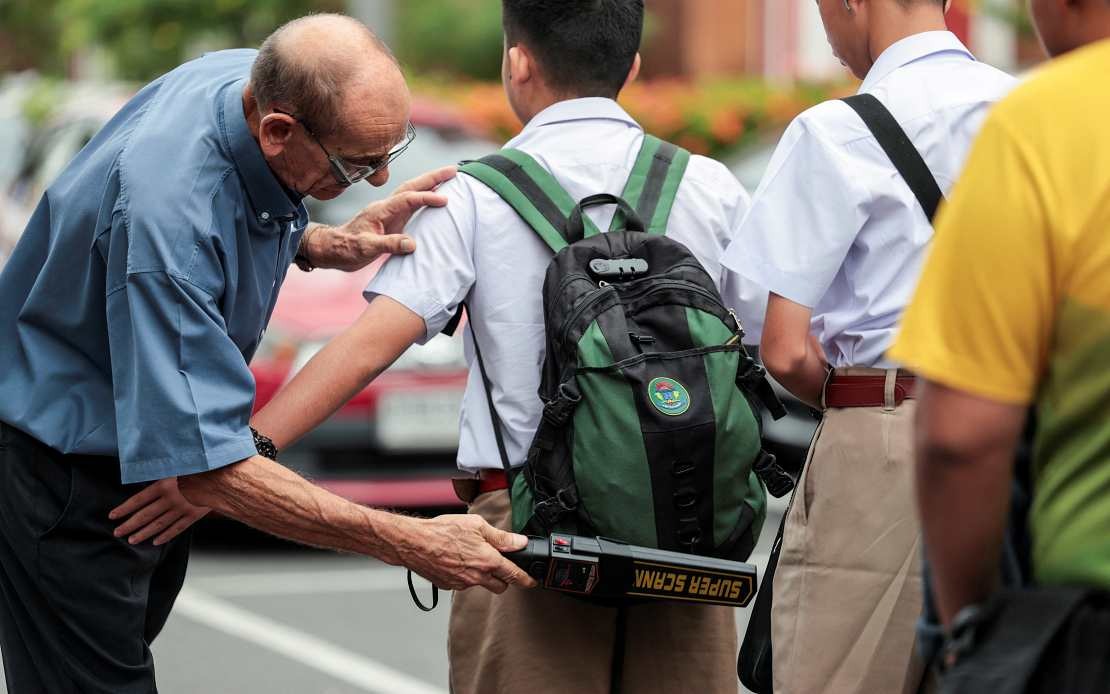
Education Minister Prasert Jantararuangthong has developed a comprehensive six-point safety initiative intended to prevent recurrence of similar incidents. This package, submitted to Cabinet for consideration, encompasses mandatory psychological evaluations for students, regular emergency response exercises, zero-tolerance enforcement against weapons possession on school grounds, stringent anti-bullying measures and comprehensive threat assessment protocols. The educational sector's proactive response reflects understanding that preventing future violence requires multifaceted intervention extending beyond firearms regulation alone to address underlying psychological and social risk factors.
Mental health screening represents a particularly significant component of the proposed safety framework, suggesting Thai authorities recognise that firearm access combined with undiagnosed or untreated psychological distress creates conditions for mass violence. By instituting mandatory assessments within educational institutions, the government seeks to identify at-risk individuals before crisis points emerge. This preventive approach complements the firearms suspension by addressing supply-side restrictions with demand-side interventions targeting those most vulnerable to violent ideation.
The tragedy has also illuminated systemic vulnerabilities within Thailand's security apparatus and social protection mechanisms. The fact that an individual capable of orchestrating a mass casualty attack succeeded in acquiring and transporting a firearm suggests that existing background check procedures, whether applied or enforced inconsistently, failed to identify warning signs. The government's response acknowledges these operational failures and proposes remedial measures designed to restore public trust through demonstrable strengthening of institutional competence.
Thailand's experience parallels challenges confronting other Southeast Asian nations grappling with civilian firearm access and associated public safety risks. While Thailand maintains relatively restrictive gun ownership policies compared to many developed democracies, recent incidents suggest that existing regulatory frameworks require continuous reinforcement and adaptation. The suspension of new permits represents a clear signal that government prioritises immediate risk reduction even at the cost of restricting citizens' access to weapons typically justified for self-defence or sporting purposes.
The policy shift occurs within a broader context of Thailand's public security challenges and ongoing efforts to maintain social stability. Firearms regulation represents one policy lever available to authorities seeking to reduce violence and strengthen public confidence in institutional capacity to protect citizens. The comprehensive nature of the government response—combining permit suspension, enhanced screening, intensified monitoring and school-based preventive measures—demonstrates recognition that addressing firearm violence requires coordinated action across multiple governmental domains and policy instruments.
For Malaysia and other regional neighbours, Thailand's experience offers important lessons regarding the necessity of robust firearms governance frameworks and the political costs of permitting mass casualty events to occur. The swift governmental response reflects public and international pressure to demonstrate competent crisis management. Thailand's multi-pronged approach combining supply-side restrictions with demand-side interventions may inform policy discussions elsewhere in Southeast Asia, particularly regarding the balance between public safety imperatives and individual freedoms in societies concerned about both civilian gun violence and state overreach.

