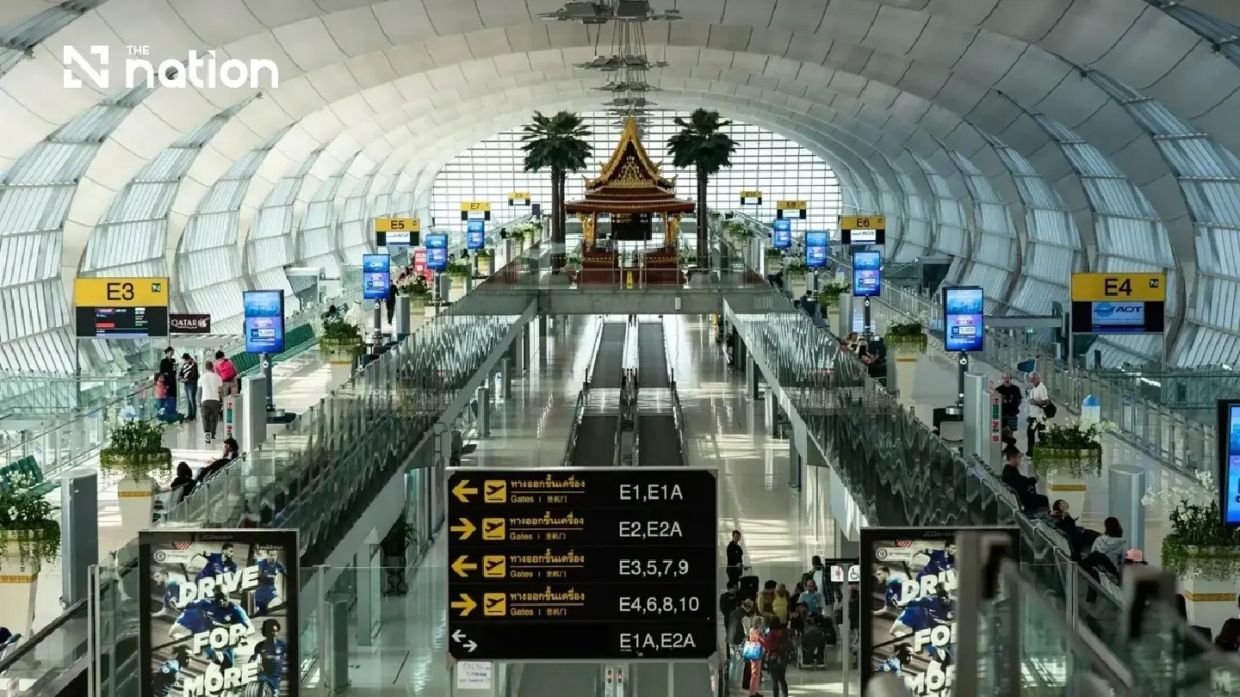
Thailand has implemented stricter border regulations for young travellers, effective from Monday, August 3, requiring all children under 18 departing the country through Suvarnabhumi Airport to carry birth certificates alongside their passports. The shift represents a notable tightening of immigration procedures at one of Southeast Asia's busiest aviation hubs, signalling Bangkok's intensified focus on safeguarding minors at international checkpoints.
The international departure section of Suvarnabhumi Airport's Immigration Checkpoint issued formal notice of the new requirement, urging parents and guardians to ensure complete documentation before approaching departure gates. This administrative change marks a departure from the previous system, which permitted Thai children to travel internationally with only their passport documentation, a streamlined approach that proved insufficient for modern child protection standards.
According to the announcement, immigration officers will accept birth certificates in multiple formats to accommodate traveller convenience. Parents may present either the original document, a certified photocopy, or an electronic photograph of the birth certificate, allowing flexibility without compromising verification procedures. This acceptance of various formats suggests Thai authorities have sought to balance stricter security measures with practical implementation at a major international airport handling thousands of departing passengers daily.
Beyond birth certificate requirements, the new protocol mandates parental consent documentation for minors crossing Thai borders. Children travelling overseas must now carry a consent letter signed by their father, mother, or both parents, depending on custody circumstances. Crucially, such letters must be issued or certified by a government agency, ensuring authenticity and preventing forged documentation that might facilitate unlawful removal of children from Thailand.
The regulatory shift addresses a longstanding concern in Thai policy circles regarding child welfare at borders. Officials have acknowledged that previous procedures relying solely on passport verification created vulnerabilities permitting minors to depart without explicit parental authorisation. By requiring government-certified consent documentation, Thai immigration authorities have closed a procedural gap that trafficking networks and unscrupulous guardians potentially exploited, particularly affecting vulnerable children without vocal family advocates.
Thailand's decision reflects broader regional and international pressure to combat child trafficking, a persistent problem throughout Southeast Asia. The United Nations and human rights organisations have documented cases of minors transported across borders for exploitation, with insufficient border controls enabling such movements. Thailand's tourism-dependent economy and position as a regional transportation hub have made it both a source and transit country for trafficking victims, necessitating enhanced protective measures at departure points.
For Malaysian travellers and regional families, these changes carry practical implications. Malaysian parents travelling with Thai-born children or guardians accompanying Thai minors on cross-border journeys must now obtain proper government-certified consent letters before departure, adding processing time and administrative requirements. Malaysian employers sending Thai employees' children back to Thailand or facilitating educational exchanges must similarly ensure compliance with the new documentation standards.
The implementation at Suvarnabhumi Airport, Thailand's primary international gateway serving Bangkok and surrounding regions, sets precedent for potential expansion to other Thai departure points. While the announcement specifically mentions Suvarnabhumi, observers anticipate similar procedures may eventually apply at Phuket, Chiang Mai, and other international airports, creating standardised protocols across Thailand's immigration system. This graduated rollout approach allows authorities to monitor implementation effectiveness before nationwide expansion.
Businesses dependent on cross-border movement—travel agencies, educational institutions coordinating student exchanges, and multinational corporations transferring employees—must adapt operational procedures. The requirement for advance government certification of parental consent introduces processing delays that previously did not exist, potentially affecting family travel schedules and corporate relocation timelines throughout the region.
Thailand's protective motivation appears genuine, though implementation challenges remain evident. Government agencies issuing consent letters must develop streamlined processes to prevent bureaucratic bottlenecks, particularly during peak travel seasons. Consular services in neighbouring countries may face increased demand for notarisation and verification services, requiring coordination between Thai diplomatic missions and regional governments.
The measure also reflects Thailand's commitment to international child protection standards, aligning domestic immigration practice with ASEAN cooperation frameworks on human trafficking. By implementing such controls, Thailand demonstrates responsiveness to regional consensus that border security and child welfare are complementary rather than conflicting objectives, a principle gaining traction across Southeast Asian governments increasingly conscious of child protection imperatives.
For regional families and travellers, immediate awareness of these requirements is essential. Airlines and travel agents serving Thai routes should proactively inform clients of the new documentation requirements, preventing last-minute complications at airports. Parents planning international trips with Thai children should commence the government certification process well in advance, ensuring smooth departure experiences and compliance with Thailand's reinforced immigration framework.

