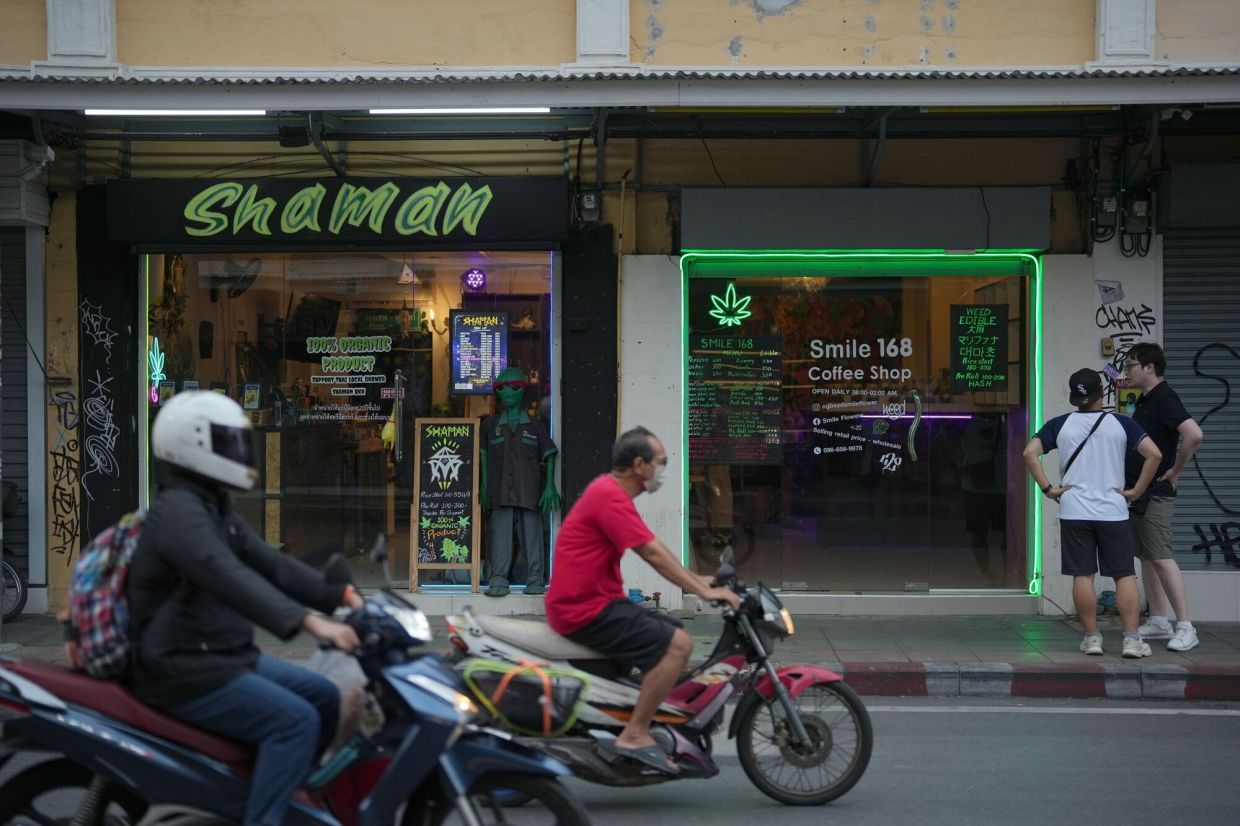
Thailand's approach to cannabis regulation is entering a critical phase as Public Health Minister Pattana Promphat pushes forward with a comprehensive legislative overhaul designed to eliminate recreational use and establish robust medical-only frameworks. The draft Cannabis and Hemp Act represents a significant departure from Thailand's existing patchwork of regulations, which had created enforcement gaps that authorities now acknowledge have enabled widespread illegal operations and cross-border trafficking. By targeting cultivation—an area conspicuously absent from current ministerial regulations—the new framework aims to create an unbroken chain of oversight from production through to final dispensing.
The legislative trajectory reflects mounting pressure within Thailand's government to salvage its cannabis liberalisation experiment, which began with selective decriminalisation but quickly spawned an unregulated market dominated by recreational retailers masquerading as medical dispensaries. Pattana's insistence that the Bhumjaithai Party's policy covers medical cannabis exclusively signals a deliberate political repositioning, likely responding to public health concerns and growing international diplomatic pressure from destination countries where Thai cannabis remains classified as a narcotic substance. The distinction matters profoundly for regional trade and legal cooperation, as Thailand's unilateral decriminalisation has created friction with neighbours and international treaty obligations.
The surveillance infrastructure now being constructed—centred on GPS-based tracking and electronic licensing—represents a technological response to enforcement failures plaguing the current system. Official records confirm that since 2023, approximately 18,000 outlets have operated under Thai cannabis regulations, but the licensing architecture has crumbled almost immediately upon implementation. Around one-third of licences issued in 2023 expired by year's end, yet only 1,500 operators pursued renewal, suggesting either economic non-viability of compliant medical dispensing or deliberate abandonment of registration to escape regulatory obligations. The ministry now faces the prospect of managing 6,000 expired outlets annually through 2026 and 2027, creating an escalating enforcement crisis that requires tens of thousands of authorised inspectors and coordination across police and local administrative bodies.
Authentication failures have compounded enforcement challenges, with authorities acknowledging past incidents of fraudulent licensing that circumvented physical verification protocols. The shift to electronic-only licensing represents a procedural tightening, yet Pattana conceded that large-volume smuggling operations may still evade detection despite enhanced controls. This candour is significant for Malaysia and other Southeast Asian nations monitoring Thailand's regulatory effectiveness, as leakage of Thai cannabis into regional markets remains a tangible concern. The illicit cross-border movement underscores a fundamental tension: Thailand has decriminalised a substance that remains tightly controlled throughout the region, creating arbitrage opportunities for organised networks.
The redefinition of compliant outlets as medical facilities staffed with supervising physicians marks a deliberate effort to embed medical gatekeeping into the retail architecture itself. By requiring doctors to authorise each transaction and monitor for suspicious consumption patterns—such as repeated large supplies to individual customers—the regulation attempts to recreate clinical control within a commercial environment. This hybrid model, blending pharmaceutical dispensing protocols with small-shop retail operations, faces obvious practical challenges in resource-constrained settings where medical supervision may become performative rather than substantive.
The question of whether cannabis will revert to narcotics classification remains unresolved within Thailand's political system, hinging on completion of the Cannabis and Hemp Control Act and subsequent parliamentary deliberation. Pattana indicated that any such reclassification would fall under the purview of the Ministry of Justice rather than the Public Health Ministry, suggesting institutional fragmentation in Thailand's drug policy apparatus. This jurisdictional complexity mirrors similar tensions across Southeast Asia, where health, law enforcement, and justice portfolios often operate at cross-purposes regarding controlled substances.
For Malaysia's policymakers and enforcement agencies, Thailand's regulatory struggles offer cautionary lessons about the practical difficulties of compartmentalising a previously prohibited substance into medical-only frameworks. The proliferation of nominally medical outlets that function as recreational dispensaries demonstrates how commercial actors exploit regulatory ambiguity, a pattern Malaysian regulators would need to anticipate if cannabis policies evolve. The estimated 6,000 non-compliant outlets operating in Thailand represent not merely enforcement failures but evidence of sustained demand for recreational cannabis that regulation has not eliminated—a dynamic relevant to regional drug policy discussions.
The involvement of the Customs Department and Airports of Thailand in monitoring outbound cannabis reflects acknowledgment that Thailand's unilateral policy shift creates friction with international drug control norms. Most destination countries, including Malaysia, classify cannabis as a controlled narcotic, making any Thai export technically illegal under their domestic laws regardless of Thai regulatory status. This jurisdictional mismatch creates liability exposure for Thai exporters and complicates regional law enforcement cooperation, as Malaysia and other neighbours must treat Thai cannabis as contraband even if legitimately licensed in its origin country.
The crackdown on the estimated 6,000 illegally operating shops represents the enforcement frontier that will determine whether Thailand's regulatory framework achieves medical-only status or devolves into de facto recreational legalisation with minimal supervision. The ministry's stated commitment to increased inspections and arrest capacity suggests serious resource allocation, yet the sheer scale of non-compliance suggests that attrition rates alone cannot resolve the problem. Pattana's acknowledgment that immediate enforcement action can proceed against unregistered operators provides legal grounding for rapid intervention, but sustainable compliance requires either voluntary operator transition to compliant medical models or market contraction through deterrent penalties and supply disruption.
The amended ministerial regulations requiring licensed outlets to function as medical facilities under physician supervision represent the regulatory crux of Thailand's medical-only strategy. Enforcement of these requirements will determine whether the framework succeeds in constraining cannabis availability to genuine therapeutic applications or merely formalises a recreational market under medical branding. For Malaysia and the broader region, Thailand's regulatory outcomes will influence broader drug policy conversations and regional enforcement cooperation protocols, making close monitoring of implementation outcomes essential for informed policy development.

