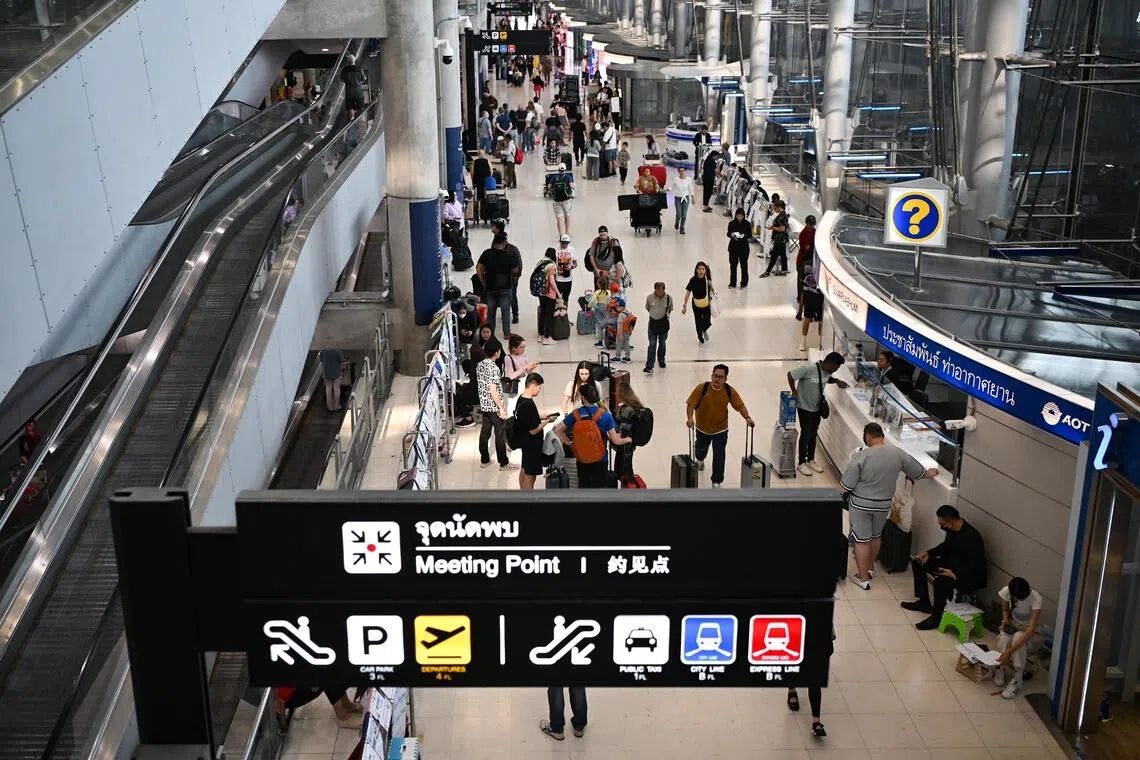
Thailand is moving to significantly reduce immigration bottlenecks at its busiest international gateway by substantially expanding access to automated passport control systems. The government has approved in principle a plan to roll out self-service e-gates to travellers from 31 additional nationalities at Suvarnabhumi Airport, with the formal implementation expected to conclude by the end of August. This expansion represents a major push to streamline arrival procedures at one of Asia's most congested aviation hubs, where capacity constraints have periodically tested the patience of growing numbers of visitors.
Deputy Government Spokesperson Lalida Persvivatana confirmed that the Immigration Bureau has greenlit the initiative, though final documentation and system configurations remain underway. The measure reflects mounting pressure on Thailand's immigration infrastructure, which must process approximately 190,000 passengers daily during peak tourist seasons. Of these arrivals, roughly 70,000 are international travellers, and immigration processing has become a critical pinch point affecting the country's reputation for hospitality and tourism competitiveness. The automated system promises to alleviate this congestion by shifting a substantial portion of arrivals away from traditional manned counters and toward technology-enabled processing lanes.
The volume of people requiring passage through immigration during the busiest windows is staggering. Between 1pm and 5pm—the primary arrival window for both long-haul and regional flights—immigration staff currently cope with between 5,000 and 6,000 passengers hourly, creating extended wait times that often test visitor goodwill before they even leave the terminal. For tourism-dependent Thailand, these initial impressions carry outsized significance. Reducing queue wait times directly improves the traveller experience and reflects positively on Thailand's broader positioning as a seamless, modern destination within Southeast Asia's competitive tourism landscape.
Once fully implemented, the expansion is projected to render approximately 6.5 million additional passengers annually eligible for automated gate usage. In addition, approximately 900,000 holders of qualifying long-term visa categories—such as retirement visas, business visas, and elite programme members—will gain access to these expedited lanes. Combined with passengers already eligible under the current system, Lalida stated that approximately 53 per cent of all arriving passengers should eventually be capable of using automated processing. This represents a significant shift in how Suvarnabhumi handles the immigration function, transforming it from a primarily manual operation into a technology-forward system that accommodates the majority of traffic flows.
Rolling out this expansion requires careful coordination across multiple government and technical domains. The Immigration Bureau is structuring the phased implementation around equipment availability, security infrastructure readiness, and the maturity of biometric data systems. First-time visitors will still be required to submit to biometric registration—a necessary step for identity verification and security assurance—but this registration process will be streamlined to minimise delays. The phased approach acknowledges that upgrading immigration infrastructure at one of the world's busier airports cannot happen overnight; each nationality cohort will be added as their associated systems reach full operational capability.
Government officials, including Deputy Prime Minister and Commerce Minister Suphajee Suthumpun and Tourism and Sports Minister Surasak Phancharoenworakul, have emphasised that reducing queue times is merely one component of a broader strategy to enhance airport operations. During a recent site visit involving multiple transport and tourism officials, discussions extended beyond immigration procedures to encompassing passenger facilities, waiting areas, and transit infrastructure. The conversation centred on ensuring that Suvarnabhumi can accommodate projected increases in passenger volumes whilst maintaining service quality and safety standards. Thailand's tourism sector, which generated 17.36 million international arrivals during just the first 210 days of the current year, shows no signs of contraction, necessitating proactive infrastructure investment.
Lalida articulated the philosophical underpinning of this initiative in notably customer-centric terms: the objective extends beyond merely shortening queues to crafting an overall arrival experience that conveys convenience, efficiency, and security from the moment passengers disembark. This framing is particularly important for Thailand, which competes against increasingly sophisticated airport ecosystems in Singapore, Dubai, and other regional hubs. By automating routine passport processing, Thailand signals to the global travelling public that it values their time and understands the frustrations associated with lengthy immigration procedures. This positioning becomes increasingly significant as traveller expectations for seamless, technology-enabled experiences continue to escalate across the aviation sector.
The expansion also carries implications for Malaysia and other Southeast Asian nations. As Thailand enhances its airport infrastructure and passenger processing capabilities, it strengthens its competitive positioning within the region's tourism marketplace. Malaysian airports, including those serving Kuala Lumpur and George Town, may face increased pressure to modernise their own automated immigration systems to remain competitive. The ripple effect of Thailand's infrastructure improvements thus extends beyond Thai borders, potentially prompting neighbouring countries to accelerate their own technological upgrades to prevent losing market share to a more efficiently operated competing hub.
From a practical standpoint, the expansion addresses a real operational challenge that has occasionally generated negative publicity for Thai tourism. Long immigration queues, particularly during peak arrival windows, have featured in traveller blogs and social media commentary as a genuine friction point in the Thailand arrival experience. By substantially reducing queue times for the majority of arrivals, Thailand directly addresses this negative perception and converts a potential detractor into a competitive advantage. Visitors from the 31 newly eligible nationalities will experience markedly smoother arrivals, generating positive word-of-mouth that extends far beyond their individual journeys.
The implementation timeline of August represents a realistic but ambitious target given the technical complexities involved. Suvarnabhumi must integrate new equipment, configure biometric systems for multiple nationality cohorts, train staff on updated procedures, and conduct extensive testing to ensure security and reliability standards are maintained. Any failure or significant delays in the automated system could theoretically create greater congestion than the current manual system, placing considerable pressure on system designers and immigration officials to achieve flawless execution during rollout phases.
Longer-term, this initiative positions Thailand to accommodate projected tourism growth without proportionally expanding its immigration workforce. As artificial intelligence and biometric technologies mature, Suvarnabhumi will likely become increasingly efficient at processing high volumes without corresponding increases in staffing levels. This technological shift allows Thailand to capture additional tourism revenue without incurring the substantial labour costs associated with hiring and training additional immigration officers. The economic efficiency of the model, combined with improved traveller satisfaction, creates strong incentives for Thailand to accelerate the expansion beyond the initially planned 31 nationalities.

