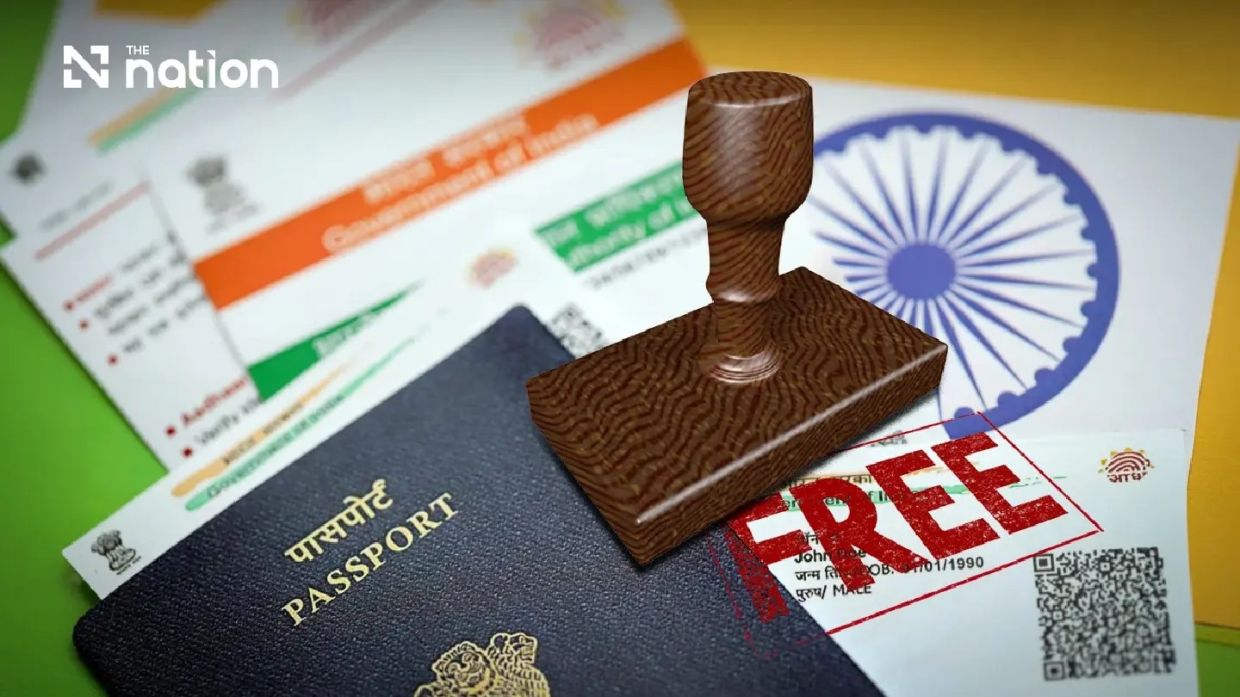
Thailand's Tourism and Sports Minister Surasak Phancharoenworakul has emphasised the strategic importance of granting 30-day visa-free access to Indian tourists, a decision aimed at positioning the kingdom as the destination of choice for affluent Indian travellers planning destination weddings and extended celebrations. The move represents a calculated shift in Thailand's approach to attracting Indian visitors, with projections suggesting the market will swell to 2.7 million arrivals in 2027—a significant milestone that underscores India's growing importance to Thailand's tourism economy.
The 30-day entitlement emerged after negotiations centred on an initially proposed 15-day limit, which tourism officials determined would prove inadequate for the specific needs of India's lucrative wedding segment. Destination weddings and related celebration events frequently demand extended preparation periods spanning multiple weeks, encompassing venue inspections, family gatherings, and ceremonial activities that compress poorly into a fortnight. By extending the visa-free duration to 30 days, Thailand aligns Indian travellers with the standard exemption granted to visitors from other major markets, a decision intended to reinforce confidence in the destination and bolster per-capita spending across longer stays.
The Tourism Authority of Thailand forecasts Indian arrivals will reach 2.55 million during 2026 before climbing 5.8 per cent to an anticipated 2.7 million in 2027. Already, India ranks as Thailand's third-largest tourist source market, with approximately 1.3 million arrivals recorded through mid-July 2026. The previous year demonstrated the market's vigour, with 2.48 million Indian visitors generating 90.425 billion baht in tourism revenue—a growth trajectory of 16.82 per cent year-on-year. The first half of 2026 sustained momentum, with arrivals expanding at 3.06 per cent, signalling consistent demand despite broader global economic uncertainties.
Visa access remains the foundational pillar supporting Thailand's India strategy, a reality brought into sharp focus when the Cabinet initially approved withdrawing the temporary 60-day visa-exemption programme covering 93 countries. Tourism operators expressed alarm at the prospect of Indian passport holders reverting to the Visa on Arrival category, which would introduce additional procedural friction and undermine Thailand's competitive positioning. The Cabinet's revised framework, approved on 14 July, resolved this tension by classifying India among 59 countries and territories entitled to standard 30-day visa-free tourism stays, anchoring the nation firmly within a stable, predictable entry category rather than temporary schemes subject to ministerial whim.
The government's restructuring reflects a dual imperative: balancing tourism expansion with enhanced immigration security. By consolidating overlapping visa categories and assigning each country a single entry classification, authorities aimed to eliminate potential loopholes exploitable for unauthorised purposes whilst maintaining competitive visa accessibility. Indian visitors currently remain in Thailand for approximately 7.17 days per trip on average—a figure considerably below the 30-day threshold, indicating that policy makers calibrated the entitlement to accommodate both conventional leisure travel and extended itineraries without creating security blind spots. All visitors, including Indians, must complete Thailand's Digital Arrival Card within three days preceding arrival.
Thailand ranks as India's third most-favoured overseas destination, trailing only the United Arab Emirates and Saudi Arabia, yet faces intensifying regional competition. Vietnam leverages aggressive pricing and promotional incentives to poach Indian travellers, Malaysia aggressively markets visa-free access, and Singapore has cultivated a stronghold in the family travel segment. This competitive landscape underscores why visa accessibility functions as a critical differentiator—India's prosperous middle class increasingly evaluates destination choices through the lens of entry convenience, and visa-free arrangements signal a nation's commitment to seamless visitor experiences.
The economic profile of Indian tourists substantiates their disproportionate value to Thailand's tourism sector. Average daily expenditure reaches 6,203 baht per person, translating to approximately 36,354 baht per typical trip. Independent travellers comprise 68.63 per cent of Indian arrivals, whilst 31.37 per cent travel through organised tour groups. Nearly 60 per cent are first-time visitors, indicating a substantial pool of repeat-visit potential. Thai cuisine ranks foremost among attractions, followed by beaches and spa-wellness experiences—preferences that distribute spending across hospitality, dining, and experience sectors rather than concentrating on narrow tourism segments.
Air connectivity forms the circulatory system sustaining India-Thailand tourism flows. The Tourism Authority's New Delhi office manages routes connecting nine Indian cities to Bangkok, Krabi, and Phuket, operating 144 weekly flights with capacity for over 32,000 passengers. Meanwhile, the Mumbai office oversees markets served by approximately 160 weekly flights offering roughly 33,000 seats. Combined weekly capacity across Thailand-India routes approaches 66,000 seats, though temporary disruptions from Middle Eastern geopolitical tensions and elevated fuel costs temporarily constrained services. Airlines nevertheless expect capacity restoration during high seasons, with Indian carriers progressively adding services from secondary cities, a development that broadens the geographic foundation of India's tourism participation.
Thailand's promotional strategy extends beyond traditional metropolitan centres to encompass Tier 2 and Tier 3 cities where rising affluence creates emerging demand clusters. Secondary target markets including Lucknow, Chandigarh, Guwahati, Ahmedabad, Surat, and Pune represent growth frontiers offering access to higher-income traveller cohorts. Surat's specialised diamond industry endows the city with exceptional purchasing power, whilst Pune's concentration of automotive and industrial enterprises provides demographic access to professional classes. The Tourism Authority concurrently cultivates neighbouring markets in Bhutan, Nepal, and Bangladesh, positioning Thailand as a regional hub within broader South Asian travel ecosystems.
Indian traveller preferences increasingly transcend conventional sightseeing and photography, migrating instead towards immersive, experience-centric itineraries emphasising food culture, community interaction, and authentic daily lifestyles. This attitudinal shift among younger Indian demographics reflects broader global tourism trends favouring experiential authenticity over curated attractions. Thai tourism promotion consequently pivots toward positioning food culture, wellness practises, and community engagement as differentiation vectors against competing destinations offering standardised beach-and-temple itineraries. By aligning policy frameworks—exemplified through the 30-day visa provision—with promotional messaging that emphasises depth and cultural immersion, Thailand constructs a comprehensive ecosystem designed to convert India's expanding affluent middle class into loyal, high-value tourism participants.

