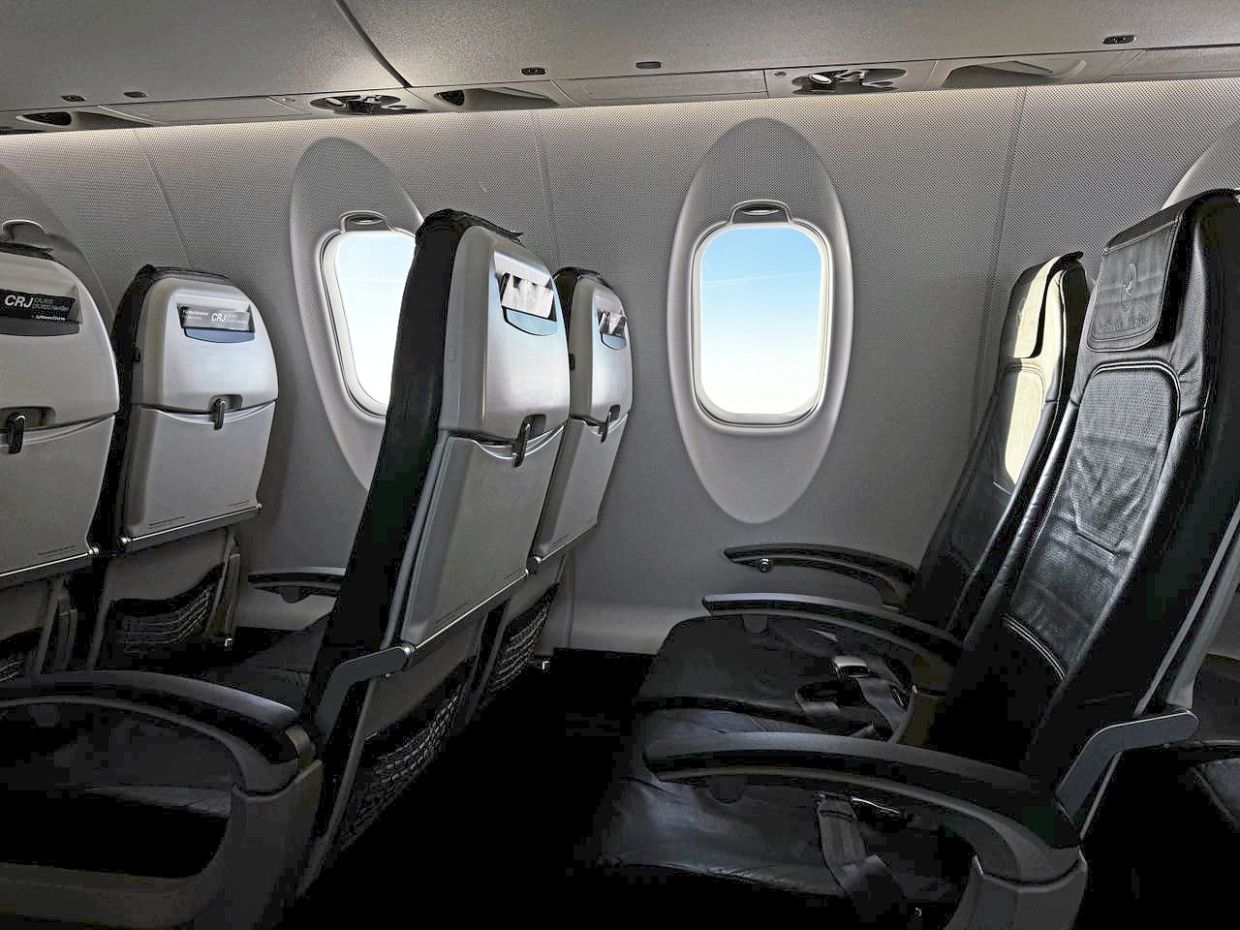
The transformation of air travel in the United States has created two fundamentally different journeys within the same aircraft. Travellers boarding the same flight now experience radically different passages through airport terminals and cabin doors, depending on what they paid for their tickets. One passenger glides through express security, relaxes in an invitation-only lounge sampling chef-prepared cuisine and craft cocktails, then boards early to settle into a spacious premium seat greeted with champagne and warm towels. Meanwhile, another passenger queues at security, purchases a US$16 (RM65) sandwich at an airport café, waits at a crowded gate, and finally boards with the last groups before squeezing into a middle seat in economy, hoping to find space for a carry-on bag. This divergence is no coincidence but rather the deliberate result of strategic decisions made by America's largest carriers since the COVID-19 pandemic.
Over the past decade, Delta Air Lines, American Airlines and United Airlines have fundamentally reoriented their business strategies around capturing revenue from premium travellers willing to pay substantially more for enhanced comfort and exclusivity. Delta's leadership articulated this philosophy clearly, with CEO Ed Bastian declaring in a recent podcast interview that the airline cannot compete on price but must instead focus on delivering superior experiences. This philosophical shift marks a dramatic departure from the industry's historical mission of democratizing air travel by making it affordable for everyday people. The three major carriers are now reconfiguring existing aircraft, designing new fleets with substantially larger premium cabins, and committing billions of dollars to creating luxury amenities that extend well beyond the aircraft itself into airport lounges and ground facilities.
The strategy did not emerge fully formed overnight but rather evolved through a series of strategic innovations beginning in the early 2010s. Henry Harteveldt, president of travel research firm Atmosphere Research Group, explains that Delta pioneered a sophisticated approach to premium seating by deploying advanced pricing algorithms to identify which economy passengers would willingly upgrade to premium cabins for modest additional costs. This innovation unlocked significant untapped demand that airlines had previously underestimated, demonstrating that travellers would indeed trade up when offered meaningful improvements in comfort, service and amenities at the right price point.
The COVID-19 pandemic appeared poised to interrupt this trajectory when business travel collapsed and corporate meetings migrated to video conferencing platforms. Industry analysts questioned whether airlines would need to return to competing on price. Instead, an unexpected dynamic emerged: leisure travellers proved remarkably willing to spend substantially more for premium seats and perks, convincing carriers that premium demand extended far beyond traditional business travellers. This discovery fundamentally reshaped airline strategy and made premium revenue a central fixture of investor discussions, with executives regularly highlighting premium revenue growth as evidence of business model strength.
The financial impact of premiumisation has become extraordinary. Industry analysts report that premium cabins, which now include premium economy offerings featuring additional legroom and enhanced amenities, generate disproportionate revenue relative to the physical space they occupy. On high-traffic transatlantic routes, business-class tickets alone generate nearly equivalent revenue to the vastly larger economy cabin, according to analysis by consulting firm McKinsey & Company. Meanwhile, former Delta President Glen Hauenstein emphasized a crucial reversal: products that historically served as loss leaders to attract premium customers have become the airline industry's highest-margin offerings.
The visible manifestations of this premium focus have become impossible to ignore in airports and aircraft. Delta's newest lounges resemble upscale restaurants with open kitchens preparing dishes like hamachi crudo, cocktail bars crafting made-to-order drinks, soundproof relaxation pods and outdoor decks with tarmac views. American Airlines partnered with the prestigious James Beard Foundation to redesign lounge menus, while its Boeing 787-9 Dreamliners for long-haul flights feature business-class compartments with sliding privacy doors, lie-flat seats exceeding standard twin mattress dimensions and luxury amenity kits featuring celebrity skincare brands. United Airlines introduced business-class cubicles with 27-inch entertainment screens, caviar service and multi-course menus inspired by cities throughout its network.
The architectural redesigns of new aircraft underscore how thoroughly airlines are reorganizing around premium passengers. Delta's next-generation Airbus A350-1000 aircraft, scheduled to arrive in 2027, will dedicate nearly half its cabin to premium seating. American Airlines announced plans to expand premium cabin capacity by 50 percent by the decade's end. These decisions represent enormous capital commitments that will shape airline economics for decades, with each newly delivered aircraft embodying the strategic choice to prioritize premium revenue over maximum passenger capacity.
Airlines have also invented new fare structures to maximize premium cabin revenue by capturing additional passenger segments. Delta introduced basic premium fares offering lower-priced entry to front-cabin seats but requiring passengers to forgo perks like seat selection and lounge access. United implemented similar tiered premium pricing earlier this year, creating multiple service levels within premium cabins themselves. This strategy attempts to extract additional revenue from price-sensitive passengers while maintaining premium pricing for those willing to pay full prices for comprehensive amenities.
United CEO Scott Kirby has pushed back on characterizations that premium focus means neglecting economy passengers, arguing that investments actually benefit all travellers. Kirby cited initiatives including seatback entertainment systems and mobile app improvements, claiming the airline pursues a nose-to-tail investment strategy serving every customer category. This framing reflects recognition that public and political backlash against perceived neglect of economy passengers could create reputational risks, though the airline's actual cabin configuration decisions suggest premium passengers receive disproportionate resources.
The premium push reflects broader transformations in airline business models during the post-pandemic era. Analysts suggest the industry has fundamentally abandoned historical strategies of competing primarily on price and instead now pursues segmentation strategies where different customer tiers receive sharply differentiated experiences. William J. McGee, a senior fellow at the American Economic Liberties Project, offered a pointed observation that contemporary airline strategies have abandoned the notion of providing equitable treatment, instead creating what amounts to dramatically different travel classes reminiscent of historical class systems.
For Southeast Asian and Malaysian travellers, these American airline strategies carry important implications. Several major US carriers serve regional markets and will implement these premium-focused cabin configurations on aircraft flying Pacific routes. Malaysian business travellers and affluent leisure passengers may benefit from enhanced premium offerings when flying American carriers, while price-conscious budget travellers will increasingly encounter the constraints and limitations characterizing economy cabins. Regional airlines may face pressure to adopt similar premium strategies, potentially affecting domestic and regional flight economics and accessibility.
The premium transformation also intersects with broader economic pressures affecting household budgets across the region. Inflationary pressures have strained consumer finances while airlines simultaneously make premium travel more elaborate and attractive, potentially widening the gap between those who can afford luxury air travel and those relying on basic economy options. The industry's explicit strategic pivot toward premium passengers represents a fundamental recalibration of airline business models away from historical commitments to democratizing air travel toward a model explicitly designed to maximize revenue from the highest-paying passengers while accommodating economy passengers in increasingly constrained circumstances.

