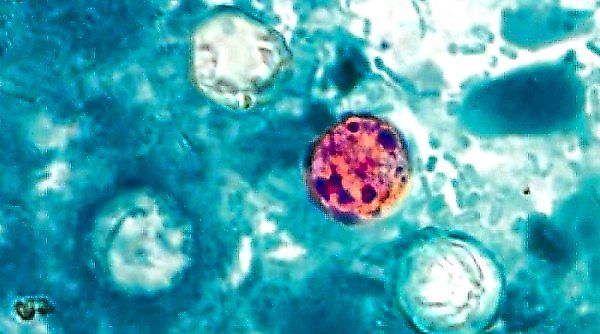
A sprawling outbreak of Cyclospora infection across five American states illustrates a fundamental vulnerability in the global food supply chain: some of the most dangerous pathogens are also the hardest to detect. The parasite, which triggered thousands of suspected cases of foodborne illness centred on Taco Bell restaurants, has exposed the limitations of even the most sophisticated testing methods available to regulatory agencies. For Malaysian consumers and food safety officials across Southeast Asia, the case underscores how contaminated produce can move silently through regional distribution networks before detection becomes possible.
Cyclospora presents what scientists call a "perfect storm" for food safety investigators. Unlike well-known bacterial culprits such as Salmonella or E. coli, which trigger symptoms within days and allow people to recall their meals with reasonable accuracy, this parasite operates on a much longer timeline. Infected individuals may not experience symptoms for up to two weeks after consumption, a lag that catastrophically undermines the traditional epidemiological method of tracing outbreaks. By the time someone falls ill and seeks medical attention, they have consumed countless meals, visited multiple restaurants, and purchased fresh produce from various sources. The tainted lettuce, meanwhile, has already cycled through distribution centres and vanished from supermarket shelves.
The investigation that traced the outbreak to shredded iceberg lettuce supplied to Taco Bell restaurants from Taylor Farms' operations in Mexico demonstrates how investigators must now compensate for these detection limitations. Public health epidemiologists conducted painstaking interviews with infected patients, mapping their consumption patterns across multiple states. The FDA attempted to validate findings through border testing, initially detecting Cyclospora in the suspect produce. However, subsequent quality-control checks revealed this positive result to be false—a consequence of the parasite's fundamental unsuitability for conventional laboratory analysis. The investigation eventually linked most cases to lettuce from a specific Taylor Farms facility in central Mexico, prompting a broad recall, yet even this success came through detective work rather than definitive scientific proof.
The core technical obstacle lies in Cyclospora's biological nature. Unlike bacteria, which scientists can culture and grow in laboratory media to amplify their genetic material, Cyclospora is a parasite that stubbornly resists cultivation. This means researchers cannot employ the standard forensic tool of modern food safety: whole genome sequencing. This genetic fingerprinting technique allows scientists to match a specific pathogenic strain from a patient to a specific batch of food from a specific producer, creating an ironclad chain of evidence. Without it, investigators work in shadows, relying on statistical patterns and epidemiological inference rather than molecular certainty. The synthetic DNA copying process that must substitute for traditional cultivation introduces its own complications, occasionally producing false positives that send investigations down dead ends.
Former FDA Commissioner Scott Gottlieb articulated the fundamental problem in stark terms: the agency simply lacks the molecular tools that would allow it to definitively isolate a particular strain of Cyclospora to a particular outbreak, facility, or shipment. This absence reverberates through the entire food safety system. The Taco Bell outbreak accounts for approximately 60 per cent of cases in the multistate incident, according to Gottlieb's analysis, leaving a substantial portion of illnesses linked to other, possibly distinct sources still under investigation by the Centers for Disease Control and Prevention. Investigators cannot be certain whether they are dealing with a single contamination event, multiple independent incidents, or a more widespread problem moving through the produce supply chain largely undetected.
The practical implications extend far beyond American borders. Southeast Asia depends heavily on imported and regionally distributed fresh produce, with many shipments originating from Mexico and other countries where Cyclospora contamination has occurred. Malaysia's position as a hub for regional food distribution means that contaminated produce could easily reach local supermarkets and food service operations before any outbreak becomes apparent. The two-week incubation period means that clusters of illness might not be recognized as outbreaks until the contaminated food has already spread across multiple countries and distribution channels. Public health officials in the region currently lack the specialized testing capacity that might identify Cyclospora cases earlier, leaving them dependent on alerts from international agencies that arrive long after contamination has occurred.
The FDA's decision to test produce at the US-Mexican border represents an attempt to establish a defensive perimeter, yet even this measure proved inadequate. The false positive demonstrates how the agency's current testing methods can mislead as well as inform. Establishing similar border testing protocols in Southeast Asia would require significant investment in laboratory infrastructure and staff training, resources that many countries in the region have not yet mobilized. The alternative—relying purely on outbreak detection through clinical cases—means accepting a lag of weeks or months between contamination and recognition, during which produce continues flowing through commercial channels.
Recent CDC recommendations encouraging doctors to test for Cyclospora represent a double-edged response to these detection challenges. By increasing clinical testing rates, the agency hopes to identify more cases and construct more complete outbreak pictures. However, this approach carries unintended consequences that food safety experts like Craig Hedberg at the University of Minnesota have flagged. Heightened publicity surrounding the outbreak, combined with easier access to testing, will likely generate a surge in confirmed cases that does not necessarily reflect continued contamination. Instead, it may simply represent improved detection of infections that occurred weeks earlier. This statistical illusion could distort policymakers' understanding of whether the actual threat is expanding or receding, potentially triggering unnecessary restrictions on produce imports or consumption.
The perishability of fresh lettuce compounds these difficulties. Hedberg notes that contaminated produce from a specific harvest moves through the distribution system within days, making it impossible to recall all affected batches once contamination is finally confirmed. The window for prevention closes before detection opens. This temporal mismatch reflects a fundamental structural problem in global food systems: the speed at which produce moves from field to consumer vastly outpaces the speed at which food safety testing can operate. For a parasite like Cyclospora that resists conventional laboratory methods, this gap becomes a chasm.
Looking forward, the outbreak exposes the urgent need for alternative detection methodologies. Researchers are exploring immunological assays and advanced molecular techniques that might bypass the cultivation problem, yet none has achieved the reliability or throughput necessary for routine screening of produce shipments. Environmental testing—examining water sources and processing facilities rather than finished products—offers another avenue, but requires cooperation from producers and investment in testing infrastructure across multiple countries. For Malaysia and Southeast Asia, the Cyclospora outbreak serves as a cautionary demonstration that food safety depends not only on the quality of testing methods available, but on their fundamental compatibility with the pathogens that threaten the supply chain.

