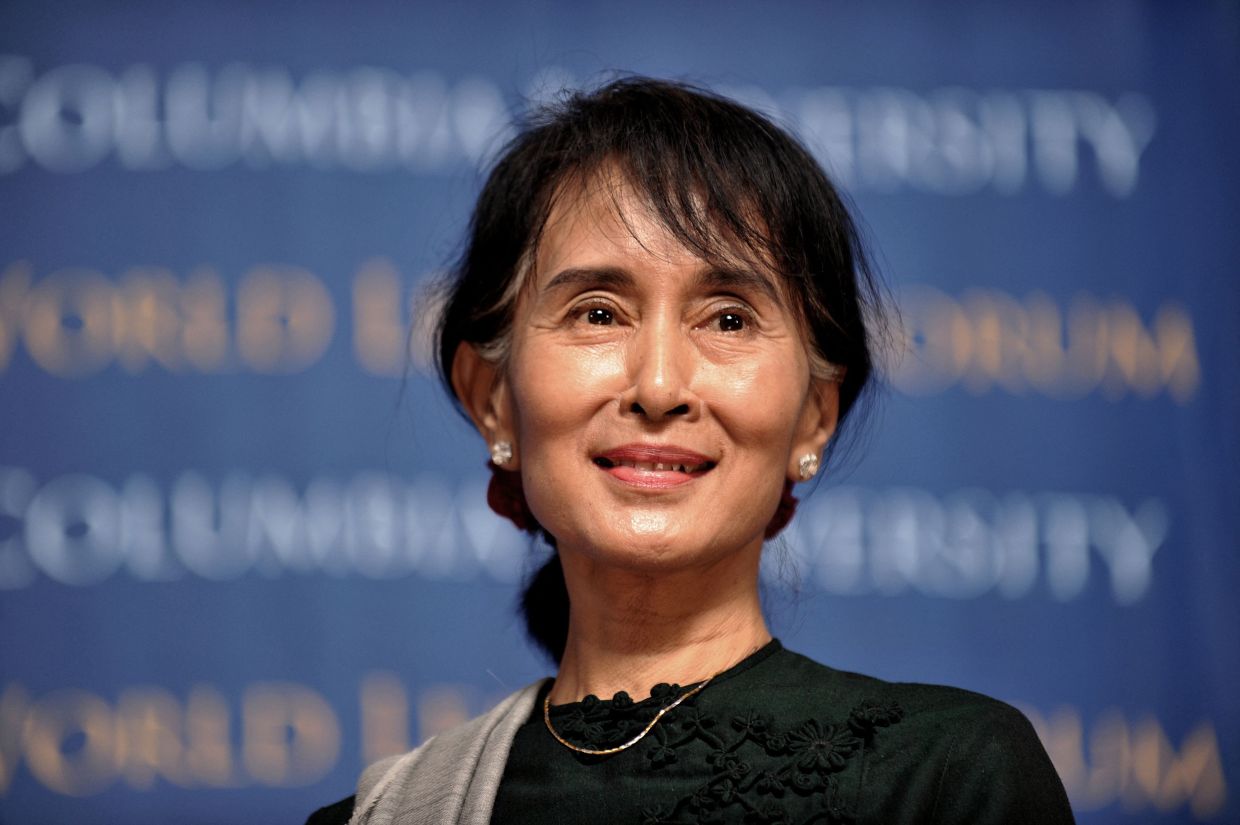
The mystery surrounding Aung San Suu Kyi's whereabouts in Myanmar's capital Naypyidaw raises uncomfortable questions about the junta's commitment to transparency and democratic norms in the Southeast Asian nation. Although military leader Min Aung Hlaing announced in April that the 81-year-old deposed leader had been transferred from prison to house arrest, nobody can definitively say where in the sprawling city she is actually being held. Her location has become a metaphor for the opacity that defines both the regime and the purpose-built capital itself.
Naypyidaw was designed with deliberate secrecy in mind. When former military ruler Than Shwe designated it as Myanmar's capital in 2005, he chose a location far removed from the historic coastal hub of Yangon and the cultural centre of Mandalay. Urban theorists describe the capital's layout as a manifestation of military paranoia—a city engineered to prevent popular uprisings and limit foreign influence by creating physical and psychological distance between rulers and ruled. With a population of just one million spread across an area nine times larger than New York City, Naypyidaw functions as a bewildering maze of anonymous government compounds connected by surreal 20-lane highways that cut through jungle and agricultural land virtually devoid of traffic.
The city's architecture and planning deliberately obstruct wayfinding and disrupt navigation. Mobile internet jammers interfere with GPS applications, leaving residents perpetually confused about their own locations. Armies of gardeners are often more visible than pedestrians along the endless highways, manicuring immaculate lawns in front of empty government buildings. Architect Galen Pardee, an adjunct professor at Columbia University in New York, describes being in Naypyidaw as experiencing "its own kind of house arrest." The city represents the inverse of sound urban planning principles—it is intentionally designed to isolate, confuse, and control rather than to facilitate human connection and movement. That political calculation sits at the heart of every street layout and architectural choice.
Suu Kyi's current confinement location has become so secretive that even senior government officials claim ignorance. Thein Tun Oo, a Member of Parliament from the pro-military Union Solidarity and Development Party (USDP), which won the junta-controlled January elections after Suu Kyi's party was barred from competing, stated plainly that he does not know where she is being held. "Not everyone can know her location," he said, adding that even he, as one of the people, lacks access to such information. This admission reveals the compartmentalised nature of the regime's security operations—information is distributed on a strict need-to-know basis, and protecting Suu Kyi's location has apparently become a matter of paramount state security.
Police special branch sources from two separate jurisdictions confirmed that Suu Kyi had been transferred to areas explicitly off-limits even to law enforcement officers in their own territories. One source claimed that "even generals do not have her information," suggesting that knowledge of her whereabouts is restricted to an extraordinarily narrow circle within the military apparatus. This level of compartmentalisation goes beyond standard security protocols and suggests a deliberate strategy to render her detention completely opaque to scrutiny. By hiding her location even from officials who ostensibly administer the detention, the regime insulates itself from direct accountability and prevents any monitoring of her conditions.
Min Aung Hlaing's decision to shift Suu Kyi from a formal prison to house arrest in April was framed as an act of mercy and evidence of his supposed transition from military dictator to civilian president. The 2021 coup that removed Suu Kyi from power provoked armed resistance and civil conflict across Myanmar. By allowing restricted elections in January—from which Suu Kyi's National League for Democracy was excluded—and announcing her transfer to house arrest, the general attempted to project an image of liberalisation. However, critics interpret this manoeuvre as pure image management rather than meaningful reform. At 81 years old, Suu Kyi remains effectively imprisoned, isolated at an undisclosed location in a city that has been engineered specifically to hide state secrets from its own residents.
Suu Kyi's son, Kim Aris, speaking by telephone from London, expressed scepticism about any substantive difference between her previous imprisonment and her current status. He argued that the location where she is being held functions as a private prison rather than a genuine residence offering the comforts and freedoms of home. "I don't see really how different it is to what she's been subjected to over the past number of years," he stated, suggesting that the regime is merely relabelling her detention rather than genuinely improving her situation. This assessment resonates with the broader international criticism that Myanmar's junta is engaged in what observers call "democratic theatre"—creating the appearance of institutional change while maintaining authoritarian control.
One villa in Naypyidaw where Suu Kyi previously stayed during her time as elected leader has been demolished, erasing physical traces of her presence and former status. Before the coup, as the nation's leader, she would have been entitled to occupy a government residence within the capital, located behind security checkpoints accessible only to those with appropriate clearance. That arrangement at least provided a known address within the governmental structure. Her current house arrest location, by contrast, exists in complete secrecy—it could be anywhere within the sprawling capital's confusing geography, known only to a handful of military officials and perhaps her immediate security detail.
The timing and nature of the junta's elections in January revealed the regime's approach to governance under Min Aung Hlaing's leadership. The military conducted the vote after five years of direct rule through executive decree, presenting it as a step toward civilianised government. However, by excluding Suu Kyi's party from participation and ensuring a landslide victory for the USDP—the military-aligned party—the regime demonstrated that electoral processes in Myanmar remain instruments of junta control rather than expressions of popular will. Parliament members, including USDP spokesman Aye Chan, now speak of Suu Kyi's era being definitively over, despite the fact that she remains alive and technically could claim political legitimacy based on her 2020 election victory.
The international community has watched Suu Kyi's fate with particular interest because of her iconic status in Myanmar's democratic movement and her 1991 Nobel Peace Prize. Her journey from decades of self-imposed exile to a global democracy advocate, and subsequently to her initial house arrest in her Yangon mansion during the pre-democracy transition, gave her considerable symbolic power. The junta's decision to arrest her after the 2021 coup and now to hide her location entirely represents an attempt to strip away that symbolic authority by rendering her invisible. By keeping her location secret, the regime prevents her from becoming a focal point for opposition or international advocacy.
For Malaysia and other Southeast Asian nations, Suu Kyi's invisible confinement in Naypyidaw serves as a cautionary example of how military regimes can weaponise urban design and administrative secrecy to suppress dissent and eliminate accountability. The region has historically seen military interventions justify themselves through claims of necessity and stability, yet Myanmar's experience demonstrates that such justifications often mask the consolidation of power and the elimination of meaningful democratic participation. Suu Kyi's disappearance into the labyrinth of Naypyidaw represents a broader regional challenge: how democracies can be dismantled quietly through institutional mechanisms rather than spectacularly through overt repression.
Naypyidaw itself has become a symbol of the Myanmar junta's priorities and methods. Its 800-acre gilded parliament complex is among the world's largest, yet it operates within a city designed to confuse and isolate rather than to serve as a functional capital. The city's emptiness, its deliberately confusing layout, its security apparatus, and its complete opacity to residents and international observers all reflect a governance model fundamentally divorced from democratic principles. Suu Kyi's hidden location within this architectural maze perfectly encapsulates the regime's approach: even when it claims to grant house arrest instead of imprisonment, the reality remains one of complete control, isolation, and invisibility.

