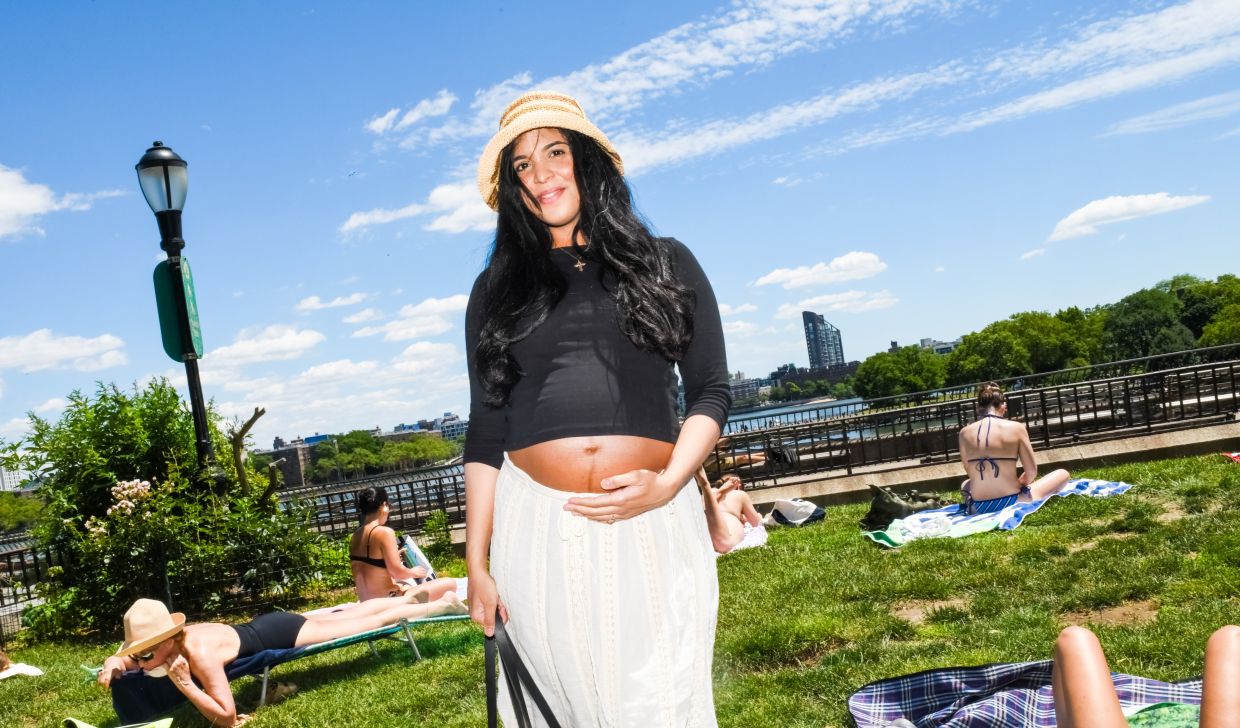
The maternity fashion landscape is undergoing a profound transformation. Where previous generations viewed pregnancy as something to camouflage beneath baggy, tent-like garments, today's expectant mothers are deliberately showcasing their expanding bodies through crop tops, cut-outs, and form-fitting designs. This shift represents more than a simple aesthetic preference—it reflects deeper generational values around body positivity and the reclamation of pregnancy as something to celebrate rather than conceal.
Sarah Brown, a 36-year-old handbag designer and stylist, embodied this new approach when pregnant at 22 weeks. She began posting images on social media featuring her bare midriff in fitted grey T-shirts paired with blazers and low-slung jeans. When her well-meaning mother suggested purchasing a traditional maternity jumpsuit, Brown politely declined, explaining that she was deliberately styling around her belly to accentuate rather than downplay the pregnancy. Her fashion choice reflected a conscious rejection of conventional maternity wear in favour of personal expression and body celebration.
This phenomenon extends far beyond individual fashion statements. Over recent years, pregnant bellies have become visible at concerts, on beaches, in parks, and across social media platforms. Rather than treating the pregnant silhouette as an embarrassment requiring concealment, women increasingly view it as temporary, worthy of fashion-forward styling. The shift has been particularly pronounced among celebrities, whose sartorial choices shape broader cultural attitudes. Beyoncé's 2017 baby shower appearance featuring her bare pregnant belly in full view generated widespread social media discussion, while Rihanna's 2022 pregnancy announcement in a partially unbuttoned bright pink Chanel puffer jacket essentially redefined contemporary maternity fashion. More recently, Anne Hathaway announced her own pregnancy in a white crop top, continuing this trend of visibility and celebration.
According to Laura McAndrews, an associate professor at Kent State University's fashion school who researches Gen Z attitudes toward maternity wear, this transformation is fundamentally generational. Young women today have grown up immersed in body positivity messaging and consequently embrace all physical stages, including pregnancy. This contrasts sharply with the 1990s and earlier decades when women routinely concealed their bodies under oversized, shapeless garments designed specifically to minimize rather than celebrate the pregnant form. The difference reflects broader cultural shifts toward accepting and affirming diverse body types and life stages.
Musician and author Michelle Zauner provided personal insight into these evolving attitudes when she performed at New York's Governors Ball music festival in June, wearing an unbuttoned cardigan that revealed a lacy black bra and her bare pregnant belly. Zauner acknowledged being directly inspired by Rihanna's approach to maternity fashion. She also expressed her aversion to traditional maternity clothing, describing typical options as oversized muumuu-style pieces that felt shapeless and unflattering. Rather than accepting these limited options, she opted to style her own wardrobe deliberately, treating pregnancy as an opportunity for creative self-expression rather than a condition requiring sartorial invisibility.
Historically, the impulse to conceal pregnancy stemmed from deeply rooted cultural attitudes. Isabel Davis, author of studies on historical perspectives of pregnancy, notes that for most of history, pregnancy was considered socially inappropriate—evidence of sexual activity that respectable women preferred to keep private. This social stigma created strong incentives to hide the pregnant body. Maternity clothing evolved specifically to fulfill this concealment function, prioritizing coverage and shapelessness over style. Even as recently as the 2010s, professional working women faced discrimination based on pregnancy, creating additional motivation to minimize visual signs of their condition.
The maternity clothing industry itself has undergone significant transformation in response to these changing attitudes. Ariane Goldman, chief creative officer of Hatch, a maternity clothing company founded in 2011, recalls launching her business during an era when discussing pregnancy openly remained taboo and many women hid their pregnancies from employers due to legitimate fears of job loss. Over the past decade, she has witnessed a remarkable cultural pivot toward celebrating pregnancy and acknowledging the power and dignity of carrying a child. This shift has profound implications for how businesses approach maternity wear design, marketing, and function.
Interestingly, the embrace of mainstream fashion over traditional maternity clothes raises important questions about the maternity wear industry's future viability. If expectant mothers increasingly bypass specially designed maternity garments in favour of styling their own wardrobes—borrowing partners' oversized clothing, purchasing flexible-fit basics, and creatively repurposing their existing closets—traditional maternity retailers face genuine challenges. Goldman acknowledges discussing this concern regularly with her team. However, she argues that even fashion-forward mothers eventually encounter functional limitations. Pregnancy creates specific physical requirements that not all standard clothing addresses adequately, ensuring that thoughtfully designed maternity pieces retain market relevance.
For many women navigating pregnancy, the solution involves pragmatic mixing of approaches. Brown managed her entire pregnancy with just two pairs of Los Angeles Apparel elastic-waist pants and two Paloma Wool tops featuring unbuttoned side panels—minimalist choices designed for function and flexibility rather than traditional maternity wear. This approach captures the contemporary maternity fashion ethos: borrowing strategic pieces that adapt to a changing body while maintaining personal style and avoiding shapeless alternatives. Such solutions prioritize comfort and wearability without sacrificing the contemporary aesthetic values that define how younger women approach fashion generally.
For Malaysian and Southeast Asian readers, these trends carry particular significance as they intersect with evolving attitudes toward motherhood, women's bodies, and professional identity in the region. As younger Malaysian women increasingly participate in the global fashion conversation and challenge traditional attitudes toward pregnancy, they simultaneously navigate distinct cultural contexts where attitudes toward female bodies remain more conservative. The celebration of maternity fashion represents not merely a style shift but a broader assertion of women's agency in how their bodies are perceived, discussed, and presented publicly—a development with implications extending well beyond the wardrobe.

