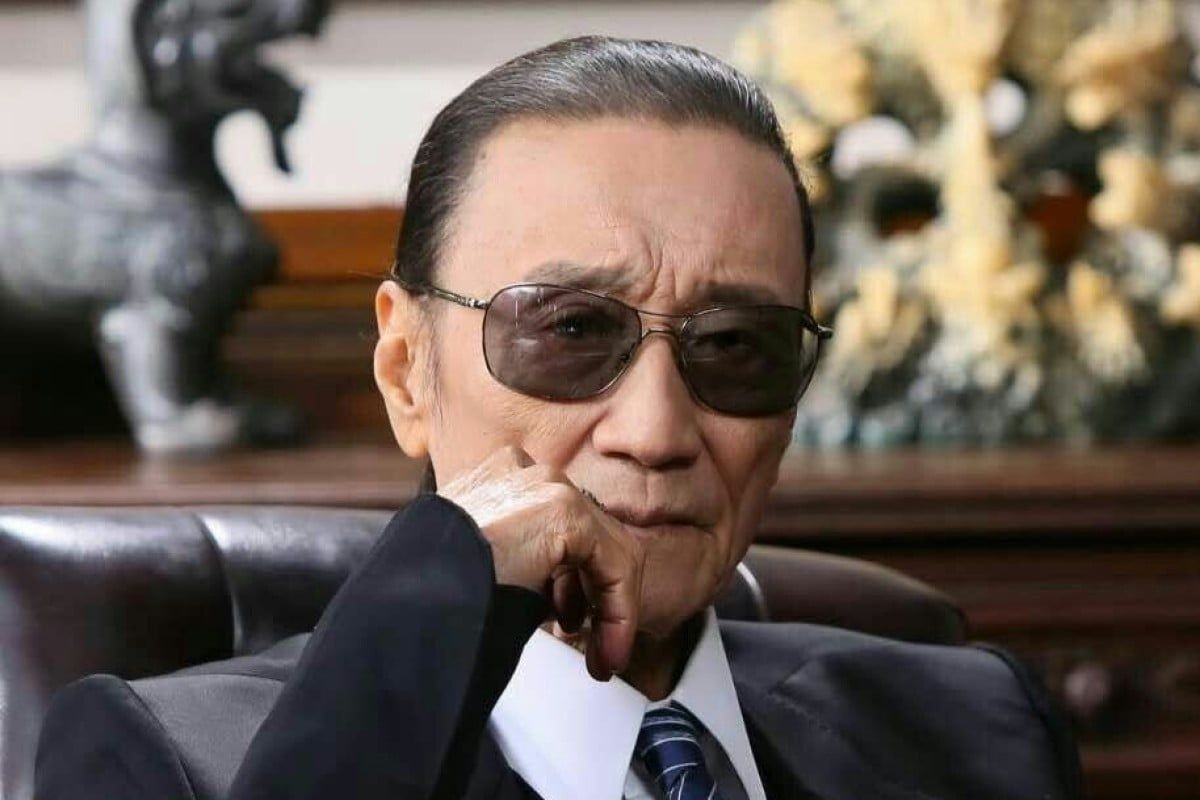
The death of Patrick Tse Yin at 89 represents far more than the loss of a respected performer—it marks the symbolic close of an entire chapter in Hong Kong's cultural history. Tse, who passed away peacefully at a hospital surrounded by family, was among the last surviving giants of Cantonese cinema's golden period, a transformative era when the city's film industry wielded unparalleled influence across Southeast Asia. The announcement of his passing by his children, pop star Nicholas Tse Ting-fung and model Jennifer Tse Ting-ting, reverberated through Chinese communities worldwide, underscoring the profound regard in which he was held by multiple generations of audiences.
Born in the 1930s, Tse became instrumental in shaping how Hong Kong cinema presented itself to the region during its most creatively fertile decades. He embodied a particular vision of modern Hong Kong life—sophisticated, stylish, and aspirational—that resonated powerfully with audiences throughout Southeast Asia. His influence extended beyond individual performances; he represented a formative moment when Cantonese-language filmmaking was developing its distinctive visual and narrative language. Charles Cheung Chi-wai, an associate professor at Baptist University's department of humanities and creative writing, contextualises this era by noting how the constellation of major stars during the 1960s collectively established Hong Kong's standing as the "Hollywood of the East", a designation that reflected both commercial ambition and cultural prestige.
In her Facebook announcement, Jennifer Tse described her father as someone who "brought joy to everyone around him with his unmistakable spirit", emphasising how his passion and charisma had left an indelible mark on Hong Kong cinema across generations. His son Nicholas likewise urged admirers to preserve his memory by maintaining the image of him as perpetually "charming and smiling", a characterisation that hints at how thoroughly Tse's on-screen persona had merged with public perception. The affectionate nickname by which he became known—"Brother Four" or "Sei Gor" in Cantonese—reflected his status not merely as an actor but as an archetypal figure representing a particular moment in the city's cultural development.
The significance of Tse's career extends into the architectural foundations of Hong Kong cinema's later international success. In 1967, Tse appeared in Patrick Lung Kong's "The Story of a Discharged Prisoner", a crime drama whose Chinese title, "Ying Hung Boon Sik", would echo through Hong Kong film history two decades later. When director John Woo created "A Better Tomorrow" in 1986—widely credited as establishing the "heroic bloodshed" genre that became Hong Kong's signature export—he borrowed substantially from the moral framework and thematic concerns present in Tse's earlier vehicle. The narrative architecture centring on an ex-convict struggling unsuccessfully to abandon his criminal past formed the blueprint that Woo would refine and amplify. This genealogy demonstrates how deeply rooted Hong Kong's celebrated action cinema was in the narrative sensibilities Tse's generation had already established.
Beyond his on-screen work, Tse also ventured into directing during the 1970s, helming films such as "If Tomorrow Comes" and "Love in Hawaii". Yet these directorial efforts have largely faded from contemporary critical consciousness, overshadowed by the monumental cultural presence he maintained as a performer. His enduring significance lay not in the quantity or innovation of individual works but in his function as what might be termed a fixed cultural reference point—a figure against whom the rapidly evolving Hong Kong film industry continually measured and reoriented itself. As the industry underwent successive transformations, Tse's persistent presence offered continuity and historical grounding.
The conventional biographical approach to Tse's legacy tends to emphasise the elements of personal narrative: his substantial estate, his role as Nicholas Tse's father, his romantic involvements spanning decades, and the remarkable fact that his son would eventually achieve greater international stardom. While these details accurately describe the contours of his life, they risk inverting the true lineage of influence. The cinema that enabled Nicholas Tse's eventual prominence and commercial success operated within frameworks of style, narrative expectation, and audience engagement that his father's generation had fundamentally shaped. Understanding Patrick Tse primarily through the lens of being Nicholas Tse's father misrepresents the direction of cultural inheritance.
A particularly revealing moment came at the Hong Kong Film Awards, where Tse received the Best Actor accolade for his role in "Time" at the age of eighty-five, making him the oldest recipient of that honour in the awards' history. The film featured him as an aging contract killer drawn reluctantly from retirement—a narrative premise laden with unintended resonance. The industry and media framed this recognition as a triumphant comeback story, suggesting renewed vitality and continued relevance. Yet examined more closely, the moment reads differently: it represents a cinema so depleted in its present creative capacity that it reached backward to its foundational generation to conjure a sense of historical weight and cultural legitimacy. The award celebrated not Tse's contemporaneous artistry but his historical significance.
This observation points to a larger reckoning about Hong Kong's cinema that Tse's death forces into sharper relief. The oft-repeated phrase that "an era ends" with his passing technically accurate only if the ending date is substantially moved backward. The studios that originally elevated Tse to stardom ceased operations long ago; the volume and international visibility of Hong Kong's film production declined progressively over decades; the golden age that defined his career had already transitioned into historical memory well before his recent death. The industry survived these decades partly through nostalgia, continued mining its legendary past for reference points and inspiration rather than generating new foundational myths.
Tse's trajectory from the 1960s through his final appearance on screen encapsulates this trajectory precisely. He was present at cinema's moment of linguistic invention, embodying the emerging grammar of what Cantonese filmmaking would become. He witnessed the subsequent exportation of that cinema's aesthetic innovations to global markets. He endured through periods of industry consolidation and contraction. And finally, he received an award that paradoxically celebrated his historical importance while implicitly acknowledging the industry's present shortage of equivalent figures. Each phase of his career charts not his individual ascent but Hong Kong cinema's broader arc from creative abundance to historical reflection.
In announcing his father's passing, Nicholas Tse employed the phrase "the show must go on"—a sentiment rooted in showbusiness tradition and professional continuity. The words carry genuine emotional resonance and represent an appropriate response to the death of any performer. Yet they inadvertently illuminate a more complicated reality. The particular show that enabled Patrick Tse's emergence and sustained his prominence—the ecosystem of vibrant Cantonese-language filmmaking that commanded regional influence—had already concluded its principal run. What persists is not the show itself but the remembrance of it, the continued engagement with its legacy, and the way subsequent generations of filmmakers and audiences measure their own work against the standards it established. Tse's death does not close an era that already ended; it serves instead as final confirmation that the closing had occurred long before, and that affection alone had been sustaining the lights.
For Malaysian and Southeast Asian audiences, Tse's significance resonates beyond his individual filmography. Hong Kong cinema's golden age profoundly shaped regional viewing habits and aesthetic expectations across Southeast Asia, establishing templates for action cinema, romantic drama, and performance style that regional industries subsequently adopted and adapted. Tse represented a moment when Hong Kong's cultural products circulated with genuine prestige and influence throughout the region, a position quite different from the contemporary landscape. His passing marks the end of the last living connection to that period of creative confidence and regional dominance, a time when Hong Kong's cinema felt vital and generative rather than archival.

