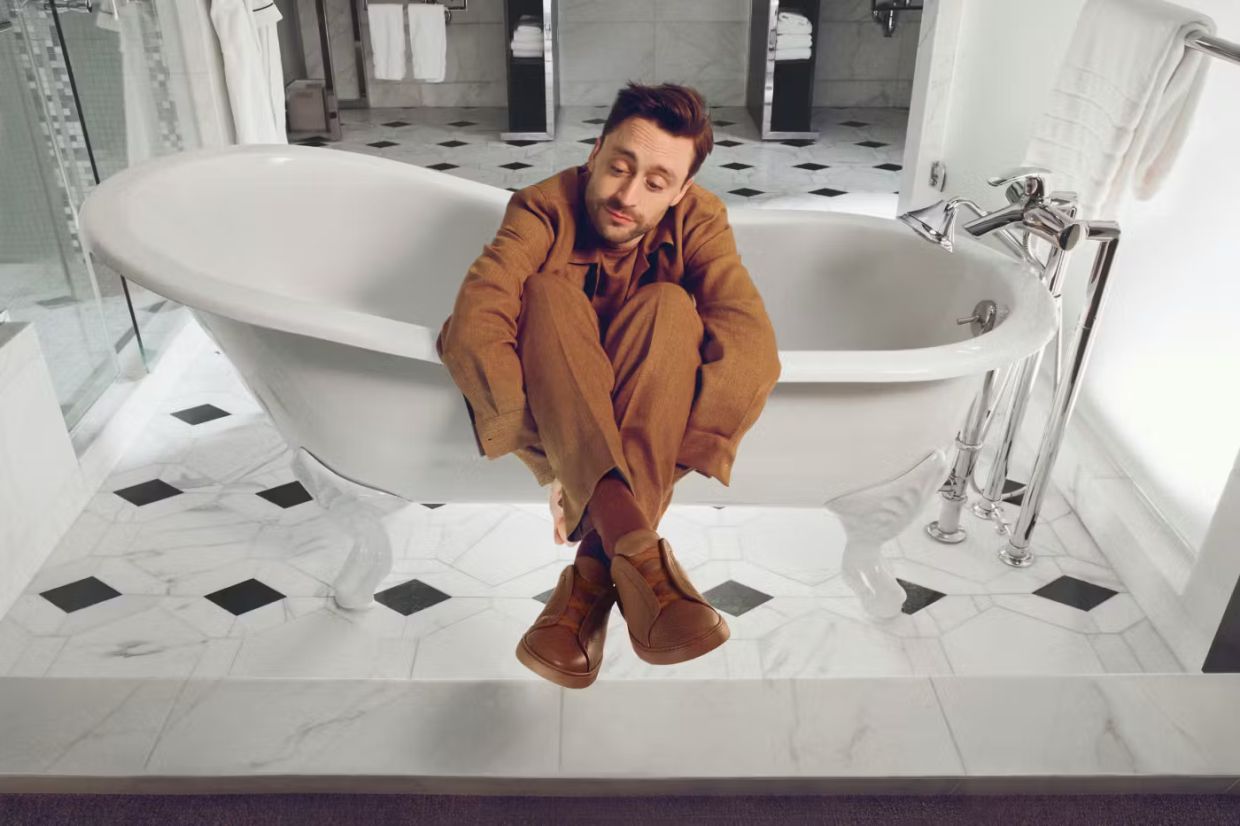
The dress sneaker represents one of fashion's most successful hybrid experiments: a shoe that marries the casual comfort of athletic footwear with the professional appearance of traditional leather dress shoes. From boardrooms to film festivals to political meetings, this carefully calibrated middle ground has become remarkably ubiquitous among influential men worldwide. Yet as social and economic pressures reshape workplace culture, this defining footwear of the early 21st century may be entering a period of reassessment.
The ascendancy of the dress sneaker reflects broader shifts in how modern professional men approach clothing. It emerged from the convergence of several cultural movements: the normalization of casual dress in office environments, the rise of "stealth wealth" aesthetics that favour understated luxury, and a general cultural embrace of comfort without sacrificing polish. Unlike previous attempts at hybrid footwear—gimmicks that ultimately collapsed back into conventional sneakers—the dress sneaker successfully positioned itself as a legitimate wardrobe choice for serious professionals. High-profile adoption by figures such as US House Democratic Leader Hakeem Jeffries at Oval Office meetings, actor Ben Stiller at the New York Film Festival and NBA events, and actor Kieran Culkin in the television series Succession helped establish the shoe as acceptable at the highest levels of society.
The shoe's penetration into traditionally conservative spaces reveals its cultural significance. Private clubs and institutions with historically rigid dress codes have begun amending their rules to permit white-soled leather shoes, even while maintaining explicit bans on conventional sneakers. This distinction matters profoundly: it suggests that dress sneakers occupy a distinct category in the minds of gatekeepers, signalling belonging to a particular class and philosophy rather than casual indifference. Apple Chief Executive Tim Cook photographed himself wearing Zegna Triple Stitch dress sneakers for a magazine cover, positioning the shoe as a marker of forward-thinking leadership.
Historically, the path to workplace casualization in men's fashion proceeded slowly. Throughout the twentieth century, professional men adhered strictly to hard-soled dress shoes, predominantly black leather, as the standard for office environments. Loafers gradually gained acceptance in the late 1960s, but the process stalled when it reached athletic footwear. Menswear historian Derek Guy, who writes the column "Die, Workwear!", notes that sneakers remained beyond the pale for several decades, even as casual culture accelerated elsewhere.
The contemporary dress sneaker lineage traces to 2004, when Italian brand Common Projects released the Achilles Low—minimalist white leather low-tops commanding premium pricing that positioned them as luxury goods rather than practical footwear. This origin story matters: by establishing the dress sneaker as an expensive Italian product with subtle branding, Common Projects gave the category intellectual and aspirational weight. The shoes weren't simply casual footwear; they represented a philosophy of thoughtful design and restrained luxury that appealed to educated professionals.
As the category proved commercially viable, brands at every price point entered the market. Established American shoemakers such as Allen Edmonds and Wolf & Shepherd began producing their own versions, while luxury conglomerates including Tom Ford, Loro Piana, and Cole Haan launched premium offerings. NBA Hall of Famer Steve Nash notably played basketball in Wolf & Shepherd dress sneakers, providing an athletic credential to a shoe category previously associated with sedentary professions. Gradually, sports broadcasters on ESPN adopted them, normalizing the shoe among media personalities who shape public perception of professional presentation.
The transition from niche luxury item to mainstream professional uniform accelerated when Silicon Valley entrepreneurs embraced dress sneakers as a symbolic bridge between startup informality and business legitimacy. In the tech world's mythology, founders who "move fast and break things" eventually mature into stewards of valuable enterprises—and dress sneakers communicated that evolution subtly. The shoe signalled: "I haven't compromised my values, but I've grown professionally." This narrative proved irresistible to traditional financial and banking sectors, whose leaders adopted dress sneakers partly out of genuine preference and partly from a desire to signal alignment with the technological optimism and cultural authority that Silicon Valley possessed.
Yet the cultural moment that elevated dress sneakers to ubiquity may be dissipating. As social media platforms face intensifying legal scrutiny regarding their manipulative design practices and psychological impacts, the aesthetic and values associated with tech culture—including its preferred footwear—may be losing their sheen. Derek Guy observes that the dress sneaker essentially functions as "T-shirts with a tuxedo printed on them": a kitschy middle ground that attempts to have it both ways rather than making a decisive choice.
Multiple factors suggest that dress sneakers' dominance in executive style could be declining. A post-pandemic normalization toward more formal workplace presentation may be reasserting itself as organisations recall the psychological and cultural functions of traditional dress codes. Economic anxieties about job security and corporate stability have also prompted professionals to emphasize competence and trustworthiness through conventional presentation—and traditional dress shoes communicate gravitas in ways that hybrid footwear cannot. When uncertainty prevails, people tend to retreat toward established signals rather than experimental compromises.
Malaysian and Southeast Asian professionals should note these international trends, as they often establish the template for aspirational local style within corporate environments. The dress sneaker phenomenon demonstrates how fashion categories can rise and fall based on their alignment with broader cultural narratives rather than functional necessity. As workplaces worldwide reassess professional presentation in response to economic and technological shifts, the shoes people wear to offices may become less about signalling flexibility and more about projecting dependable authority—a shift that could reshape wardrobes across the region.
The enduring lesson from the dress sneaker's trajectory concerns the relationship between comfort, aspiration, and professional identity. For two decades, this shoe successfully resolved a tension in modern professional culture: the desire for physical comfort without appearing to have abandoned standards or seriousness. But fashion categories that exist primarily to bridge contradictions rather than express coherent values often prove vulnerable to cultural shifts. Whether dress sneakers represent a temporary trend or a permanent evolution in menswear remains uncertain, but their potential decline should prompt reflection about what shoes—and by extension, what values—truly define contemporary professional culture.

