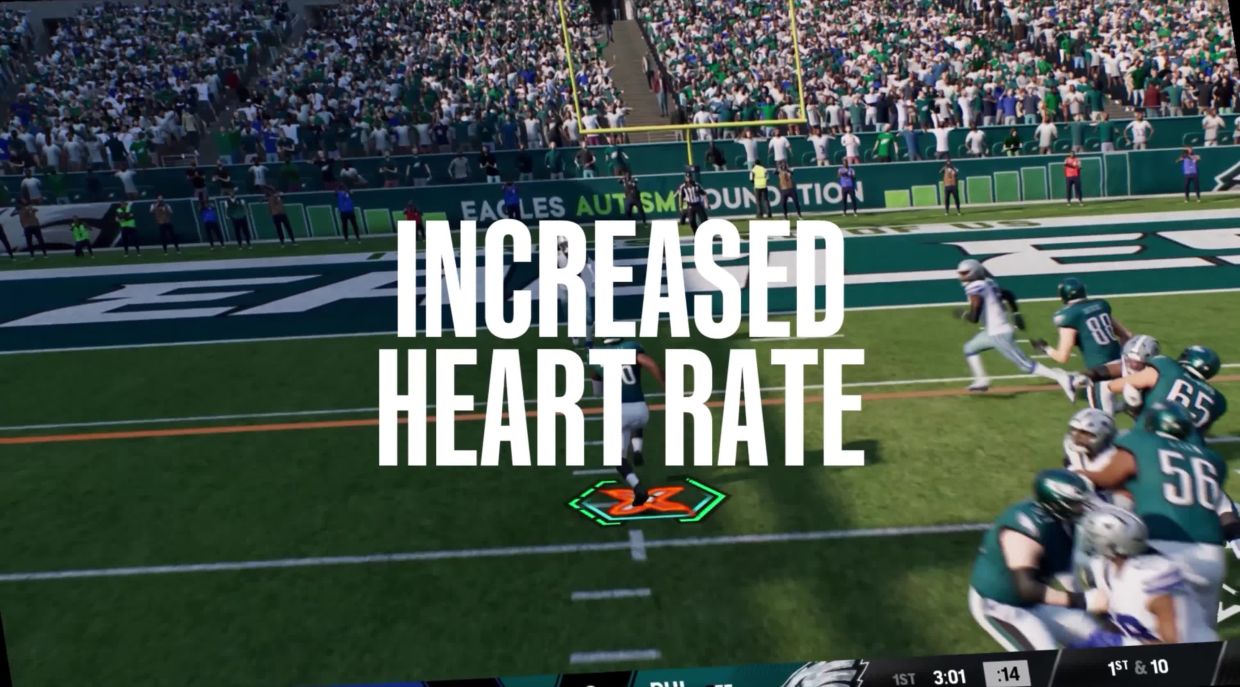
The latest instalment of Madden NFL promises players an authentic simulation of American football, yet for years it has omitted one of the sport's most serious and prevalent injuries: concussions. Now, a freely available modification created by independent developers is attempting to correct that oversight by introducing realistic depictions of brain injury symptoms into the game—a move that has reignited conversations about the entertainment industry's responsibility to portray the true cost of professional athletics.
When a linebacker makes contact with a running back during routine gameplay in the standard version of Madden, the action continues almost immediately. But those who have downloaded the concussion modification experience something markedly different. After a significant head impact, players may encounter blurred vision, heightened light sensitivity, waves of nausea, elevated heart rate, throbbing headaches, breathing difficulties, dizziness, or ringing in the ears—all accompanied by screen distortion and audio effects that mirror the disorientation an athlete might feel. Though the user base for this modification remains modest, its symbolic weight carries considerable significance within gaming and sporting communities.
Electronic Arts, the company behind Madden NFL, declined to offer any public response to the modification or its implications. The silence itself speaks volumes about a corporation's reluctance to engage with uncomfortable truths about the sport it profits from. The decision to exclude concussions from gameplay represents not merely an omission but an active choice—one made during an era when scientific evidence about the long-term neurological consequences of repeated head trauma has become increasingly difficult to ignore. This selective representation of injury raises fundamental questions about what developers owe their audiences when creating products that simulate real-world harm.
Chris Borland, a former linebacker for the San Francisco 49ers who walked away from his professional career after just one season due to concerns about cumulative brain injury, has publicly supported the modification's educational intent. However, he emphasised a critical limitation: a visual or sensory representation experienced while seated comfortably at home bears little resemblance to the actual, ongoing neurological consequences that athletes face. Borland highlighted the gap between game mechanics and lived reality, noting that true realism would require depicting scenarios such as cognitive decline, relationship deterioration due to mood changes, memory problems, and the existential challenges that follow a serious concussion. A feature informing players that their virtual character struggles with irritability or domestic conflict would represent a fundamentally different gaming experience—one that prioritises education over entertainment.
The trajectory of concussions within the Madden franchise provides a revealing case study in how corporations manage uncomfortable realities. During the 1990s and early 2000s, the games included ambulances removing injured players and featured visual concussion assessments that mimicked protocols used on actual sidelines. These elements vanished gradually throughout the 2010s—not coincidentally, this period aligned with mounting public awareness of chronic traumatic encephalopathy (CTE) and the NFL's catastrophic public relations crisis regarding brain injuries. The death of Hall of Famer Junior Seau, posthumously diagnosed with CTE, combined with a landmark lawsuit settlement exceeding US$1.5 billion (RM6.13 billion) to former players and their families, created an environment where acknowledging the reality of head trauma became commercially hazardous for both the league and its licensed entertainment partners.
Ben Utecht, a former NFL tight end who retired prematurely in 2010 specifically because of concussion concerns, articulated a troubling motivation underlying the decision to remove concussions from gameplay: the league's desire to avoid discouraging youth participation. In Utecht's view, the NFL and by extension EA Sports maintained that highlighting the genuine risks of head injury might deter young athletes from pursuing football, thereby threatening the pipeline of future professionals and the ecosystem of youth sports equipment, coaching, and media consumption. Yet this logic raises an uncomfortable question about whether commercial interests should override the responsibility to represent physical reality, particularly in a product marketed toward adolescents still developing their understanding of risk and safety.
The modification's creators undertook a substantial technical challenge, incorporating 9,000 lines of code to produce their vision of concussion realism. Their motivation centres on expanding public awareness beyond traditional health advocacy channels. Players engaging with this modified version experience not only the immediate sensory disruption of a brain injury but also participate in a broader cultural conversation about accountability in sports. The developers recognise that millions of people interact with the Madden franchise annually, making the game a potential vector for reaching audiences who might never encounter formal educational materials about concussion protocols or long-term neurological consequences.
Kristen Thomson Sheely, executive director of the Derek Sheely Foundation, represents the human dimension of this debate. Her son Derek died at age 22 following a catastrophic brain injury sustained during a college football practice at Frostburg State University in Maryland during 2011. According to court documents, Derek complained of a headache after an initial head impact, only to be mocked by coaching staff and forced back onto the field. Minutes later, a collision with a defensive back resulted in symptoms so severe that he collapsed and never regained consciousness. The family's subsequent US$1.2 million (RM4.9 million) settlement with the NCAA and Frostburg State achieved some justice, including the permanent retirement of his jersey number, but nothing could restore what was lost. Sheely recognised that a wildly popular video game played by millions represents a channel through which Derek's story and the warning it contains could reach audiences far beyond traditional educational frameworks.
The Madden modification's designers incorporated a memorial element directly into their creation: when players complete a game using the modified version, a banner displays Derek Sheely's retired jersey, No. 40. This integration transforms the modification from a purely technical exercise into an act of commemoration and advocacy. It serves as a constant reminder that the injuries being simulated represent not abstractions but the real deaths and disabilities of actual people—athletes whose families continue grieving preventable tragedies.
The presence of other injuries within standard Madden gameplay creates an additional layer of inconsistency that critics find indefensible. Players routinely manage ankle sprains, muscle strains, and other musculoskeletal injuries, making tactical decisions about whether to rest an athlete or risk further damage. The selective exclusion of concussions, the most common injury in football, while retaining lesser injuries, suggests a deliberate suppression rather than a neutral design choice. EA Sports and the NFL's licensing department, which conducts annual review of Madden content, apparently determined that realism applies selectively—to injuries considered less threatening to the sport's image and commercial interests.
Strikingly, concussion epidemiology within professional football has not improved despite their removal from the gaming ecosystem. The 2024 NFL season documented 168 reported concussions, a dramatic increase from 129 the previous year, which the league attributed to rule changes encouraging more kick returns. These figures suggest that pretending concussions do not exist within entertainment media provides no protective benefit while simultaneously denying consumers access to accurate information. Instead of facing the reality of what football entails, the sport has chosen to whitewash its public-facing products, creating a disconnect between the game players see and the injuries players actually sustain.
The ongoing discussion between EA Sports and the NFL regarding concussions in gameplay reveals the complexity underlying these decisions. League officials engaged in negotiations about whether concussion inclusion would feel appropriately realistic, acknowledging that two identical head impacts in real football produce different outcomes for different athletes—a variability that would be challenging to simulate authentically. Rather than grapple with this complexity, the easier solution became simply removing the feature entirely. This choice prioritises aesthetic coherence and marketing interests over educational accuracy or entertainment integrity. For Southeast Asian readers and Malaysia's growing gaming community, the episode serves as a case study in how multinational corporations negotiate between realism and commerce, offering lessons applicable well beyond sports simulation.

