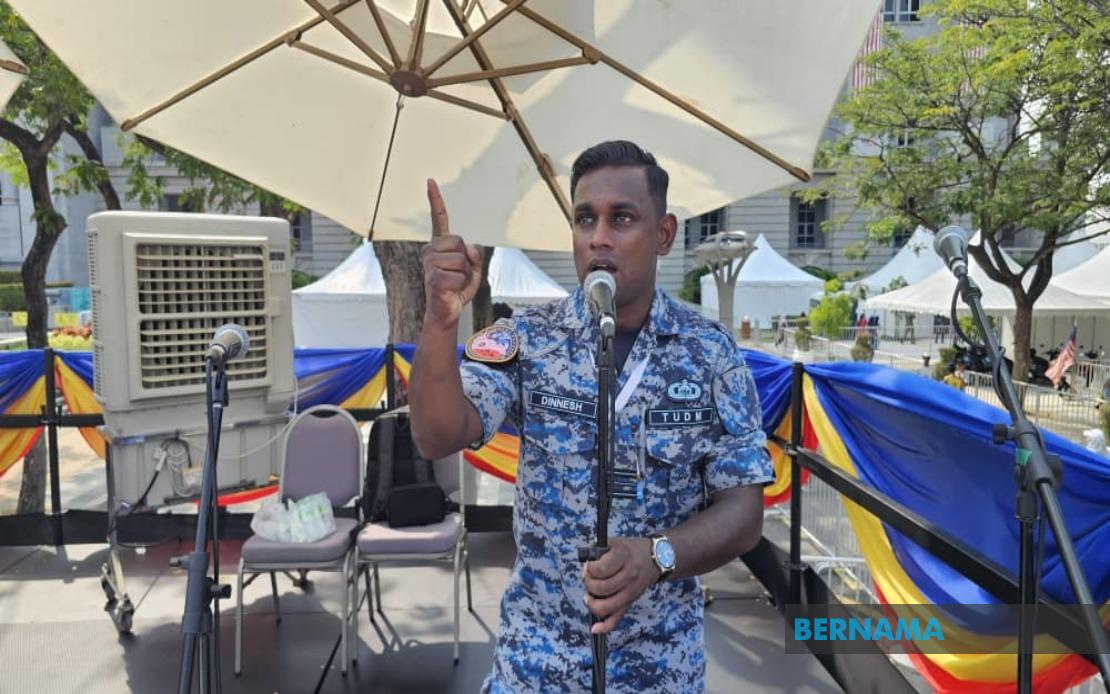
As fighter jets carved precision manoeuvres across the Putrajaya skyline on National Day, it was the commanding voice of Major Dinnesh Nicolas Rene that transformed the aerial display into a comprehensible spectacle for the thousands gathered below. The 34-year-old Royal Malaysian Air Force officer served as one of three commentators for Malaysia's 2026 National Day celebrations, working alongside Major Neny Suhaida Ab Suki and Captain Muhammad Iqbal Nasrudin to ensure that every barrel roll, formation shift, and coordinated flyby resonated with meaning for the assembled crowd, dignitaries, and broadcast audiences across the nation.
The role of air show commentator demands far more than vocal projection and a prepared script. Dinnesh, who has served in the RMAF since 2015 and currently holds a position in the Air Defence Control Division, emphasises that successful commentary requires encyclopaedic knowledge spanning aircraft specifications, pilot credentials, squadron histories, formation dynamics, and the precise sequence of aerial manoeuvres planned for each segment of the display. This depth of technical understanding separates compelling narration from mere description, allowing commentators to provide context that elevates audience appreciation beyond the visual spectacle.
Dinnesh's journey into air show commentary began unexpectedly in 2019 when he was selected to commentate at the Langkawi International Maritime and Aerospace Exhibition. That experience opened a new professional avenue, leading to subsequent roles during Royal Malaysian Air Force anniversaries and eventually to his involvement in major national celebrations. His background as an air defence officer proved invaluable, providing operational insight into the technical dimensions that audiences need explained during high-speed aerial displays where individual aircraft movements might otherwise blur together into an undifferentiated show.
Preparing for a National Day air show of this magnitude demands extensive coordination that extends weeks before the actual event. Dinnesh describes an intricate process beginning with detailed meetings and collaborative planning sessions with ground control personnel and pilots themselves. These sessions establish the precise parameters of the display: which aircraft will participate, how many jets form each element, the identities and backgrounds of lead pilots, individual squadron mottos that carry historical significance, and the exact sequence and timing of every manoeuvre. This information forms the foundation upon which coherent, informed commentary becomes possible.
Coordination extends beyond the aviation personnel alone. Dinnesh emphasises that commentators must work closely with security agencies, protocol officers, and other stakeholders involved in orchestrating a major state occasion. When the King and Prime Minister attend, as they do for National Day celebrations, the stakes intensify considerably. Commentators become custodians of appropriate messaging, required to understand which topics merit discussion, which subjects demand discretion, and precisely when information should be delivered to avoid overshadowing state protocols or creating diplomatic sensitivities.
The mastery of protocol represents one of the commentator's most demanding challenges. Unlike a master of ceremonies introducing speakers or coordinating ground-based activities, an air show commentator operates within tightly constrained parameters where timing must align with unfolding aerial events occurring hundreds of metres overhead, often moving at speeds exceeding 800 kilometres per hour. A mistimed comment can disrupt the narrative arc carefully constructed through coordination, while an inappropriate remark might create embarrassment during a high-profile state occasion broadcast to millions.
Beyond protocol considerations lies a purely physical challenge that Dinnesh identifies as paramount: voice preservation. The commentator's voice is not a decorative element but the primary instrument through which aerial information reaches audiences. Unlike other ceremonial speakers who address crowds for limited durations, air show commentators must maintain vocal power and clarity throughout hours of preparation, multiple rehearsals, and the extended duration of the actual event, all while competing against the deafening roar of jet engines. The risk of vocal strain, hoarseness, or complete voice loss poses a genuine occupational hazard that commentators must actively manage through careful technique and rigorous voice care protocols.
Managing vocal demands requires deliberate attention throughout the entire preparation and performance cycle. Dinnesh approaches this challenge systematically, implementing voice protection measures during rehearsals and maintaining discipline right through to the final broadcast. This commitment to vocal sustainability reflects the professional seriousness with which experienced commentators approach their role, recognising that a compromised voice cannot convey the energy and enthusiasm that transforms static aerial displays into compelling narrative experiences.
Dinnesh's philosophy for delivering effective commentary rests on an essential principle: the commentator must authentically embody and transmit the emotional resonance they wish audiences to experience. This requires genuine enthusiasm rather than manufactured performance. Despite years of professional exposure to fighter jets in operational contexts, Dinnesh maintains authentic excitement about air shows, preserving the sense of wonder that initial encounters with high-performance aircraft inspire. This sustained enthusiasm translates into vocal authenticity that audiences instinctively recognise and respond to emotionally.
The technical precision and emotional authenticity required for air show commentary makes the role far more nuanced than general audiences typically recognise. Commentators serve as translators between the specialised world of military aviation and the general public, converting technical phenomena into comprehensible and emotionally resonant narratives. In Malaysia's case, where National Day celebrations unite the nation around shared symbols of pride and identity, this translation function carries particular significance, enabling citizens to appreciate the capabilities and professionalism of their armed forces while experiencing collective pride in national achievement.
For Major Dinnesh Nicolas Rene and his fellow commentators, the 2026 National Day celebration represented another opportunity to perform this crucial role, ensuring that the thundering flyovers at Dataran Putrajaya became not merely impressive sights but integrated components of a coherent national narrative. The voice guiding audiences through these aerial manoeuvres carried responsibility extending beyond entertainment into the realm of national symbolism and military-civilian communication, making the role of air show commentator far more significant than the casual observer might initially appreciate.

