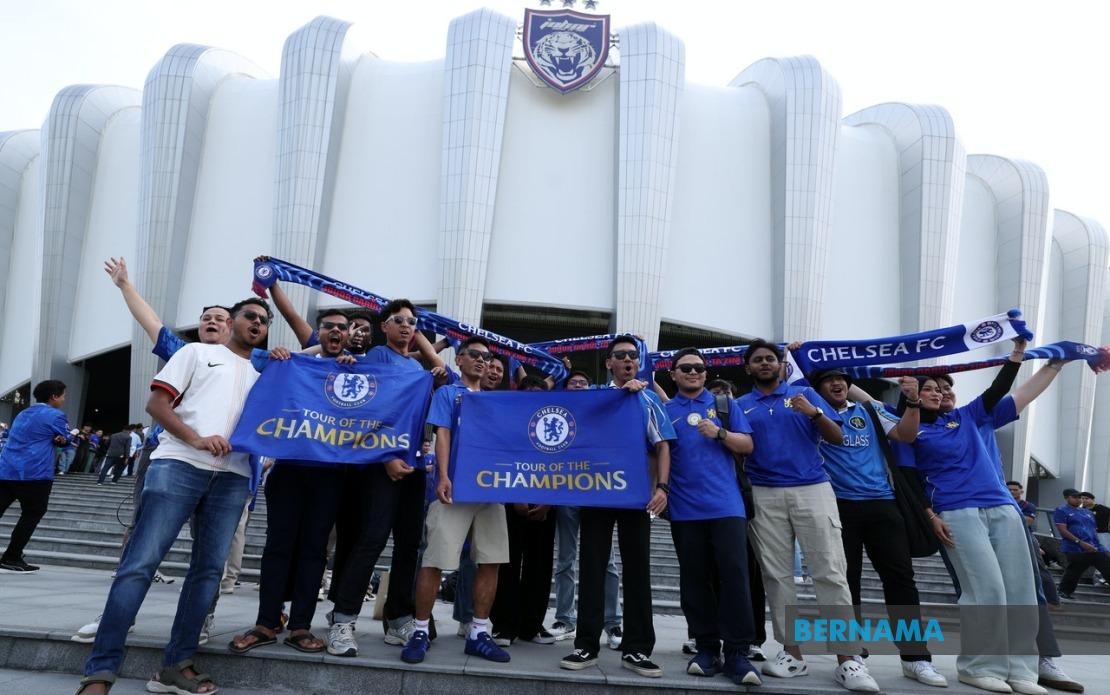
The Sultan Ibrahim Stadium in Iskandar Puteri transformed into a vibrant sea of crimson and azure on August 9 as supporters bearing allegiance to both Johor Darul Ta'zim and Chelsea FC streamed through the gates ahead of their highly anticipated friendly encounter. Beginning from mid-afternoon, the venue witnessed an extraordinary gathering of devotees across multiple age groups—from seasoned enthusiasts escorting their families to clusters of younger fans—all adorned in the colours of their chosen sides. The electric atmosphere that pervaded the stadium reflected not merely the occasion of two professional teams meeting on the pitch, but a broader moment of celebration for football in the region.
The precinct surrounding the stadium became a bustling commercial hub as official merchandise outlets struggled to manage the volume of eager purchasers. Queues snaked around stalls dealing in limited-edition apparel and memorabilia, with supporters keen to secure tangible reminders of what many viewed as a landmark occasion. The retail activity underscored the commercial magnetism that Chelsea, as an institution with a global fanbase, exerts wherever it travels, transforming match days into comprehensive experiences that extend well beyond the ninety minutes of play.
The magnetic pull of watching an English Premier League side perform on Malaysian soil drew spectators not only from across the peninsula but also from neighbouring Singapore. Many supporters seized upon the weekend fixture to make the journey, viewing the opportunity as rare and unlikely to recur in the near future. For Malaysian football enthusiasts accustomed to consuming international football through broadcasts or travels abroad, the prospect of witnessing world-class talent competing locally represented a significant shift in the accessibility of elite sport within the region.
By early evening, traffic authorities confronted the logistical complexities inherent in channeling substantial crowds through main arterial routes serving the stadium. The Royal Malaysia Police implemented coordinated management protocols to maintain orderly flow whilst ensuring safety, with congestion remaining within manageable parameters as the 8 pm kickoff approached. The scale of vehicular movement underscored the pull that such fixtures exercise on the public, transcending the traditional supporter base to attract casual enthusiasts and families.
Amid the throng stood Ahmad Danial Muhammad, a 28-year-old from Bangsar in Kuala Lumpur who has maintained allegiance to Chelsea since the Didier Drogba era defined the club's trajectory. For supporters of his vintage, the opportunity to observe Premier League personnel in the flesh without embarking on transatlantic travel carried profound significance. His willingness to acquire a ticket upon learning of the fixture's scheduling illustrated the pent-up demand among Malaysian Chelsea adherents for such occasions.
The demographic reach of the event extended across borders into Singapore, where Tan Wei Sheng, a 34-year-old enthusiast, coordinated an early departure at midday to circumvent anticipated congestion at the Johor Causeway. His assessment of the stadium's amenities as world-class reflected broader recognition that Malaysian sporting infrastructure has progressed considerably, enabling the nation to host events of international standing. The willingness of Singaporean residents to travel specifically for this fixture demonstrated that the event's appeal transcended national boundaries within the Southeast Asian context.
For JDT partisans, the significance of the occasion operated along different vectors. Mohd Khairul Anuar Ismail, a 41-year-old supporter from Bukit Piatu in Melaka, interpreted Chelsea's choice of the Southern Tigers' home ground as validation of the club's standing and the professional stature that Malaysian football has attained. He framed the encounter not merely as entertainment but as substantive recognition by an internationally prominent institution that the domestic game merits engagement at the highest levels. This perspective captures how such fixtures function symbolically for local football communities, affirming their position within global hierarchies of sport.
Safiyah Rosli, a 32-year-old JDT enthusiast from Batu Pahat, articulated a perspective that connected the Chelsea visit directly to leadership within Johor's football ecosystem. She attributed the success in securing such a high-profile fixture to the strategic vision and commitment of Tunku Mahkota Ismail, the Regent of Johor, highlighting how major football achievements become intertwined with political and administrative stewardship at the state level. This observation reflects the reality that in Malaysia's football landscape, institutional success frequently correlates with royal patronage and the personal investment of prominent figures.
The convergence of these varied perspectives—international Chelsea supporters seeking accessibility, regional fans crossing borders for a unique opportunity, and domestic audiences viewing the fixture through the lens of national football development—created a multifaceted event that transcended conventional categorisation. The stadium functioned simultaneously as entertainment venue, commercial marketplace, and symbolic stage upon which broader narratives about Malaysian football's evolution were being performed and interpreted by participants.
The friendly encounter represented a culmination of efforts to position Malaysian football within increasingly competitive regional and global contexts. That Chelsea selected Iskandar Puteri for this engagement, rather than more established hubs elsewhere, carried implications for Johor's infrastructure credentials and JDT's status as an institution capable of attracting marquee opponents. The attendance figures and the demographics of those converging upon the venue demonstrated that Malaysian football retains substantial grassroots enthusiasm, particularly when international prestige becomes accessible through domestic fixtures.
Beyond the immediate spectacle, the event illustrated how contemporary football functions as a vector for regional connectivity and cultural exchange. Supporters traversing the Johor Causeway, families of diverse backgrounds assembling within a single stadium, and online and broadcast audiences across Southeast Asia created networks of engagement that transcended traditional geographical limitations. The Sultan Ibrahim Stadium, on this particular evening, became not merely a sporting venue but a nexus through which Malaysian football asserted its growing integration into global football networks.

