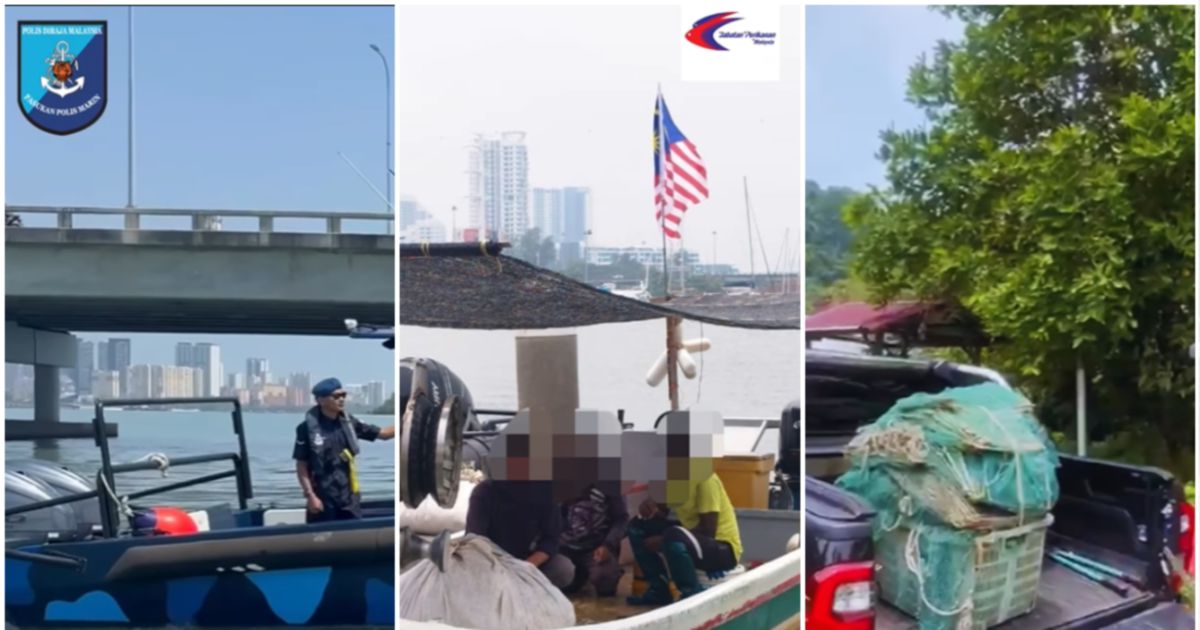
A joint enforcement operation targeting illegal fishing activities in Penang waters has resulted in three arrests and the seizure of RM75,360 worth of fishing equipment, signalling renewed commitment by authorities to combat unlicensed maritime operations in the region. The operation, conducted off George Town yesterday, underscores the escalating challenge posed by unauthorised fishing practices that continue to threaten Malaysia's marine resources and coastal communities.
The three detainees, apprehended during the coordinated sweep, remain in custody for investigation. Enforcement teams recovered substantial quantities of fishing gear alongside a vessel, all deemed to have been deployed in contravention of maritime regulations. The total estimated value of the confiscated items exceeds RM75,000, reflecting the scale of operations being conducted beyond regulatory oversight in waters that fall under Penang's jurisdiction.
Illegal fishing represents a persistent problem throughout Southeast Asia, with vessels operating without proper licensing or registration routinely moving across state and international boundaries. In Malaysian waters, authorities have intensified patrols and cooperative initiatives to dismantle networks engaged in such activities. Penang, strategically positioned along the Strait of Malacca, remains particularly vulnerable to these operations given its busy shipping lanes and proximity to established fishing grounds.
Enforcement agencies involved in the operation include maritime authorities tasked with protecting Malaysia's Exclusive Economic Zone and territorial waters. These joint operations typically combine resources from federal and state-level departments to maximise detection and interdiction capabilities. The coordinated approach reflects recognition among policymakers that tackling illegal maritime activities requires sustained inter-agency cooperation and substantial resource deployment.
The motivations driving individuals toward unauthorised fishing are multifaceted. Economic pressures, limited access to licensed fishing permits, and the significant profit margins associated with unregulated harvesting all contribute to the persistence of illegal operations. For many practitioners, the risk-reward calculation appears favourable despite potential penalties, suggesting that deterrent measures alone may prove insufficient without addressing underlying economic drivers.
Marine resource depletion resulting from overfishing poses consequences extending far beyond individual prosecutions. Uncontrolled harvesting depletes stocks, disrupts ecosystem balance, and undermines the viability of legitimate fishing enterprises that operate within regulatory frameworks. Coastal communities dependent on sustainable fisheries for livelihood face declining catches and heightened competition, creating downstream economic stress that reverberates through regional food systems and employment structures.
Malaysia's approach to maritime enforcement has evolved considerably, incorporating technological monitoring systems, intelligence networks, and bilateral cooperation mechanisms with neighbouring countries. However, the sheer expanse of Malaysian waters and the mobility of illegal operators present formidable enforcement challenges. Authorities must balance prevention activities with limited budgetary resources while maintaining presence across vast maritime zones.
The seized vessel and equipment will likely enter evidentiary proceedings related to charges the detainees face. Penalties for illegal fishing in Malaysian waters carry substantial fines and potential imprisonment, with sentencing severity depending on aggravating factors including vessel size, sophistication of equipment, and prior offence history. Previous cases have resulted in fines ranging from tens of thousands to hundreds of thousands of ringgit, though collection remains problematic for repeat offenders.
Penang's role as a focal point for enforcement activity reflects the state's position within Malaysia's maritime security architecture. The Strait of Malacca, passing through Penang waters, constitutes one of the world's most significant shipping lanes, necessitating coordinated security responses encompassing anti-piracy, smuggling interdiction, and illegal fishing suppression. Investment in coastal security infrastructure and personnel training has increased correspondingly, though observers note that resources remain stretched across competing priorities.
The broader context reveals tensions between conservation imperatives, livelihood concerns among fishing communities, and revenue generation through resource extraction. Policymakers struggle to articulate sustainable fisheries management approaches that satisfy environmental objectives whilst addressing socioeconomic dimensions affecting those dependent on maritime industries. Enforcement operations such as yesterday's raid represent one enforcement mechanism, though critics argue that addressing root causes would yield more durable solutions than reactive interdiction alone.
International dimensions further complicate the situation, as fishing vessels registered across multiple jurisdictions routinely operate in contested waters or areas subject to overlapping claims. Cooperation frameworks between Malaysia, Singapore, and Indonesia have expanded, though coordination gaps occasionally limit effectiveness. Transnational criminal networks engaged in illegal fishing increasingly employ sophisticated logistics and financial structures, necessitating investigation capabilities extending beyond traditional maritime patrol functions.

