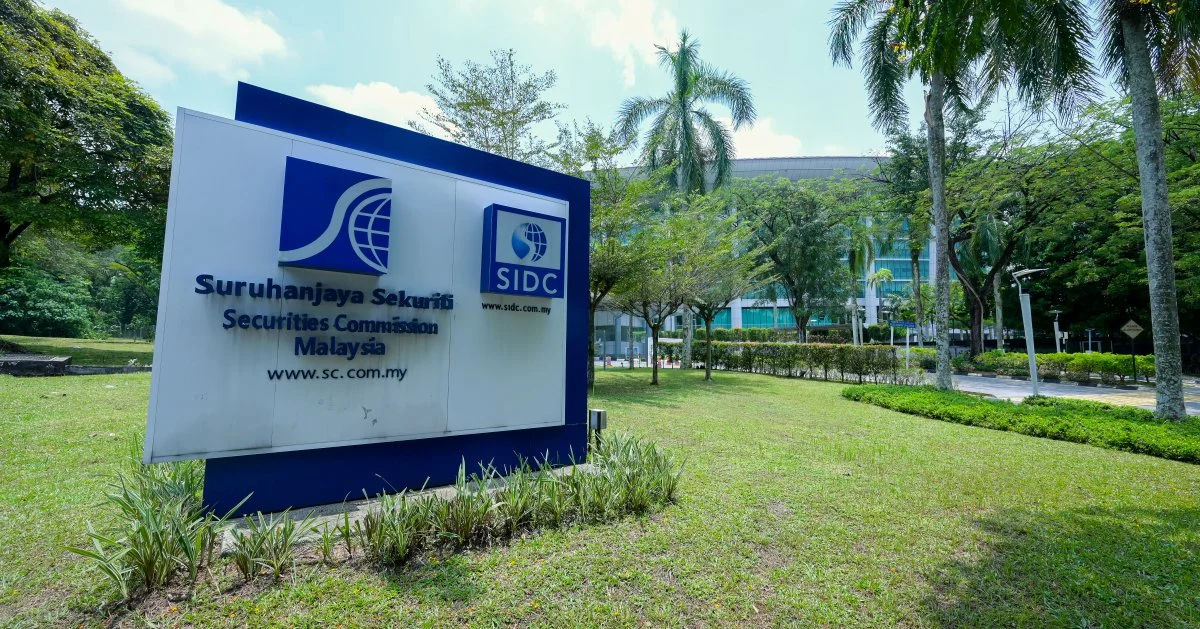
Three brothers have been charged in separate proceedings at Kuala Lumpur Sessions Courts for carrying out unauthorised capital market operations, marking another enforcement milestone for Malaysia's financial regulator, the Securities Commission (SC). The simultaneous prosecutions underscore intensifying regulatory scrutiny against individuals conducting securities and investment activities without proper licensing, a persistent challenge in Southeast Asia's financial surveillance landscape.
The Securities Commission's enforcement division has ramped up its monitoring and legal action against unlicensed market participants in recent years. These individuals typically operate through informal networks or online platforms, often targeting retail investors with promises of substantial returns on unregistered investment schemes. The three-pronged case against the brothers represents a coordinated enforcement approach, with each defendant handled through separate court proceedings to ensure clarity and appropriateness in handling distinct charges or jurisdictional matters.
Unlicensed capital market activities constitute a serious breach of Malaysia's securities framework, governed primarily by the Capital Markets and Services Act 2007 (CMSA). The law explicitly prohibits individuals from providing regulated investment services, dealing in securities, or offering fund management services without obtaining proper authorisation from the SC. Violations can result in substantial financial penalties and imprisonment, reflecting the gravity with which authorities treat unauthorised financial intermediation.
The enforcement action against the three brothers illustrates a broader regional problem affecting Malaysia and its Southeast Asian neighbours. Fraudulent investment schemes and unlicensed financial services have proliferated across the region, exploiting regulatory gaps and technological advancement that enable rapid capital movement across borders. Malaysia, as a financial hub with relatively sophisticated digital infrastructure, has become both a source and transit point for such activities, making robust enforcement essential for investor protection and market integrity.
Retail investors in Malaysia have increasingly fallen victim to schemes operated by unlicensed market participants. These operations typically promise unusually high returns, exploit social media and messaging applications for marketing, and employ sophisticated psychological tactics to overcome investor hesitation. Once funds are transferred, recovery becomes extraordinarily difficult, leaving victims with limited recourse and substantial financial losses that often exceed their ability to absorb.
The Securities Commission has significantly strengthened its enforcement capacity over the past several years, establishing dedicated units to investigate complex financial crimes and unlicensed market operations. The regulator works closely with law enforcement agencies, the Financial Intelligence and Enforcement Department (AMLAFET), and international counterparts through established networks to trace the flow of illicit funds and dismantle operational networks. This multi-agency approach has proven more effective than traditional regulatory oversight alone.
For Malaysian investors, these prosecutions carry important lessons about due diligence and verification. Before committing capital to any investment opportunity, individuals should confirm that financial service providers hold valid SC licensing by consulting the regulator's publicly accessible register of authorised entities. The presence of proper licensing provides a critical safeguard, though it does not eliminate investment risk entirely. Investors should remain sceptical of unusually high return promises and be cautious of pressure to make rapid investment decisions.
The cases against the three brothers also reflect evolving regulatory approaches to financial crime in Malaysia's developing market. Rather than focusing exclusively on high-profile schemes that attract media attention, authorities have increasingly pursued systematic investigations into operational networks that maintain longer periods of illicit activity. This patient, methodical enforcement strategy disrupts criminal ecosystems more effectively by removing key participants and dismantling the infrastructure that enables sustained operations.
International coordination has become integral to combating cross-border unlicensed market activities. Many schemes operating in Malaysia receive direction from foreign-based principals or operate as part of larger criminal networks spanning multiple Southeast Asian jurisdictions. The Securities Commission's participation in regional forums and bilateral cooperation agreements enables faster information sharing and coordinated enforcement action that traces complicity across borders and prevents geographical arbitrage.
The three separate Sessions Court proceedings allow prosecutors to present individualised evidence while building an integrated case against the broader operation. This structure also provides flexibility in sentencing, as courts can tailor penalties based on each defendant's specific role, the scale of their involvement, and their degree of culpability. Such differentiation encourages cooperation among defendants and witnesses, potentially yielding intelligence about broader networks and enabling future enforcement actions.
For market participants and the investment community more broadly, these prosecutions reaffirm official commitment to maintaining orderly securities markets and protecting legitimate investors from predatory competition by unlicensed operators. When unlicensed market participants operate with relative impunity, they undermine confidence in the entire financial system and distort the competitive environment for properly authorised service providers who have invested substantially in compliance infrastructure and professional standards.
The Securities Commission continues to encourage members of the public to report suspected unlicensed market activities through its official reporting channels and dedicated hotlines. Information from vigilant investors has proven invaluable in detecting and dismantling schemes before they accumulate substantial funds or victimise large numbers of individuals. Public cooperation, combined with regulatory capacity and law enforcement coordination, remains essential for maintaining the integrity of Malaysia's capital markets and protecting the savings and investment aspirations of ordinary Malaysians.

