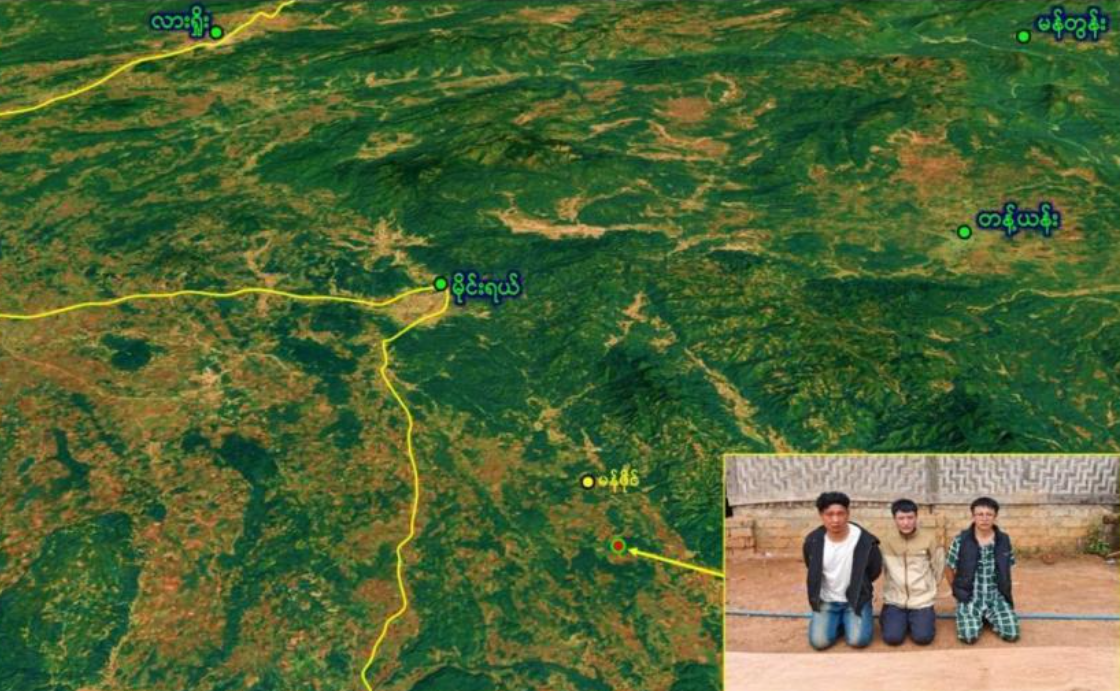
Myanmar's military has arrested three Chinese nationals accused of orchestrating an online scam gambling enterprise in Mongyai Township, part of an escalating campaign to dismantle illegal gaming networks that exploit victims across the region. The operation, conducted on August 26 in northern Shan State near the border area, represents the latest enforcement action in what authorities describe as a comprehensive national-level initiative targeting cross-border criminal syndicates.
The crackdown reflects growing regional concern about online scams and illegal gambling operations that have proliferated in border zones across Southeast Asia. Myanmar, like neighbouring Thailand, Laos, and Cambodia, has become a hub for organised scam operations targeting victims throughout Asia. These networks typically employ international labour forces—particularly from China and other countries—to staff remote call centres and processing facilities, making the problem inherently regional rather than isolated to any single nation.
According to local intelligence that triggered the operation, individuals involved in the scam gambling scheme had established temporary settlement structures in Mongyai Township to conduct their illicit activities. Community members provided crucial information to authorities, prompting security personnel to conduct detailed investigations and subsequent enforcement operations. This reliance on civilian tips underscores how visible these operations have become in affected areas, with residents increasingly aware of suspicious activity in their communities.
The three Chinese men had allegedly crossed into Myanmar illegally, highlighting the porous border security challenges that continue to plague the region. They were apprehended approximately 26 kilometres southeast of Mongyai town and roughly five kilometres south of Manphai Village, in a remote location strategically chosen to evade detection while remaining accessible for operational purposes. The geographic specificity of the arrest location suggests authorities had conducted surveillance prior to the enforcement action.
The physical infrastructure seized during the raid demonstrates the scale and sophistication of the operation. Military personnel dismantled one large corrugated iron-roofed structure measuring 50 by 20 feet with bamboo walls, along with five additional temporary tarpaulin shelters of varying dimensions. These makeshift facilities functioned as operational headquarters for the gambling network, providing workspace and accommodation for the criminal workforce. The construction methods—using readily available and easily dismantled materials—reflect how these organisations prioritise mobility and rapid relocation to avoid prolonged exposure.
Equipment confiscated during the operation reveals the technological infrastructure necessary to sustain large-scale online scamming. Authorities recovered 25 mobile phones, five all-in-one computers, two power stations, and notably, one Starlink satellite communication device. The inclusion of Starlink equipment is particularly significant, as it indicates how criminal networks are leveraging advanced satellite technology to maintain connectivity in remote border regions where traditional telecommunications infrastructure remains limited. This technological sophistication suggests well-resourced international criminal organisations rather than small-scale operators.
Additional equipment seized included ten communication radios and other unspecified devices integral to the operation. The communications apparatus indicates coordination between multiple operational units, likely extending beyond the single location where arrests occurred. Such networked operations typically involve backend processing centres, victim contact teams, money-laundering facilities, and management structures distributed across multiple locations, suggesting the arrested individuals may have been components of a larger criminal ecosystem.
Myanmar's intensified enforcement approach targets not only the operators of these schemes but also the physical infrastructure they construct. Authorities have announced that illegally erected residential and operational shelters would be systematically demolished and destroyed, a measure aimed at eliminating the operational footprint of such networks. This destruction policy represents a shift toward more aggressive environmental denial tactics, preventing criminal groups from establishing sustained presence in vulnerable border regions.
The arrested suspects face prosecution under Myanmar's existing legal frameworks governing illegal entry, telecommunications fraud, and gambling offences. The completion of interrogation and formal investigation procedures will determine the specific charges and severity of prosecution. Given the international dimensions of such cases, there may also be coordination with Chinese authorities, though details of any such cooperation remain undisclosed.
For Malaysia and other Southeast Asian nations, this enforcement action carries important implications. Online scam gambling networks operate across the region's borders with remarkable fluidity, targeting victims in Malaysia, Singapore, Indonesia, and beyond. The arrest demonstrates that neighbouring governments are implementing increasingly coordinated responses, though significant gaps remain in cross-border enforcement capabilities. Malaysian authorities have similarly intensified crackdowns on scam operations, particularly those using foreign labour and satellite technology to maintain clandestine operations.
The effectiveness of Myanmar's approach will depend on sustained enforcement rather than isolated incidents. Criminal networks typically reestablish operations in alternative locations if pressure at one site becomes excessive, suggesting that regional coordination and intelligence-sharing must improve substantially. Malaysia's ongoing efforts to combat online scams intersect directly with these transnational networks, making Myanmar's security operations relevant to domestic public safety objectives.
Authorities across Southeast Asia face the fundamental challenge that scamming operations generate enormous profit margins relative to operational costs, making them persistently attractive to organised crime syndicates despite law enforcement pressure. Until victim-targeting mechanisms are disrupted at source and proceeds are effectively traced and seized, networks will continue to regenerate. The Myanmar operation represents necessary enforcement work, yet the broader battle against online fraud requires simultaneous action against money-laundering channels, technology providers, and financial institutions that enable these schemes to flourish.

