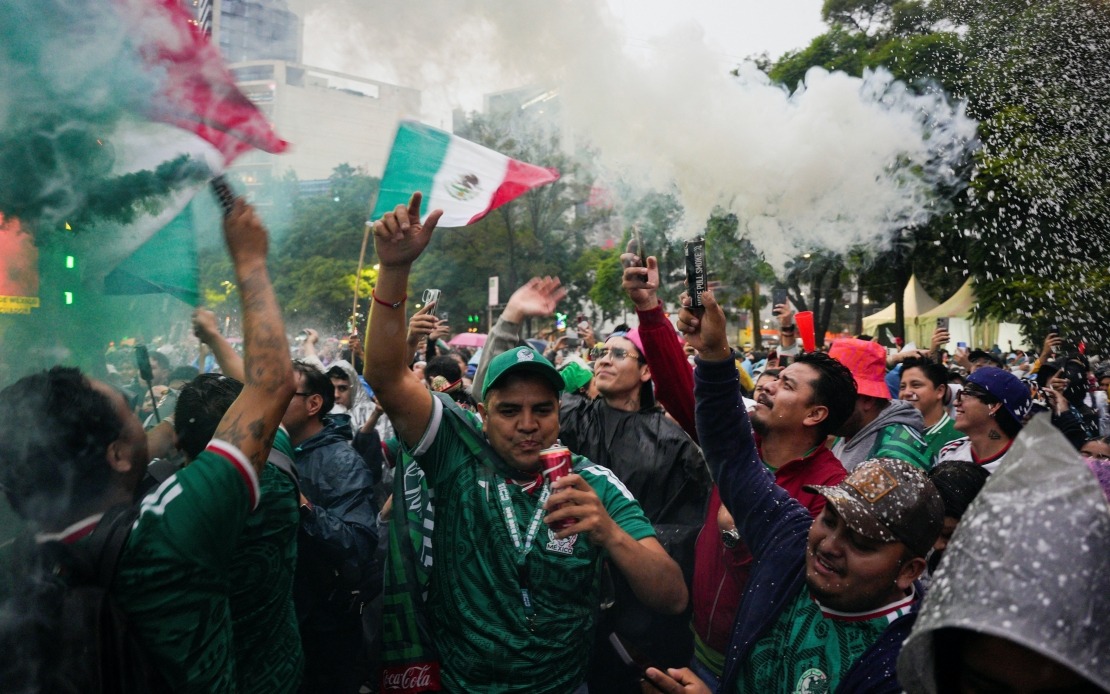
The festive atmosphere in Mexico City took a tragic turn on Tuesday night as three residents succumbed to asphyxiation during celebrations following Mexico's advancement in the FIFA World Cup. The deaths occurred near Paseo de la Reforma, the capital's central thoroughfare, as jubilant supporters gathered in the streets to mark their national team's 2-0 victory over Ecuador at the Estadio Azteca. Mexico City's health authorities have confirmed the identities of those who died: a 44-year-old man, a 19-year-old woman, and a 48-year-old woman, all of whom perished from asphyxiation in different locations along the crowded avenue.
Mexico's commanding performance against Ecuador secured their passage to the knockout stages of the tournament, maintaining hopes of a strong showing on the continental stage. The victory came with the tantalizing prospect of a round-of-16 matchup against England at the same venue should Thomas Tuchel's squad overcome DR Congo in their concurrent fixture on Wednesday. Such a pairing would have generated enormous interest given the historical rivalry between the two nations and the significance of the Estadio Azteca as one of world football's most intimidating atmospheres.
Clara Brugada, who holds the position of head of government in Mexico City, acknowledged the tragedy through her social media account, providing details of the official response. She confirmed that emergency teams deployed to Paseo de la Reforma immediately attended to reports of three individuals found unconscious at separate points along the street. Despite the rapid activation of all available medical response protocols and the swift intervention of trained personnel, medical staff were unable to revive any of the victims. The incident underscores the risks that can accompany large-scale public celebrations in confined urban spaces.
In her statement, Brugada extended condolences to the families of the deceased and emphasized that her administration was actively maintaining contact with relatives to provide comprehensive support and assistance during their time of grieving. The gesture reflected the gravity with which Mexico City's leadership regarded the incident and the commitment to addressing the immediate needs of those affected. The municipal government pledged to work closely with bereaved families to ensure they received all necessary resources and aid.
The deaths represent a sobering reminder of the potential dangers lurking within spontaneous mass gatherings, particularly when large crowds congregate in relatively confined areas without adequate crowd management infrastructure. Asphyxiation deaths during celebrations typically result from compression injuries when crowds surge or become dangerously overcrowded, limiting the ability of individuals to breathe freely. Such incidents have occurred at sporting events and public celebrations worldwide, highlighting an ongoing challenge for city authorities managing enthusiastic fan bases.
Brugada used the platform to make a broader appeal to the public, calling for supporters to exercise responsibility, care, and empathy when celebrating future victories or significant moments. Her message suggested that while the joy of national sporting achievement was understandable and valuable, it needed to be tempered with awareness of potential hazards and consideration for the physical safety of all participants. This appeal acknowledged the cultural importance of collective celebration while advocating for a more measured approach.
For Malaysian and Southeast Asian observers, the incident carries particular resonance given the region's own passionate football culture and the tendency for major sporting triumphs to generate spontaneous public celebrations. Countries across the region, including Malaysia, have experienced their own crowd management challenges during football-related festivities. The Mexico City tragedy provides a cautionary lesson about the importance of robust safety protocols, adequate police and emergency personnel presence, and effective crowd control measures when large numbers of enthusiastic supporters gather in public spaces.
The incident also intersects with broader questions about how municipal governments can balance the legitimate desire of citizens to celebrate national achievements with the imperative to protect public safety. Authorities in major cities across the world continue to grapple with this tension, seeking methods to accommodate spontaneous celebrations while preventing the kinds of dangerous crowd densities that can lead to fatalities. This requires investment in infrastructure, training of emergency personnel, and advance planning for predictable surge points in celebration.
Mexico's advancement in the World Cup represents a significant achievement for the nation's football programme, yet it has been overshadowed by this human tragedy. The three deaths serve as a stark counterpoint to the jubilation of sporting success, reminding observers that the euphoria of competition can sometimes mask underlying risks. Looking forward, Mexican authorities and football administrators will likely need to coordinate more carefully on safety measures for any future celebrations, particularly should the national team advance further in the tournament and trigger even larger gatherings in Mexico City's streets.

