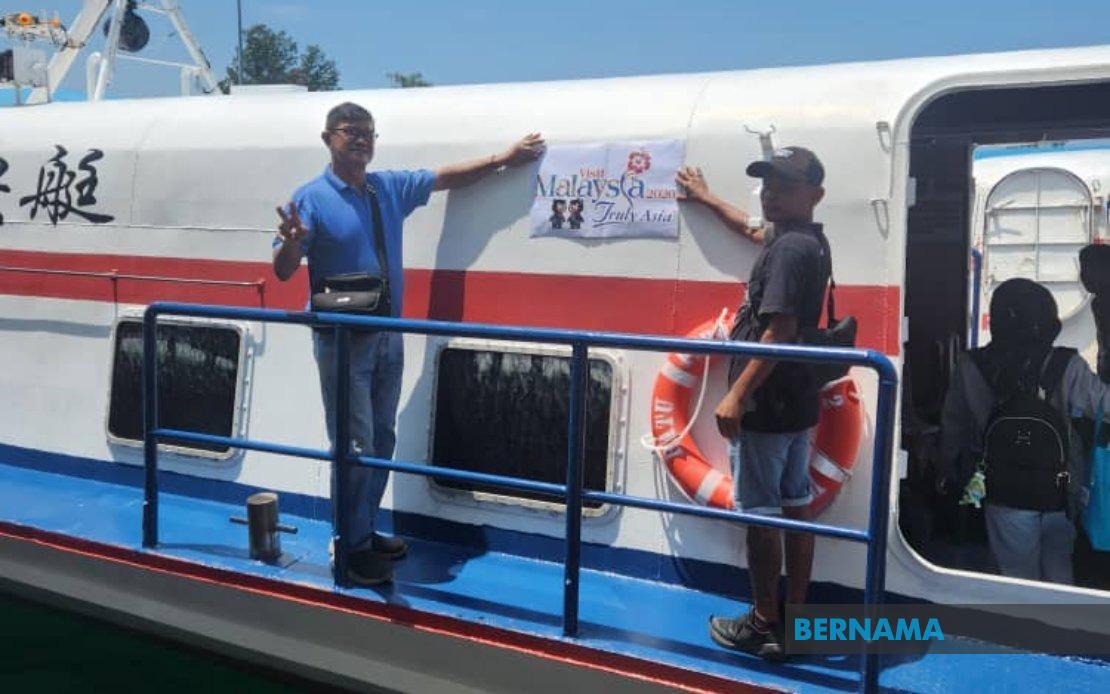
The suspension of the Labuan-Lawas ferry service marks a significant disruption to regional connectivity, with operations ceasing from July 14 to October 14 in what operator RPL Shipyard describes as a necessary restructuring measure. The halt represents the first interruption to a maritime link that has serviced the communities of Labuan and Lawas in Sarawak for more than three decades, leaving thousands of regular users scrambling for alternative transport arrangements.
RPL Shipyard Co, which manages the service under agreement with LDA Holdings Sdn Bhd—the authority responsible for Labuan International Ferry Terminal—cited a combination of operational challenges that have rendered the current business model unviable. The operator pointed to persistent difficulties in securing reliable diesel supplies, a critical issue for any marine transport enterprise where fuel represents a substantial portion of running expenses. Combined with escalating costs across maintenance, personnel, and vessel upkeep, the company found itself unable to balance the books using existing passenger fare structures.
The financial squeeze facing the operator reflects broader pressures affecting regional maritime transport throughout Southeast Asia. Operating costs have climbed steadily across wages, parts procurement, and regulatory compliance, while passenger revenues have remained constrained by fare caps and competitive pricing that operators must maintain to remain accessible to working-class commuters. For a service operating on what is essentially a subsistence economics model, even modest cost increases can tip operations into unsustainability, particularly when external shocks—such as fuel supply volatility—disrupt normal planning cycles.
The suspension carries significant implications for two distinct user populations that depend on the service. Students from Sarawak pursuing higher education at Universiti Malaysia Sabah and Labuan Matriculation College have historically relied on the affordable ferry connection to maintain ties with home while pursuing qualifications in Labuan's established education hub. The three-month gap forces these students into more expensive alternatives, whether flying to Kota Kinabalu or taking overland routes through Brunei, arrangements that significantly increase education-related expenditures for already cost-conscious families.
Equally important to the broader community are residents from Lawas and surrounding districts who depend on Labuan Hospital for medical treatment. The suspension disrupts healthcare access for populations living in more remote areas of Sarawak's interior, potentially forcing patients to postpone non-urgent procedures or arrange more complicated and costly alternatives. For emergency medical referrals, the absence of direct maritime transport complicates already challenging evacuation logistics from a region where infrastructure is limited and distances are considerable.
LDA Holdings Sdn Bhd acknowledged receipt of the formal suspension notification and signalled intent to engage constructively with the operator. Chief executive officer Noor Halim Zaini indicated plans to meet with RPL Shipyard to understand the underlying issues more thoroughly and explore pathways toward service restoration. This administrative response suggests recognition at the terminal management level that the suspension, while formally temporary, carries enough significance to warrant high-level attention and problem-solving engagement rather than passive acceptance.
The operator's framing of the closure as a restructuring opportunity, intended to stabilise finances and prepare for eventual resumed operations, indicates that both parties may view this as a strategic pause rather than an outright abandonment of the route. However, the structural issues cited—unresolved diesel supply problems and cost-revenue imbalances—are unlikely to self-correct during a three-month hiatus without external intervention or policy adjustment. The ferry operator would require either improved fuel supply reliability, reduced operating costs, higher passenger fares, or direct subsidy to achieve the financial stability necessary for long-term viability.
Government involvement may prove essential to resolving this impasse. Regional ferry services connecting remote communities often struggle with economics that cannot sustain purely commercial operation, yet serve essential connectivity functions for populations lacking viable alternatives. Malaysia's experience with regional transport connectivity challenges suggests that policymakers at both federal and state levels recognise the importance of maintaining such links, even when profitability proves elusive. Whether the Sarawak state government or federal transport authorities will intervene with subsidies, fuel supply arrangements, or fare restructuring remains to be determined as the suspension period unfolds.
The broader context includes Malaysia's ongoing efforts to strengthen East Malaysia's infrastructure and regional connectivity. Labuan, as a federal territory with designated special economic status, sits at the intersection of Sabah and Sarawak, and losing a three-decade-old transport connection signals deterioration rather than progress in achieving integrated regional development. The ferry service represented informal but crucial infrastructure linking these jurisdictions, particularly for populations in less-developed areas like Lawas who benefit from regular access to Labuan's medical and educational facilities.
The ripple effects extend beyond immediate users. Local businesses in both Labuan and Lawas that depend on regular passenger traffic and associated commercial activity will face disruption. The suspension may accelerate existing trends toward centralisation of commerce and services in larger urban nodes, further disadvantaging smaller communities already grappling with limited economic opportunities. For policymakers focused on reducing regional inequality and ensuring equitable development across Peninsular Malaysia, Sabah, and Sarawak, the ferry suspension underscores how quickly essential infrastructure can become vulnerable to commercial pressures and operational crises.
As the LDA Holdings management prepares to engage with RPL Shipyard, stakeholders will be watching closely to determine whether this suspension represents a temporary pause or signals the beginning of the end for a service that has become woven into the social fabric of eastern Malaysian connectivity. The next three months will prove critical in determining whether operators and authorities can identify sustainable solutions that balance commercial viability with the continued provision of affordable transport linking communities whose geographical position and limited alternatives make such connections genuinely essential rather than merely convenient.

