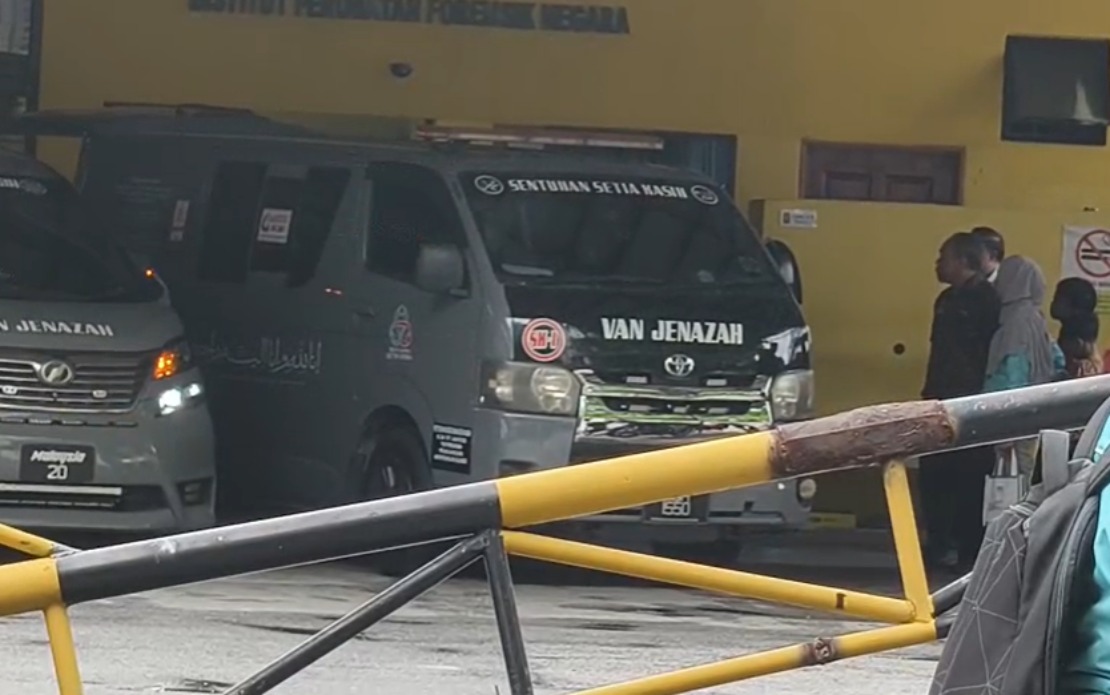
Three family members killed in a collision involving a Malaysian Immigration Department (JIM) lorry on Jalan Sultan Ismail in the early hours of Monday have been released by Kuala Lumpur Hospital's National Institute of Forensic Medicine following the completion of post-mortem procedures. The remains of Shaik Mohd Firdaus Shaikh Yahya, aged 53, along with his daughters Siti Nor Sazlin, 25, and Siti Darwisyah Auni, 12, were handed over to family members at approximately 5.45 pm, allowing relatives to proceed with funeral arrangements according to Islamic practices and family wishes.
The bodies were transported from the forensic institute in three separate hearses and will first be taken to Jamiul Ehsan Mosque on Jalan Pahang for the customary Islamic ritual bathing and shrouding. Following these preparations, funeral prayers will be conducted at the mosque before the bodies are transported to Kampung Air Hitam Labu Muslim Cemetery in Kampar, Perak, for final burial. The family's decision to arrange the funeral in Perak suggests connections or ancestral ties to the state, a common practice among Malaysian Muslim families who wish to bury their deceased in their place of origin or family burial grounds.
The tragic incident occurred at approximately 1 am when the empty JIM lorry, operating as a Black Maria police transport vehicle, collided with a Proton Saga sedan at the Maju Junction intersection. According to reports, the lorry was en route to Chow Kit for an enforcement operation targeting undocumented migrants and was operating with its emergency beacon and siren activated. The collision resulted in three deaths and one serious injury, with the impact also affecting four pedestrians and an Inokom Matrix multi-purpose vehicle, indicating the force and chaotic nature of the accident.
Initial investigations suggest that the JIM lorry allegedly breached traffic regulations by crossing the Maju Junction intersection against a red light signal, colliding with the Proton Saga that was proceeding through the same intersection with a green light. The collision's force was sufficient to cause the lorry to lose control and skid across the intersection, subsequently striking the four pedestrians and the multi-purpose vehicle. The sequence of events underscores the dangers posed when emergency vehicles, operating under time pressure during enforcement operations, fail to exercise appropriate caution at busy intersections.
The incident raises significant concerns about road safety protocols for government vehicles conducting operations, particularly those engaged in immigration enforcement and law enforcement activities. Emergency vehicles operating with sirens and beacon lights activated are granted certain traffic exemptions to enable swift response and operational effectiveness, yet they remain obligated to exercise due care and caution, especially at major intersections. The allegation that the lorry ran a red light suggests a potential failure in adhering to these safety obligations, with fatal consequences.
Police have classified the investigation under Section 41(1) of the Road Transport Act 1987, which addresses causing death through rash or negligent driving. This legal framework enables authorities to determine whether the incident resulted from driver error, vehicle malfunction, or other contributing factors. The classification indicates that investigators are treating this as a potential criminal matter rather than a simple accident, reflecting the serious nature of the incident and the need to establish accountability.
The tragedy highlights the broader challenges facing Malaysia's traffic safety landscape, particularly concerning high-risk intersections in urban areas where multiple vehicle types converge. Jalan Sultan Ismail is a major arterial road in Kuala Lumpur's commercial district, and Maju Junction is a busy intersection handling significant traffic volumes during both day and night hours. The incident occurred in the early morning period when traffic volumes are typically lower, yet the collision still resulted in multiple casualties, demonstrating how severe accidents can occur even during off-peak hours.
For the Malaysian Immigration Department, this incident represents a significant operational and reputational challenge. Beyond the immediate tragedy of three lives lost, there are questions regarding vehicle maintenance, driver training, operational protocols, and risk management for enforcement activities. Government agencies conducting enforcement operations must balance the need for swift action with obligations to maintain public safety and comply with traffic regulations. This incident will likely prompt a comprehensive review of JIM's operational procedures and potentially lead to enhanced training requirements for drivers of emergency vehicles.
The loss of life in this manner carries profound implications for public trust in government operations and the management of emergency services. Families depend on the assumption that government personnel operating official vehicles do so responsibly and with regard for public safety. When these expectations are violated, the consequences extend beyond the immediate victims to broader social perceptions of accountability and governance standards. The outcome of the formal investigation will be closely monitored by transport safety advocates and the public alike.
The incident also reflects international trends regarding road traffic fatalities involving emergency vehicles, a concern shared across Southeast Asia and globally. Many countries have implemented enhanced protocols, including mandatory training programs, driver monitoring systems, and operational guidelines specifically designed to reduce accidents involving emergency services. As Malaysia continues to modernize its transport safety frameworks, lessons from this tragedy may inform future policy development and enforcement agency procedures.
The bereaved family now faces the difficult period of grieving the loss of three members in a single tragic event. The fact that a father and two young daughters were killed together compounds the emotional and practical impact on the extended family network. In Malaysian society, such losses often precipitate significant changes in family structures and responsibilities, particularly regarding the welfare of any surviving dependents and inheritance matters that must be addressed according to Islamic law and family customs.
Moving forward, this incident serves as a sobering reminder of the importance of stringent safety protocols for all vehicles, particularly those engaged in official government operations. The investigation's findings may lead to policy reforms affecting how enforcement agencies conduct time-sensitive operations and manage the balance between operational urgency and public safety compliance. Ultimately, the lives lost in this collision deserve to be remembered as catalysts for improved safety measures that might prevent similar tragedies in the future.

