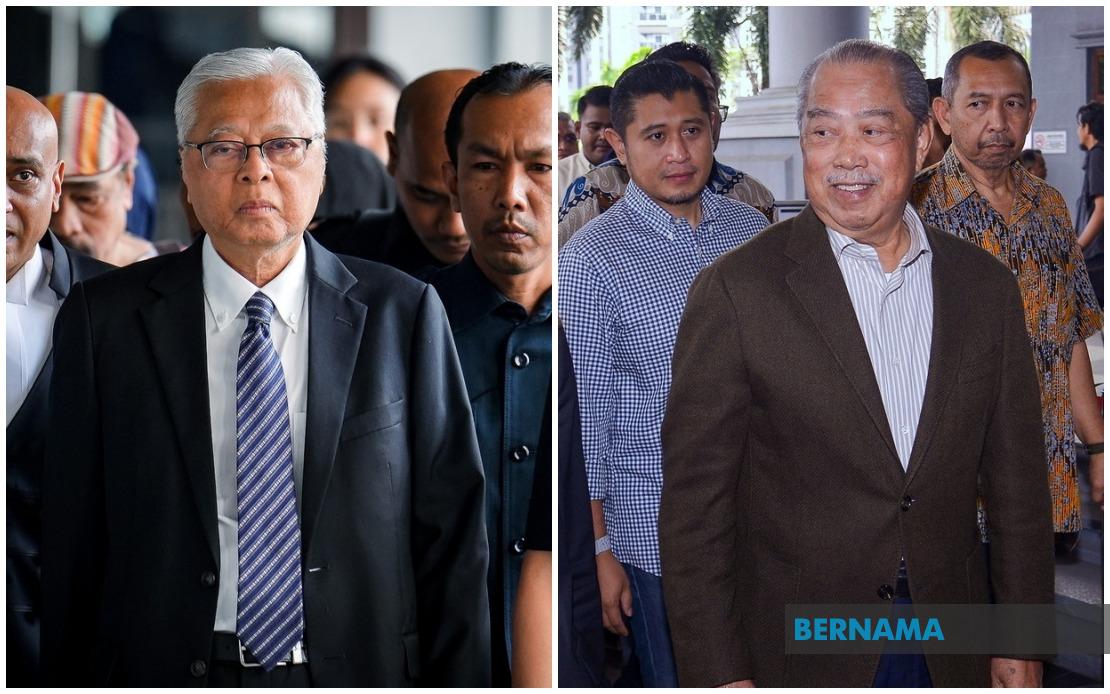
The Kuala Lumpur Court Complex witnessed an extraordinary convergence on Wednesday when three former prime ministers attended separate legal proceedings on the same day, creating what veteran journalists described as a historic moment unlikely to repeat in Malaysian public life. Datuk Seri Najib Tun Razak, Tan Sri Muhyiddin Yassin, and Datuk Seri Ismail Sabri Yaakob each arrived at the complex to face distinct legal challenges, drawing unprecedented media attention and presenting security organisers with an unusual logistical challenge.
V. Anbalagan, a seasoned court correspondent with Free Malaysia Today who has covered Malaysian judicial proceedings for years, characterised the event as singular in his professional experience. He emphasised the historical significance of witnessing three former heads of government standing before the courts simultaneously, describing it as a watershed moment for Malaysian journalism. Anbalagan suggested that such an alignment of circumstances involving multiple former premiers would likely prove extraordinarily difficult to replicate, noting that the convergence transcended Malaysian boundaries in terms of rarity and news value.
Siti Zanariah Nor Zin, a news officer with Bernama Television, reflected on her 16 years in journalism to underscore how exceptional the situation had become. She credited the carefully managed arrival schedule of the former leaders and their legal representatives for enabling media organisations to coordinate their coverage effectively. The staggered movements allowed newsrooms to dispatch regular updates to their headquarters while maintaining continuity across the day's developments. Critically, the orderly management of the court grounds extended press freedom to track the proceedings without disruption or operational strain.
Amirul Aiman Osman of Utusan Malaysia highlighted the initial apprehension that simultaneous coverage of three separate proceedings might overwhelm journalistic resources and create chaotic scenes outside the complex. Despite acknowledging the hectic atmosphere and crowded conditions, he noted that robust security measures prevented any incidents from occurring. His presence since seven in the morning underscored the intensity with which news organisations had prepared for what they anticipated would be a significant day in Malaysian political journalism.
The court grounds began filling before dawn as television crews, photographers, and reporters from multiple outlets assembled to document the separate hearings and capture reactions from the three former leaders. The early mobilisation reflected media recognition that the simultaneous appearance would dominate the news cycle and represented a juncture in Malaysian politics worth comprehensive coverage. Security personnel from the Sentul district police headquarters and the Palace of Justice collaborated to ensure that the convergence proceeded without incident.
Court officials disclosed that meticulous preparations had commenced the previous afternoon to facilitate smooth movement of the three former prime ministers and their entourages throughout the complex. The coordinated approach involved issuing security passes across multiple categories tailored to different groups, distinguishing between the general public, accredited journalists accessing open proceedings, and media personnel utilising video-link facilities. This graduated access system enabled press freedom while maintaining order and protecting the integrity of the legal proceedings.
Nik Zainab Jusoh, a security officer overseeing operations at the complex, confirmed that a comprehensive briefing held the previous day had prepared all personnel for the significant turnout. Enhanced monitoring concentrated on upper floors where courtrooms stood, particularly at entrances where the presence of cameras and reporters necessitated careful management. Ground-floor operations remained stable and controlled, suggesting that security planning had effectively distributed personnel and resources according to anticipated pressure points.
Najib attended proceedings in a civil suit valued at USD5.64 billion, initiated by 1Malaysia Development Berhad and its subsidiary against him and other defendants, heard before Judicial Commissioner Mohamad Redzuan Idrus. Muhyiddin faced seven charges related to alleged abuse of authority and money laundering involving the Jana Wibawa programme, with proceedings conducted before Judge Noor Ruwena Md Nurdin. Ismail Sabri appeared before Judge Suzana Hussin on charges of failing to declare assets totalling RM14.7 million in cash, holdings in multiple foreign currencies, and gold bars; he subsequently secured release on RM300,000 bail with one surety at 11.43 am.
The convergence reflected the complex political trajectory Malaysia has experienced following the dramatic governmental transitions of recent years. Each former premier now navigates distinct legal vulnerabilities, illustrating how institutional accountability mechanisms have operated across successive administrations. The simultaneous appearance amplified public consciousness regarding the judiciary's engagement with former heads of state, underscoring Malaysia's commitment to legal processes that do not exempt political leaders from scrutiny regardless of their prior office.
From a journalistic standpoint, the day represented validation of Malaysia's free press operating within democratic frameworks where political figures remain subject to public accountability. The ability of media organisations to document proceedings involving former prime ministers without restriction, whilst maintaining order and enabling legal processes to advance, demonstrated institutional maturity. For Southeast Asian observers, the Malaysian case illustrated how courts and media can navigate politically sensitive moments through professional protocols and structured access.
The event also carried implications for Malaysian public discourse regarding governance standards and institutional independence. By permitting simultaneous proceedings against multiple former leaders, the judiciary demonstrated consistency in its application of legal principles. Media coverage amplified this message, reinforcing expectations that political office confers no permanent immunity from legal examination. For Malaysian citizens and regional observers, the morning underscored that leadership transitions do not conclude accountability but rather extend it through formal mechanisms.
Looking forward, the convergence established a benchmark unlikely to be surpassed given the demographic and political factors involved. The coordination required between security, court administration, and media organisations provided a template for managing similarly extraordinary circumstances. As Malaysia continues navigating its political evolution, the institutional capacity demonstrated on Wednesday suggested readiness to maintain judicial integrity and press freedom despite unprecedented pressures and competing demands.

