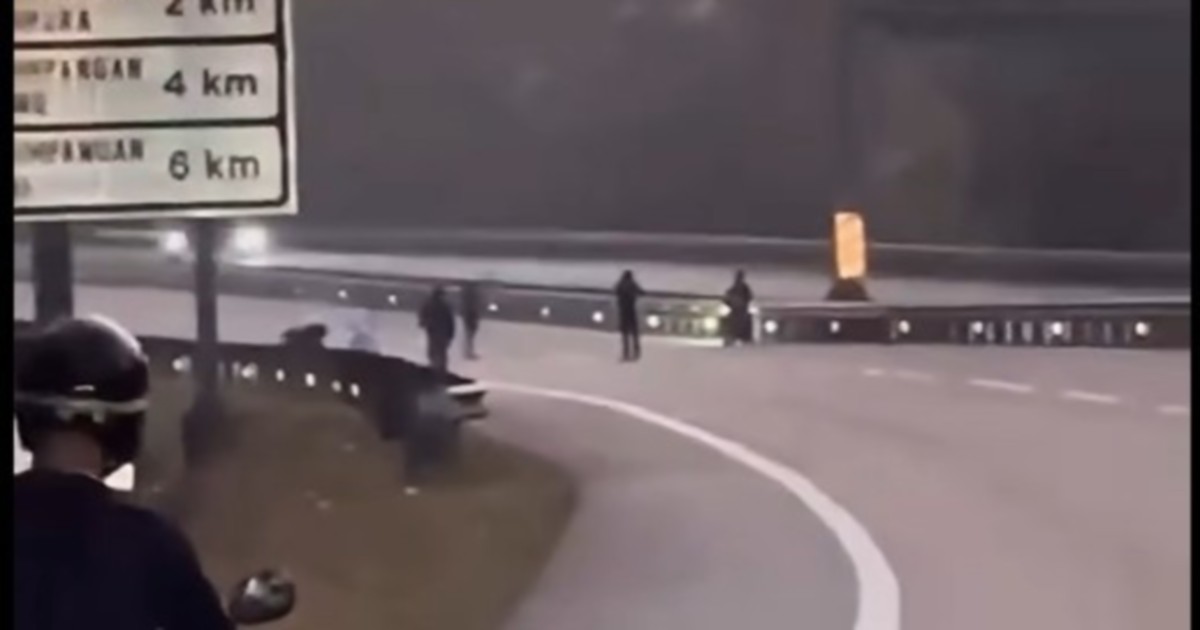
Police in Kulai have taken three additional men into custody as part of an ongoing investigation into an illegal motorcycle racing event that occurred on the Second Link expressway in Johor, expanding the scale of the enforcement operation to 11 arrests overall. The remands underscore intensifying efforts by authorities to crack down on street racing activities that place public safety at serious risk along one of Malaysia's major transportation corridors.
The Second Link, which connects Johor Bahru to Singapore and forms a vital commercial and transport artery in Southeast Asia, has increasingly become a flashpoint for illegal racing activities. Such incidents not only disrupt traffic flow on this critical highway but create genuine hazards for ordinary commuters and commercial vehicles. The involvement of multiple participants and the scale of arrests suggest this was a coordinated event rather than isolated speeding, indicating an organised underground racing culture operating within the region.
Illegal street racing represents a persistent challenge across Malaysia's major highways and urban centres, particularly in high-density commercial corridors like the Second Link. These activities often involve modified motorcycles capable of extreme speeds, with participants racing without regard for traffic laws or public safety. The phenomenon has grown increasingly sophisticated, with participants using communication networks to organise events and coordinate lookouts for enforcement activities.
The escalating arrest toll signals that investigators are methodically identifying all individuals involved in the incident, likely through witness statements, traffic camera footage, and digital evidence tracing communications between participants. The pace of remands suggests a coordinated investigation involving multiple police departments and potentially specialist traffic enforcement units, indicating the seriousness with which authorities are treating this breach of highway safety regulations.
Johor's road safety challenges have been under particular scrutiny in recent years, with both state and federal authorities implementing various initiatives to reduce accidents and dangerous driving behaviour. The Second Link remains a priority zone due to its high traffic volume and strategic importance to the regional economy. Illegal racing events not only endanger the participants themselves but pose severe risks to innocent motorists and freight operators who transit the highway for legitimate purposes.
The investigation's progression also reflects broader enforcement priorities addressing motorcycle-related offences, which constitute a significant portion of traffic fatalities and serious injuries on Malaysian highways. Enforcement bodies have faced mounting pressure to tackle organised racing groups, which often operate with apparent impunity by exploiting windows when traffic monitoring is light or shifting locations to evade predictable police patrols.
For Malaysian commuters and businesses relying on the Second Link for regular transit, such incidents raise concerns about unpredictable disruptions and the fundamental reliability of this crucial transport link. The highway facilitates billions of ringgit in cross-border trade with Singapore annually, making its safety and consistent operation economically significant beyond the immediate safety considerations.
The involvement of multiple detainees also raises questions about the organisational structure behind these events and whether organised racing syndicates are operating across state lines in Malaysia. Intelligence gathering during such investigations can reveal networks that facilitate other illegal activities or pose broader public order concerns. Law enforcement agencies across the peninsula increasingly cooperate on cases involving interstate criminal networks, and findings from this investigation may support wider enforcement initiatives.
Authorities have not yet disclosed specific charges or the legal framework under which these men are being remanded, though penalties for illegal racing in Malaysia can include substantial fines and imprisonment depending on the severity and whether injuries or property damage resulted. The progression from initial arrests through remand and potential charging represents a critical phase where evidence quality and witness credibility will determine prosecution viability.
The continued expansion of the arrest count also demonstrates that police investigations into high-profile traffic incidents have evolved beyond initial response work to encompass comprehensive follow-up investigations. Digital forensics, traffic reconstruction analysis, and coordinated multi-agency cooperation have become standard practice for major highway incidents in Malaysia's more developed enforcement jurisdictions.
Moving forward, this investigation may prompt renewed dialogue between Johor authorities, transport regulators, and private sector stakeholders regarding Second Link safety protocols. The event underscores persistent tensions between enforcement resource availability and the sophisticated methods employed by street racing communities to identify and exploit gaps in highway monitoring systems.
For regional observers watching Malaysian traffic enforcement developments, this case illustrates the ongoing challenge of balancing highway safety imperatives with the practical difficulties of preventing organised illegal activities across lengthy transport corridors. As arrests continue and the investigation matures, the eventual prosecutions will likely influence enforcement strategy and deterrent messaging aimed at similar racing communities operating elsewhere across Malaysia.

