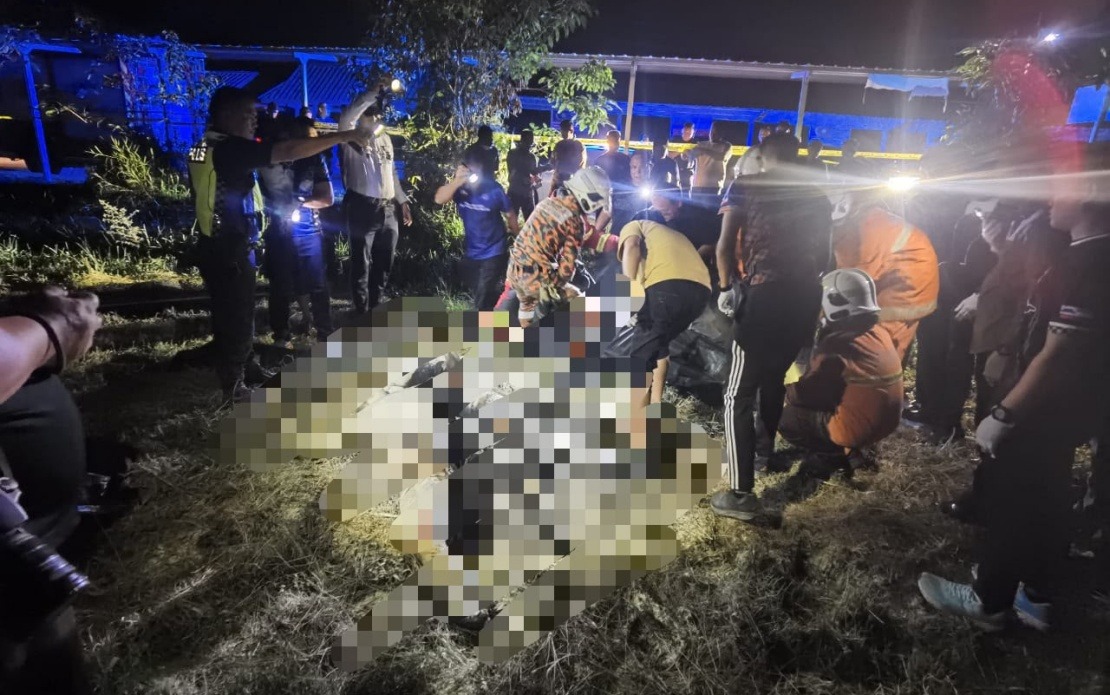
A tragedy unfolded in Beaufort, Sabah on August 6 when three police officers were killed in what authorities are treating as a suspected electrocution. The incident occurred along Jalan Weston in Kampung Weston, drawing immediate emergency response and prompting a flurry of social media activity as bystanders documented the scene.
The Sabah Fire and Rescue Department received notification of the emergency at 5.56 pm, triggering a coordinated rescue operation. The Beaufort Fire and Rescue Station dispatched a Fire Rescue Tender crewed by seven personnel to the location, which lay approximately 28 kilometres from their base. The rapid deployment underscored the urgency of the situation, though by the time emergency responders arrived at Jalan Weston, the victims had already succumbed to injuries consistent with electrical contact.
Visual evidence of the incident circulated swiftly across social media platforms, with multiple videos capturing three individuals lying on the roadway surrounded by concerned onlookers and emergency personnel. The rapid digital dissemination reflects how crisis incidents in Malaysia now play out simultaneously in both physical and virtual spaces, often complicating official communication timelines and creating parallel public narratives before authorities can establish confirmed facts.
The response operation was led by Operations Commander PBK I Irwan Abdul, who coordinated efforts between the fire and rescue team, the Royal Malaysia Police, and representatives from Sabah Electricity. This inter-agency collaboration highlights the complexity of electrical incidents, which require not only immediate medical intervention and scene management but also technical expertise to secure the electrical hazard and prevent secondary casualties among responders.
At the time of reporting, the identities of the three deceased officers remained undisclosed pending notification of next of kin and formal identification procedures. Such operational security is standard practice in law enforcement fatalities, though it leaves the public with limited personal detail about those who died in service. The families would typically be the first to learn of their loss through official police channels rather than through news media.
The precise circumstances surrounding the electrocution likewise remained under active investigation, with authorities declining to speculate on preliminary findings. Whether the victims came into contact with live electrical infrastructure, faulty equipment, or environmental factors such as wet conditions that increased conductivity would require forensic analysis and site assessment by specialists from Sabah Electricity. These technical details are crucial not only for understanding how the tragedy occurred but for implementing preventative measures to protect other personnel and the public.
Electrocution incidents involving emergency services personnel often raise questions about occupational safety protocols and equipment standards. In a region like Sabah where infrastructure development is ongoing and tropical weather conditions create unique hazards, ensuring that police and rescue workers operate under robust safety guidelines becomes imperative. The incident may prompt broader reviews of training, protective equipment, and site assessment procedures within law enforcement and emergency services.
For Malaysian readers, this incident resonates particularly given the visibility and respect commanded by frontline emergency personnel. Police officers and firefighters operate in environments with inherent risks, and electrocution represents a hazard that extends beyond their traditional conflict or disaster scenarios. The public nature of their work and the tragic outcome elevate this beyond a routine workplace accident to a significant loss affecting multiple families and the broader police service.
Regionally, this incident contributes to ongoing dialogue about infrastructure safety and emergency response capacity across Southeast Asia. Sabah, as a state with significant development activity, infrastructure expansion, and geographic challenges, faces particular demands in maintaining safety standards. How authorities investigate and respond to such incidents often serves as a benchmark for workplace safety culture and institutional accountability across the region.
The investigation into the Beaufort incident will likely extend beyond immediate cause determination. Authorities may examine whether the site presented identifiable electrical hazards, whether warning systems or barriers were in place, and whether the officers' presence at that location was part of a routine or emergency operation. Such comprehensive review processes, though they cannot restore the lives lost, contribute to institutional learning and may prevent similar tragedies.
As details emerge from ongoing investigations, particular attention will focus on whether systemic improvements can be implemented to better protect personnel working near electrical infrastructure. The tragedy underscores that in modern urban and developing environments, electrical hazards present occupational risks that extend well beyond obvious industrial settings. For emergency services and law enforcement across Malaysia and the broader region, this incident serves as a sobering reminder of the diverse dangers inherent in service roles.

