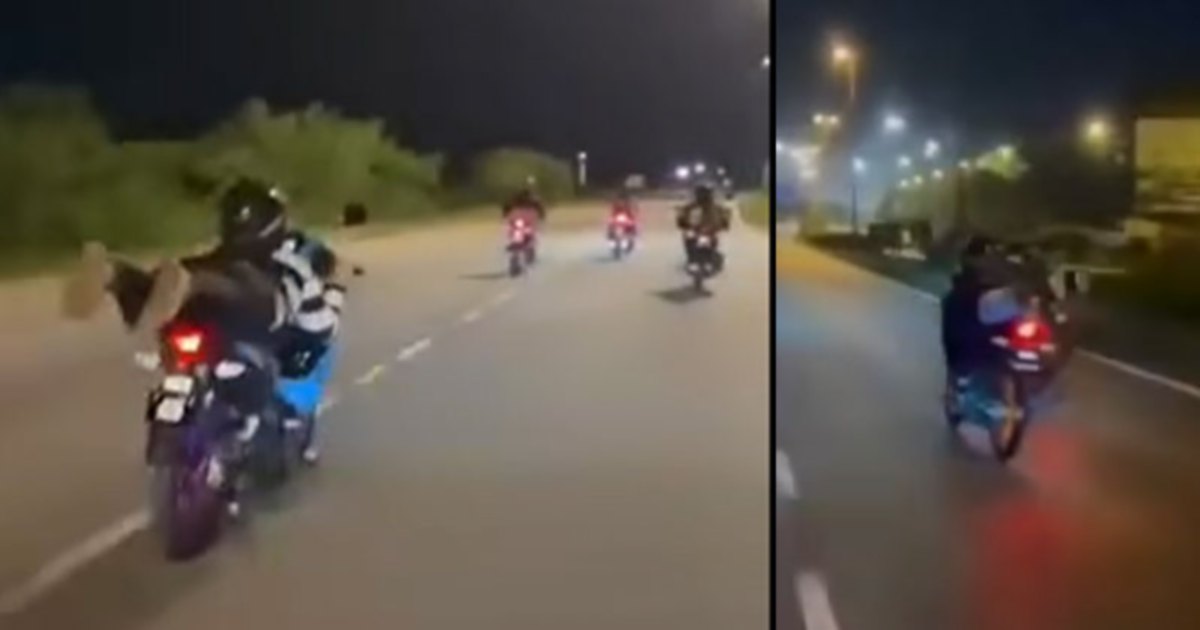
Three teenage girls have been taken into custody in Kuantan following their involvement in a series of dangerous motorcycle stunts that captured attention on social media. The girls, all minors, were arrested in connection with 'Superman' riding performances carried out on Jalan Kuantan Bypass-Gebeng road during the previous week. The stunts, which involve riders standing on motorcycles while in motion, generated substantial online engagement and prompted intervention from local authorities.
The arrest reflects growing concern among law enforcement agencies across Malaysia regarding the proliferation of reckless driving behaviours being documented and shared on social media platforms. What begins as an attempt to gain online attention and accumulate views frequently ends in serious injury, death, or legal consequences for those involved. This particular incident underscores how young people, seeking validation through viral content, increasingly engage in life-threatening activities without fully considering the ramifications.
The 'Superman' stunt, which involves the rider extending their body horizontally above a moving motorcycle, ranks among the most hazardous forms of motorcycle manipulation. Executing such manoeuvres demands absolute precision and leaves virtually no margin for error. Even minor miscalculations in speed, road surface conditions, or balance can result in catastrophic crashes. The fact that these stunts were performed on a public bypass road compounded the danger, as the riders risked not only their own safety but that of other road users who had no awareness of the impending hazard.
Public roads, particularly bypass routes that facilitate high-speed traffic flow, constitute particularly unsuitable venues for such activities. Jalan Kuantan Bypass-Gebeng serves as a critical thoroughfare for regional traffic, carrying daily volumes of vehicles ranging from motorcycles to heavy commercial lorries. Introducing unpredictable human elements into such environments jeopardises the safety of innocent motorists going about legitimate travel. The enforcement action taken by authorities therefore serves not merely to punish the offenders but to protect the broader motoring public.
The viral nature of these videos raises questions about social media platforms' role in incentivising dangerous behaviour among young people. When stunts accumulate thousands of views, comments, and shares, the reward mechanism becomes psychologically powerful for teenagers seeking peer recognition and social status. The algorithm-driven promotion of sensational and shocking content inadvertently creates a competitive environment where increasingly extreme acts become necessary to maintain relevance and audience engagement. This dynamic has become particularly pronounced among Generation Z users who have grown up with social media as their primary means of social interaction and self-expression.
In Malaysia, motorcycle-related incidents constitute a significant portion of road fatalities and serious injuries annually. Young riders, particularly those under the age of twenty-five, are disproportionately represented in accident statistics. The combination of inexperience, risk-taking behaviour, and under-developed risk assessment capabilities creates a particularly vulnerable demographic. When these inherent vulnerabilities intersect with the social pressures generated by social media culture, the consequences can prove tragic. Authorities have increasingly recognised that educational initiatives, enforcement action, and platform accountability all form necessary components of a comprehensive approach to road safety.
The case demonstrates the ongoing challenge faced by law enforcement in addressing novel forms of dangerous behaviour that emerge as social media trends. Traditional traffic regulations exist to manage conventional driving scenarios, yet stunt riding represents a qualitatively different category of risk. Enforcement officers must balance proportionate punishment with the educational objective of deterring future incidents, particularly when minors are involved. The custody of three teenage girls has doubtless attracted family attention and potentially generated consequences within their immediate communities, which may contribute to broader awareness of the serious legal and physical dangers involved.
Parental supervision and digital literacy education emerge as critical preventative measures in addressing this phenomenon. Many teenagers lack the cognitive maturity to fully appreciate the distinction between virtual reward accumulation and genuine personal achievement or safety. Conversations within families about online behaviour, peer pressure, and risk assessment can help young people develop more discerning perspectives regarding content creation. Schools and community organisations increasingly recognise their roles in providing frameworks through which young people can understand the psychological mechanisms underlying social media engagement and the importance of distinguishing between momentary online validation and long-term wellbeing.
The broader implications of this incident extend beyond the three individuals involved or even the specific motorcycle community. The incident reflects systemic challenges in contemporary society where digital connectivity has created new pathways through which human behaviour becomes visible, shareable, and instantly amplifiable. Young people navigating these environments require guidance, boundaries, and understanding rather than punishment alone. Nevertheless, enforcement action remains necessary to establish clear boundaries regarding acceptable conduct on public roads, particularly when activities endanger others who have not consented to the risks involved.

