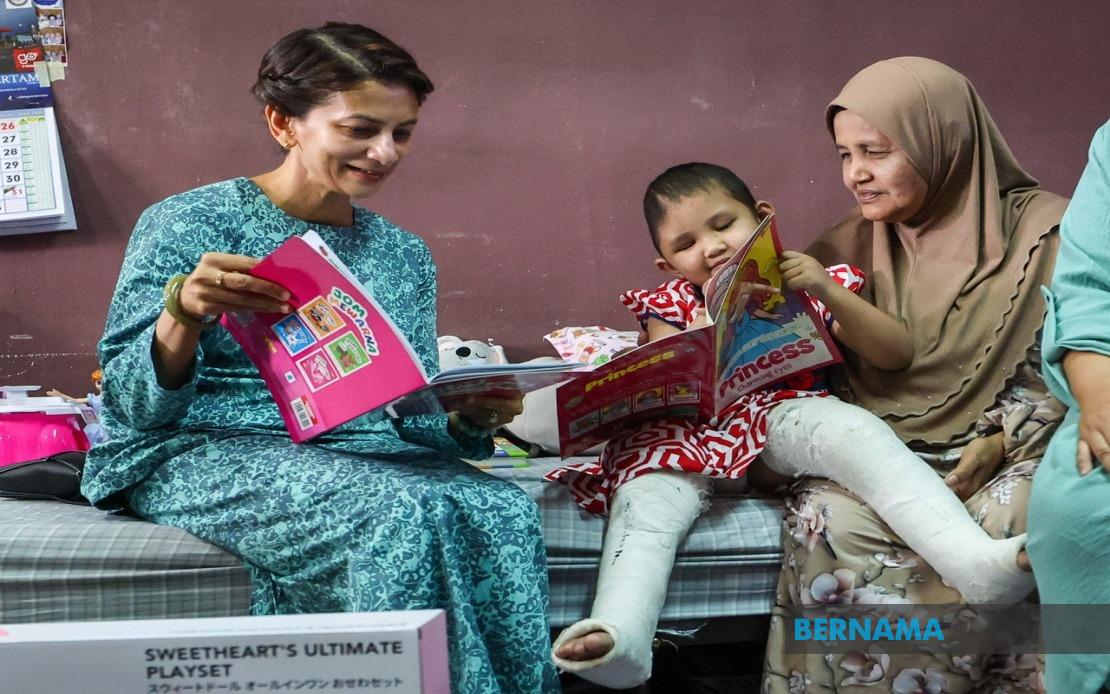
A three-year-old girl who miraculously survived a devastating road collision in Sungai Petani that claimed the lives of six relatives has reached a milestone in her recovery, with her paternal aunt confirming that the child is showing encouraging progress since her discharge from hospital last month. Aulia Sofia Ahmad Shafiq was the sole survivor of the June 7 crash, which occurred when a Proton X50 sport utility vehicle collided with a lorry while travelling from Penang to Merbok. The tragedy claimed the lives of both her parents, Ahmad Shafiq Ahmad Shukri, 27, and Jamaliah Sannusi, 29, along with her two-month-old brother Ahmad Mikail, grandmother Nora Mhd Husin, 55, uncle Ahmad Fahim Ahmad Shukri, 27, and cousin Iskandar Affan Ibrahim, seven.
Discharge from Sultanah Bahiyah Hospital in Alor Setar on July 2 followed nearly a month of intensive treatment and rehabilitation. Her aunt, Siti Nor Atikah Ahmad Syukri, 32, characterised the child's recovery as remarkable, describing Aulia Sofia as "a miracle" given the severity of her injuries and the initial assessment that her survival prospects were minimal. Speaking at her home in Taman Bandar Bertam Putra, the aunt noted that despite considerable physical challenges, the young girl has demonstrated the resilience and vitality typical of her age group, with each passing week bringing observable improvements in her overall condition.
Yet the path ahead remains uncertain in critical respects. Both of Aulia Sofia's legs sustained fractures during the collision, preventing her from walking independently at this stage. Beyond this mobility constraint, the child endured significant head trauma and severe damage to her left eye, including a ruptured eyeball that required emergency surgical intervention. Doctors successfully performed the operation to preserve the eye itself, but the prognosis regarding vision remains genuinely unclear. Medical assessment suggests she may recover sight partially or fully, though complete vision loss cannot be excluded until further diagnostic testing is completed. The full extent of her visual capacity will only become apparent following additional specialist evaluations scheduled for later this month.
Regaining consciousness approximately two weeks after the collision, Aulia Sofia has since been informed of her parents' deaths—a profound psychological adjustment that her caregivers are managing with sensitivity and professional guidance. The trauma of losing her entire nuclear family alongside the physiological stress of her injuries compounds the challenge facing the young girl as she navigates the early stages of recovery and adaptation to her radically altered circumstances.
The royal family of Kedah demonstrated tangible compassion through a visit to the child at her aunt's home. The Raja Muda of Kedah, Tengku Sarafudin Badlishah ibni Al Aminul Karim Sultan Sallehuddin, accompanied by the Raja Puan Muda of Kedah, Che Puan Muda Zaheeda Mohamad Ariff, and their daughter Tunku Zara Bahiyah, presented practical support to those caring for Aulia Sofia. Notably, the royal visitors established a National Education Savings Scheme (SSPN) account in the child's name, a gesture aimed at securing her educational future and demonstrating institutional recognition of her extraordinary circumstances. Siti Nor Atikah expressed deep gratitude for the gesture, characterising it as a reflection of the royal household's abiding commitment to supporting families affected by tragedy.
The household caring for Aulia Sofia is itself marked by grief. Siti Nor Atikah lost her youngest son, seven-year-old Iskandar Affan Ibrahim, in the same collision—making her both the aunt providing sanctuary for the orphaned girl and a bereaved mother navigating her own profound loss. This doubled tragedy has not diminished her family's determination to provide Aulia Sofia with stability and belonging. Her husband, Ibrahim Ghazali, 39, a lorry driver, stated unequivocally that the family intends to raise Aulia Sofia as their own daughter. Legal guardianship procedures are currently underway to formalise this arrangement and provide the child with the security of full family recognition.
The environment into which Aulia Sofia has been welcomed offers genuine continuity with her earlier life. Ibrahim noted that the child's cousins maintained close relationships with her prior to the accident, and this existing affection has eased her adjustment to her new domestic situation. The presence of playmates and extended family around her daily has proven therapeutically valuable, with the child reportedly thriving in an atmosphere of familiar faces and unconditional acceptance. Ibrahim characterised the household as one where Aulia Sofia "enjoys living here because her cousins are always around," suggesting that the normalcy and spontaneous joy of childhood companionship may prove as healing as any formal medical intervention.
The orthopaedic follow-up appointment scheduled for July 26 represents the next significant checkpoint in Aulia Sofia's physical rehabilitation trajectory. The fractures to both legs will require ongoing specialist management, with rehabilitation likely to be protracted and demanding. Yet medical advances in paediatric orthopaedic surgery offer reasonable grounds for optimism regarding her eventual mobility, even if full recovery may take considerable time and intensive physiotherapy.
Aulia Sofia's story encapsulates the fragility of life on Malaysian roads and the capacity for human resilience in the face of unimaginable loss. The crash that devastated her family occurred in a split second at 3.50 pm on an ordinary afternoon, yet its consequences will reverberate through her entire lifetime. Her recovery—both physical and psychological—will depend upon the sustained commitment of her adoptive family, the skill of her medical team, and the collective compassion of a community that recognises in her survival something deserving of protection and investment. In a nation where road traffic fatalities remain a persistent public health challenge, particularly affecting families from modest socioeconomic backgrounds, Aulia Sofia's case offers both a sobering reminder of that toll and an inspiring testament to the resilience of a young child and the redemptive capacity of familial love.

