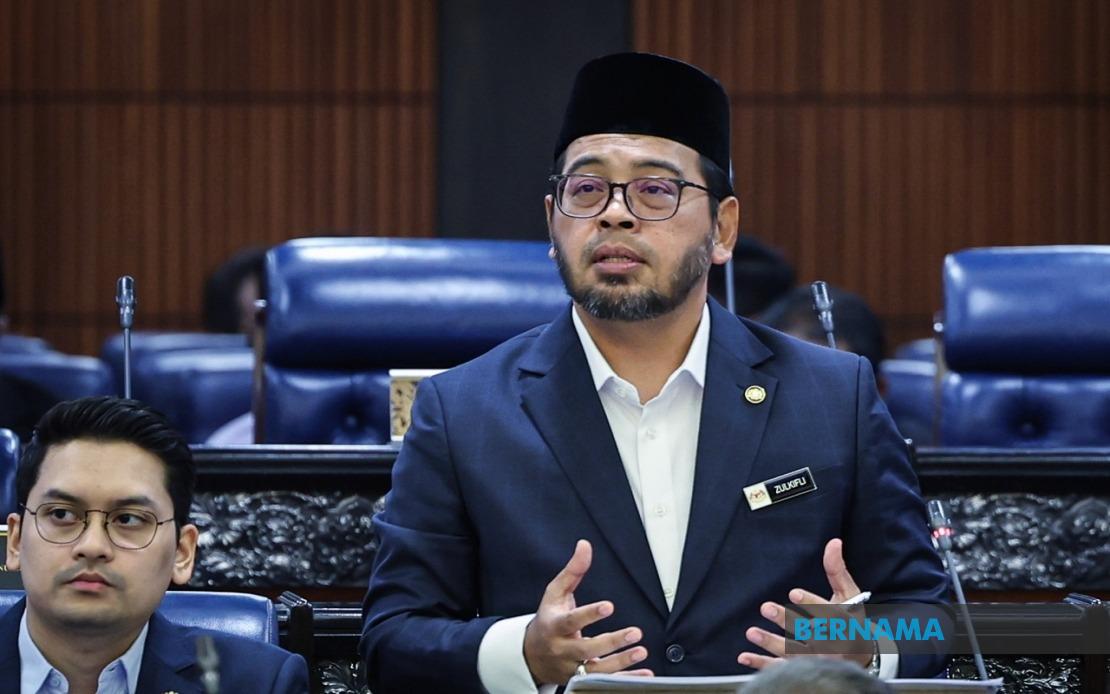
The financial meltdown at Lembaga Tabung Haji, which ultimately forced the government to bail out the pilgrimage savings institution, might never have reached crisis proportions if management had acted decisively on regulatory warnings issued nearly a decade ago. Minister in the Prime Minister's Department (Religious Affairs) Dr. Zulkifli Hasan told Parliament on August 11 that Bank Negara Malaysia issued five cautionary letters to TH leadership between August 2014 and September 2016, each highlighting deepening concerns about the institution's financial stability, reserve adequacy, and liquidity management.
The cumulative impact of ignoring these supervisory signals became painfully evident by the end of 2018, when TH's liabilities exceeded assets by approximately RM10 billion—a chasm so wide that government intervention became unavoidable to prevent systemic financial damage. Zulkifli's remarks during the Dewan Rakyat's special session debate on the Royal Commission of Inquiry report into TH underscore a critical governance failure spanning years rather than months. Had TH's board and senior management treated BNM's escalating warnings with appropriate urgency starting in 2014, the minister suggested, early corrective action might have contained deterioration within manageable bounds and spared taxpayers the enormous cost of rescue.
The RCI's findings lend weight to Zulkifli's assessment. The commission concluded that TH should never have received clean audit certificates during this period. Instead, auditors should have issued qualified opinions flagging "matters of emphasis"—a distinction that carries real significance in corporate governance. By presenting an artificially clean bill of health, the institution's true financial trajectory remained obscured from depositors and regulators alike, masking the accumulating damage even as warning lights flashed internally.
Central to TH's downward spiral was reckless dividend distribution that violated fundamental prudential rules. The institution declared and distributed hibah payments to depositors even when its liabilities exceeded assets, a practice explicitly prohibited under Section 22 of the Tabung Haji Act. This continued until 2017, draining capital that should have been retained to shore up reserves. These distributions were not guided by actual financial position but rather dispensed according to what could be characterized as wishful thinking about future returns, eroding the institution's cushion against market volatility and poor investment performance.
Bank Negara Malaysia, exercising its statutory responsibility to safeguard financial stability across non-bank institutions, had maintained ongoing dialogue with TH management regarding the central bank's concerns. Officials received assurances that TH would address the issues raised. However, Zulkifli noted with evident frustration, the reality diverged sharply from these commitments. TH's subsequent actions demonstrated minimal responsiveness to BNM's repeated cautions, suggesting either institutional complacency or inadequate understanding of the severity of deteriorating fundamentals among decision-makers.
The implications for Malaysian depositors—particularly the hundreds of thousands of citizens who rely on TH for their pilgrimage savings—are sobering. The institution manages funds belonging to primarily middle and lower-income Malaysians who entrust their hajj aspirations to a supposedly stable, government-linked entity. Governance breakdowns of this magnitude betray that trust and raise legitimate questions about how such institutional decay escaped earlier intervention despite BNM's warnings and the availability of regulatory tools.
Moving forward, Zulkifli indicated that the government intends to pursue multiple remedial tracks simultaneously. Amendments to the Tabung Haji Act 1995 will be expedited to strengthen governance frameworks and close loopholes that enabled the dividend distribution abuses. Forensic auditing has commenced on the investment portfolio flagged in the RCI report, aimed at recovering whatever value might be salvaged. A proposed Multi Agency Task Force will investigate each at-risk investment with a view toward asset recovery and potential enforcement action against those responsible for negligent or imprudent stewardship.
These corrective measures reflect a broader recognition that TH cannot be permitted to slide into crisis again. The institution occupies a unique place in Malaysian financial and social architecture, serving as custodian of funds earmarked for one of Islam's five pillars. Rebuilding depositor confidence will require not merely legislative tinkering but demonstrable change in institutional culture, risk management sophistication, and leadership accountability. The RCI process itself, which consumed significant parliamentary time and scrutiny, serves notice that governance lapses of this magnitude will no longer pass unexamined.
The Dewan Rakyat's special debate session, which continued for more than ten hours with thirty-nine members of parliament contributing remarks, underscores the political and public attention this matter commands. Speaker Tan Sri Johari Abdul noted that a third meeting would convene in October to continue detailed examination of outstanding questions, indicating that parliamentary oversight will remain intensive. For Malaysian policymakers and regulators, TH represents a cautionary tale about the consequences of allowing warning signals to go unheeded and the exponential cost of regulatory forbearance.
The RM10 billion bail-out ultimately borne by taxpayers stands as a measurable price for institutional failure and regulatory inaction. Yet the broader cost extends beyond mere finances to include erosion of public confidence in financial institutions and governance frameworks. Whether amendments to TH's governing legislation and the proposed enforcement measures can genuinely restore operational discipline and depositor trust remains to be seen, but the direction of governmental intent appears clear: accountability, recovery, and structural reform rather than further tolerance of the drift that produced this crisis.

