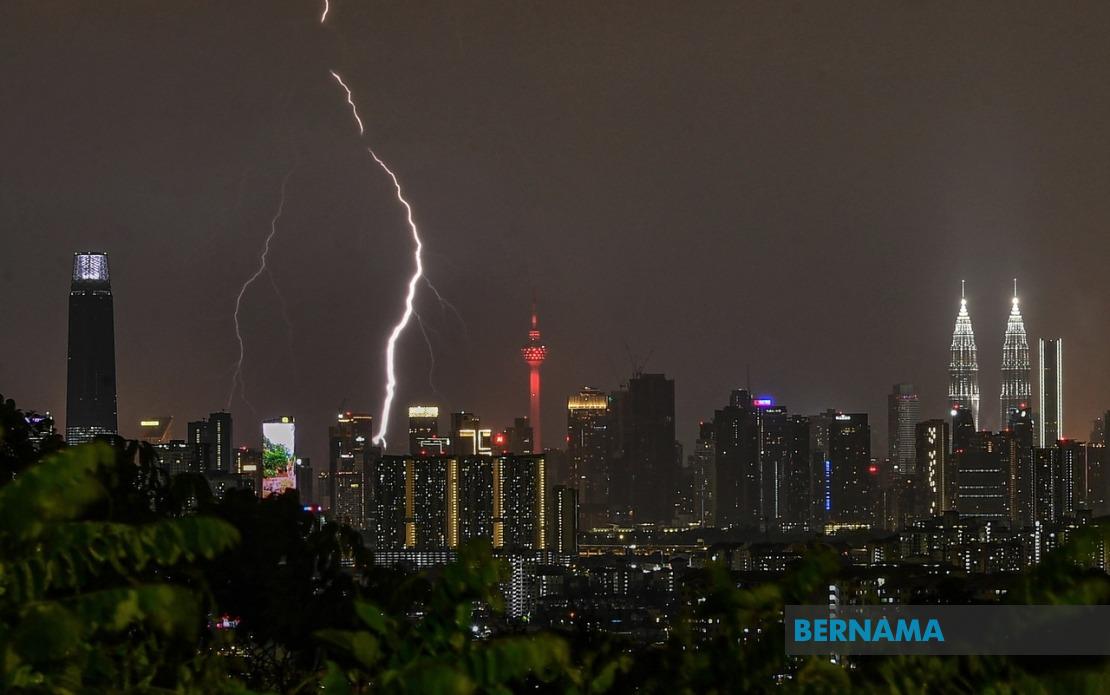
The Malaysian Meteorological Department has cautioned residents across a substantial swathe of the peninsula to brace for severe weather conditions this afternoon, issuing a thunderstorm alert that encompasses Kuala Lumpur alongside major population centres in eight states. The warning, announced at 2 pm, signals the expectation of heavy downpours accompanied by gusty winds that could persist until 5 pm, prompting authorities to advise heightened vigilance among the public.
The alert blankets the entirety of Melaka and Penang, two of the nation's most densely populated states along the western coastline. Residents in these areas should prepare for potential disruptions to daily activities, including possible traffic congestion on major routes and temporary flooding in flood-prone neighbourhoods. Both states experience frequent seasonal weather patterns that can escalate rapidly, making official warnings a crucial tool for public safety and preparedness.
In Kedah, five districts have been identified as particularly vulnerable: Kuala Muda, Sik, Baling, Kulim and Bandar Baharu. These areas, spanning both rural and semi-urban landscapes, require heightened awareness given their geographical characteristics and existing drainage infrastructure constraints. The concentration of warnings in these specific zones suggests meteorologists have identified atmospheric conditions likely to produce the most severe precipitation in these locations.
Perak faces an even more extensive alert zone, covering ten districts: Kerian, Larut, Matang and Selama, Hulu Perak, Kuala Kangsar, Kinta, Kampar, Batang Padang and Muallim. This widespread warning reflects the state's vulnerability to monsoon-influenced weather patterns and the complex terrain that can amplify rainfall intensity. Residents in these areas, particularly those in mining-affected regions and hilly terrain, should remain especially cautious about potential landslides or flash flooding in tributaries.
Pahang's six affected districts—Cameron Highlands, Lipis, Raub, Bentong, Pekan and Rompin—span the state's diverse geography from highland areas to coastal plains. Cameron Highlands, a major agricultural and tourism destination, could experience temporary disruptions to transportation and farm operations. The highland region's elevation means rainfall can be particularly intense, and ground saturation levels may already be elevated from earlier precipitation this monsoon season.
The warning zone in Selangor encompasses seven districts: Sabak Bernam, Kuala Selangor, Hulu Selangor, Klang, Gombak, Petaling and Hulu Langat. Given this state's role as the economic heartland and its dense urban infrastructure, the alerts carry particular significance for business continuity, public transportation scheduling, and commuter safety. Klang, as a major port city, warrants special consideration regarding operational impacts and waterfront safety.
Negeri Sembilan's Jelebu district and six districts in Johor—Tangkak, Segamat, Muar, Batu Pahat, Kluang and Mersing—complete the geographical scope of the warning. The Johor districts extend from inland agricultural regions to the eastern coastal belt, indicating a broad atmospheric disturbance affecting diverse terrain types simultaneously.
This comprehensive alert underscores the developing nature of Malaysia's monsoon season and the unpredictability of tropical weather systems in the region. Unlike far-advanced forecasting in temperate climates, tropical thunderstorm warnings often emerge with relatively short lead times, making the meteorological department's proactive communication essential for minimising harm. The three-hour window from 2 pm to 5 pm requires residents and commuters to make immediate adjustments to their plans.
For the business community and transport operators, the warning necessitates contingency planning. Port operations in Melaka and Klang may need to implement enhanced safety protocols, while public transportation authorities should prepare for potential delays. Construction sites across affected areas may need temporary suspensions of outdoor work, and event organisers should consider moving activities indoors or postponing gatherings.
MetMalaysia's advisory for continuous monitoring of updates reflects the dynamic nature of severe weather. Atmospheric conditions can either intensify beyond current forecasts or dissipate more rapidly than predicted, making real-time information critical. The department's emphasis on public alertness highlights the importance of individuals checking official weather channels, securing loose outdoor items, and planning alternative routes for essential travel.
The concentration of warnings across such a wide area simultaneously points to a significant weather system, possibly a mesoscale convective complex or the interaction between the Southwest Monsoon and local heating effects. Understanding these broader meteorological patterns helps residents appreciate why multiple states experience identical warnings rather than isolated incidents.
Beyond today's alert, the pattern of warnings across the peninsula during monsoon months remains a recurring challenge for Malaysia's infrastructure, agriculture, and urban planning. While individual thunderstorms are brief, their collective impact across densely populated areas demands ongoing investment in drainage systems, early warning infrastructure, and public education about severe weather safety. MetMalaysia's role in providing timely, accurate forecasts remains fundamental to the nation's disaster risk reduction efforts.

