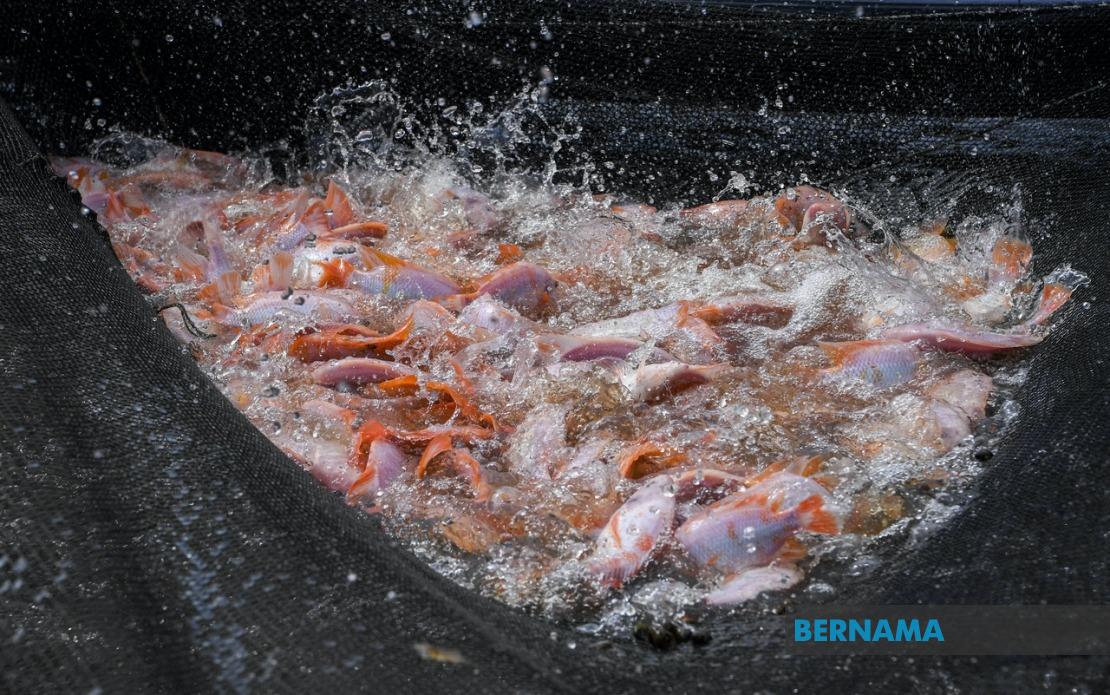
Tilapia is poised to become a cornerstone of Malaysia's protein supply chain and a significant wealth generator for aquaculture entrepreneurs, according to Agriculture and Food Security Minister Datuk Seri Mohamad Sabu. Speaking at the inauguration of the Tilapia Fish Farming Project Using the ARC Berkat Biofloc System in Klang, Mohamad emphasised that the country must pursue modern, sustainable production methods to unlock the species' full economic and nutritional potential. This statement reflects a deliberate policy shift toward intensifying Malaysia's engagement with tilapia farming as both a food security initiative and an income-generating enterprise for rural and semi-rural communities.
The minister drew a telling comparison between tilapia and chicken, positioning the fish as the aquaculture equivalent of the poultry sector in terms of accessibility, demand, and scalability. This analogy underscores official recognition that tilapia offers a democratised protein source capable of reaching Malaysian households across income levels while creating entrepreneurial opportunities throughout the supply chain. The framing reveals strategic thinking about how developing nations can meet rising protein demands without depending exclusively on imported animal products or resource-intensive livestock farming. For Southeast Asian readers, this model has relevance beyond Malaysia's borders, as tilapia farming addresses similar food security concerns across the region where freshwater aquaculture capacity remains underutilised.
Government backing through the National Agri-Food Empowerment Programme (PPAN) demonstrates institutional commitment to the sector's expansion. By channelling funding toward the Klang project and similar initiatives, the Ministry of Agriculture and Food Security is signalling that tilapia development forms part of a broader strategy to strengthen domestic agri-food production capacity. This investment reflects confidence that modern aquaculture techniques can generate returns whilst addressing resource constraints that have historically limited Malaysia's agricultural productivity. The programme's focus on technology adoption and modern farming practices suggests policymakers view tilapia farming not as a subsistence activity but as a competitive commercial sector capable of competing with imports and creating export opportunities.
Statistics paint a picture of an industry with substantial existing activity but significant room for growth. As of July 2026, approximately 4,399 registered tilapia farmers were engaged in the sector, compared with 4,400 in 2025, indicating a largely stable farmer base. However, production volumes tell a more dynamic story. In 2025, Malaysia's tilapia farms generated 28,555.94 tonnes of product valued at RM343.47 million. The first seven months of 2026 saw 9,436.25 tonnes worth RM108.83 million, projecting toward annual output that could exceed the previous year if current momentum sustains. These figures exclude Sabah and Sarawak, meaning national production is even more substantial than headline numbers suggest, highlighting regional contributions that often escape national attention.
Biofloc technology has emerged as a transformative production method, particularly suited to Malaysia's geographic constraints and climate challenges. The system optimises both land and water usage by creating a contained environment where natural bacteria break down waste products, creating additional nutrition whilst maintaining water quality. This efficiency is critical in a nation where agricultural land is increasingly scarce and freshwater resources face competing demands. Datuk Adnan Hussain, Director-General of the Department of Fisheries Malaysia, acknowledged that biofloc systems hold considerable promise for intensifying production in space-limited areas, yet cautioned that success depends on rigorous management of water quality, dissolved oxygen levels, nutritional inputs, fish health, and biosecurity protocols. This balance between optimism and caution reflects professional understanding that technology alone cannot succeed without accompanying expertise and discipline.
Regional production patterns reveal Selangor's dominance in biofloc-based tilapia farming, with the state producing 1,423 tonnes valued at approximately RM14 million during 2025. Kedah followed with 35 tonnes, whilst Melaka contributed 10 tonnes, yet paradoxically Kedah led in farmer numbers with 26 practitioners compared to Selangor's concentration among fewer operators. This disparity suggests that larger-scale, more capitalised operations in Selangor achieve greater output per farmer, implying professional development and investment differentiation across states. The regional breakdown also highlights opportunities for capacity building in less developed farming communities, where knowledge transfer and capital access could unlock productivity gains similar to those Selangor has already realised.
Approximately 99 per cent of Malaysia's biofloc system capacity is devoted to tilapia production, underscoring both the species' suitability for the technology and the absence of diversification in this production method. This concentration creates vulnerability, as any sector-wide challenge affecting tilapia farms using biofloc systems would simultaneously impact nearly the entire installed biofloc capacity. Conversely, it demonstrates clear market and production preference, validating investment decisions by farmers who have adopted the technology overwhelmingly for tilapia. The potential for biofloc systems to expand production in land-constrained areas remains substantial, particularly given Malaysia's ongoing urban expansion and agricultural land pressure. Replicating Selangor's success in other states represents a tangible pathway for national production growth without requiring vast additional land cultivation.
The invasive species dimension presents an ecological counterweight to enthusiasm for tilapia expansion. As an alien fish species, tilapia poses documented risks to native freshwater ecosystems should individuals escape into public waters, rivers, lakes, or dams. The Department of Fisheries has consequently issued explicit warnings that farmers and the public must not release tilapia into natural water bodies, recognising that commercial advantages cannot justify ecosystem disruption. This constraint requires farmers to operate contained systems with robust infrastructure, increasing capital requirements and operational complexity. It also demands vigilance from regulatory authorities and public cooperation, as uncontrolled release—whether through negligence or deliberate escape—could irreversibly alter freshwater biodiversity across Malaysia and potentially across regional waterways.
Certification and quality standards form an increasingly important dimension of Malaysia's tilapia sector development. The government is encouraging farmers to pursue myGAP certification, reflecting alignment with international good agricultural practice standards that enhance marketability and ensure consumer safety. This emphasis on formalisation and standards represents a shift toward professionalising the industry, distinguishing certified commercial operations from informal or subsistence-level farming. For Malaysian consumers, rising standards should translate into safer, more consistently quality tilapia products. For regional markets, certified Malaysian tilapia gains competitive advantage over less rigorously produced alternatives, supporting export potential and positioning the country as a quality supplier within Southeast Asia's aquaculture ecosystem.
Weather-related challenges, particularly during hot seasons, require proactive management and represent an emerging concern as climate patterns shift. Elevated temperatures stress fish, reduce dissolved oxygen in water, and create conditions favouring disease outbreaks. Farmers are advised to intensify water quality monitoring and management during peak heat periods, adding another layer of operational vigilance required for successful modern tilapia farming. This climate sensitivity will likely intensify with global warming projections for Southeast Asia, meaning that sustainable tilapia production increasingly depends on farmers' adaptive capacity and access to technical support systems.
Government commitment to sector development extends beyond regulation and certification toward active support provision. The Department of Fisheries has indicated ongoing support for seed supply, inputs, equipment acquisition, technology provision, and technical advisory services. This comprehensive support ecosystem addresses multiple barriers that might otherwise prevent new entrants or constrain existing operators. Particular emphasis on attracting young people into aquaculture reflects demographic and employment concerns, as rural youth often migrate toward urban sectors. By positioning tilapia farming as a modern, technology-enabled, economically viable career path rather than traditional subsistence fishing, authorities hope to reverse rural depopulation whilst building a sustainable sector with professional practitioners rather than marginal operators.
For Malaysia's broader food security architecture, tilapia represents a flexible, scalable component that can absorb increased demand for protein without depending on volatile international supply chains or extensive agricultural land expansion. The sector's demonstrated growth trajectory, combined with government support and technological advancement, positions tilapia farming as a model for how developing economies can simultaneously address nutrition, employment, and environmental objectives through strategic sector development. Southeast Asian policymakers observing Malaysia's approach may find replicable lessons in how targeted investment, technology adoption, and regulatory frameworks can transform subsistence farming into commercial enterprise. However, success ultimately depends on maintaining the delicate balance between production ambition and environmental stewardship, between farmer profitability and ecosystem integrity, that the sector's guardians must continuously navigate.

