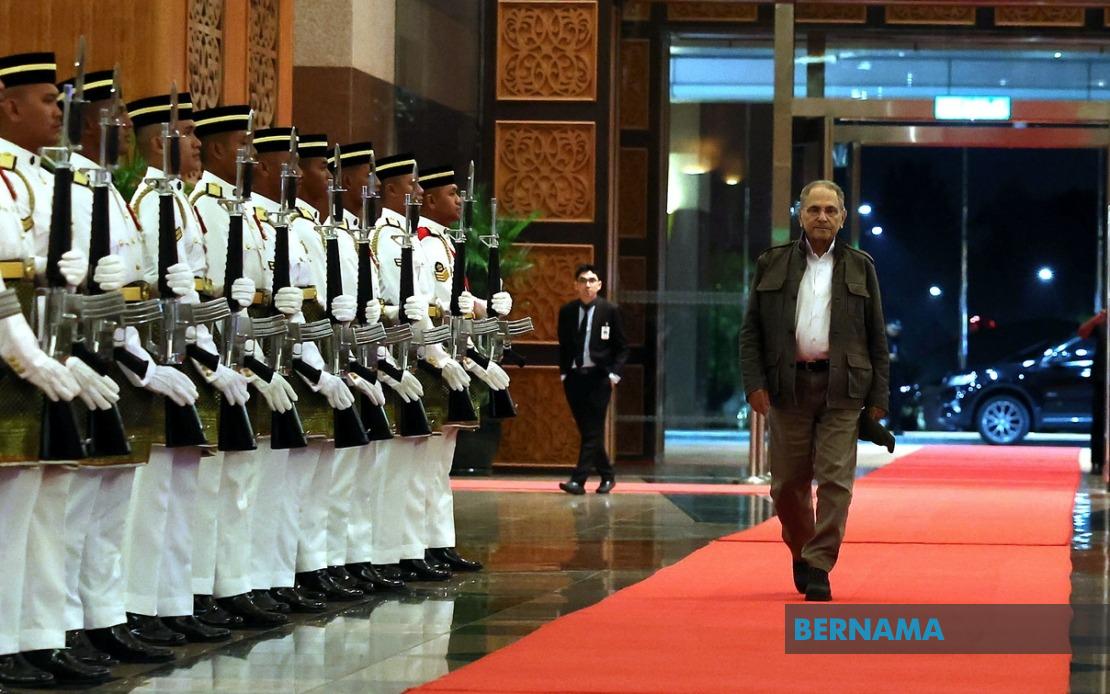
Timor-Leste President Jose Ramos-Horta departed Malaysia in the early hours of June 17, concluding a five-day special visit that underscored the deepening strategic relationship between the two Southeast Asian nations. The Nobel Peace Prize laureate boarded a Batik Air flight from Kuala Lumpur International Airport Terminal 1, departing at 2.15 am after ceremonies that included a formal Guard of Honour from the First Battalion Royal Ranger Regiment. The visit represented a significant diplomatic engagement, reflecting Timor-Leste's growing importance in the region following its accession to ASEAN just months earlier.
During his time in Malaysia, Ramos-Horta articulated an unusually warm assessment of bilateral relations, describing them as "exceptionally good" during a dialogue session titled "A Changing World, Enduring Values" held on June 15. His remarks carried particular significance given that Malaysia played an instrumental role in supporting Timor-Leste's path to full ASEAN membership, backing the nation's candidacy during Malaysia's own ASEAN chairmanship. Timor-Leste formally joined as ASEAN's eleventh member on October 26, 2025, marking a pivotal moment in the nation's regional integration. For Malaysian readers and policymakers, this development carries implications for intra-ASEAN dynamics and the bloc's enlarged membership.
The President's appreciation extended to Malaysia's historical contributions to Timor-Leste's sovereignty and stability. He specifically acknowledged Malaysia's support both before and after Timor-Leste's independence in 2002, including peacekeeping efforts deployed during the critical transition period of 1999. These references serve as reminders of Malaysia's consistent diplomatic engagement in the region and its role in supporting newly independent nations navigating complex geopolitical circumstances. Such historical context strengthens the narrative of bilateral cooperation and establishes a foundation of trust that informs current discussions.
A significant highlight of the visit involved Prime Minister Datuk Seri Anwar Ibrahim hosting an official luncheon at the Seri Perdana Complex, where both leaders engaged in substantive discussions about expanding economic and people-to-people ties. The conversation encompassed trade expansion, investment opportunities, human capital development initiatives, education exchanges, and technical training programmes. These discussions reflect a recognition that political friendship must translate into tangible economic benefits for citizens of both nations. The breadth of topics covered suggests a comprehensive approach to bilateral relations that moves beyond ceremonial exchanges into substantive collaboration.
Ramos-Horta made a pointed appeal to Malaysian investors, inviting them to explore infrastructure development opportunities in Timor-Leste. His pitch emphasised several attractive characteristics of the Timorese economy: a notably low debt level, a robust sovereign wealth fund that provides financial cushioning, and backing from major multilateral financing institutions. For Malaysian businesses and investors seeking new markets in Southeast Asia, Timor-Leste represents an emerging opportunity, particularly in infrastructure sectors where Malaysian expertise in project management and construction has proven competitive. The President's direct appeal suggests that Dili is actively marketing itself to regional investors amid global capital competition.
Current bilateral trade figures reveal an asymmetry that merits examination. In 2024, trade between Malaysia and Timor-Leste totalled USD18.72 million, equivalent to approximately RM85.68 million. Malaysian exports dominated the exchange at USD18.37 million (RM84.06 million), while imports from Timor-Leste comprised just USD0.35 million (RM1.62 million). This imbalance reflects Timor-Leste's current stage of economic development and its limited manufacturing base, but also indicates significant untapped potential. As Timor-Leste develops its infrastructure and economic capacity, trade volumes could expand substantially, benefiting Malaysian exporters and creating opportunities for Malaysian firms involved in development projects.
Ramos-Horta expressed confidence in Timor-Leste's readiness to host ASEAN in 2029, a responsibility that carries enormous symbolic and logistical weight. He noted that infrastructure development and facility improvements are being accelerated to meet this ambitious timeline. For Malaysia's policymaking community, Timor-Leste's trajectory is relevant not only as a neighbouring ASEAN member but also as an indicator of the bloc's capacity to integrate and support developing members. Malaysia's own experience hosting major ASEAN events provides a reference point for evaluating realistic timelines and resource requirements.
The visit also illuminates Timor-Leste's strategic positioning within ASEAN and the broader region. As a nation recovering from conflict and still consolidating state capacity, its integration into ASEAN represents both opportunity and challenge. Malaysia's role as a senior member offering mentorship and practical support positions it advantageously for deepening influence in Dili. This diplomatic engagement also reflects ASEAN's commitment to inclusivity and the bloc's investment in ensuring that newly integrated members succeed in their development trajectories.
For Malaysian readers and observers, the conclusion of this visit signals that regional diplomacy remains active and forward-looking. The warmth of the engagement and the substance of discussions suggest that bilateral relations have solid foundations and meaningful momentum. As Timor-Leste continues its transition from a post-conflict state to an active ASEAN participant, Malaysia's role as partner, mentor, and potential investor positions the country well for deepening ties that could yield economic and diplomatic benefits. The visit underscores the reality that Southeast Asian regionalism is built through sustained high-level engagement, personal relationships between leaders, and concrete economic cooperation.