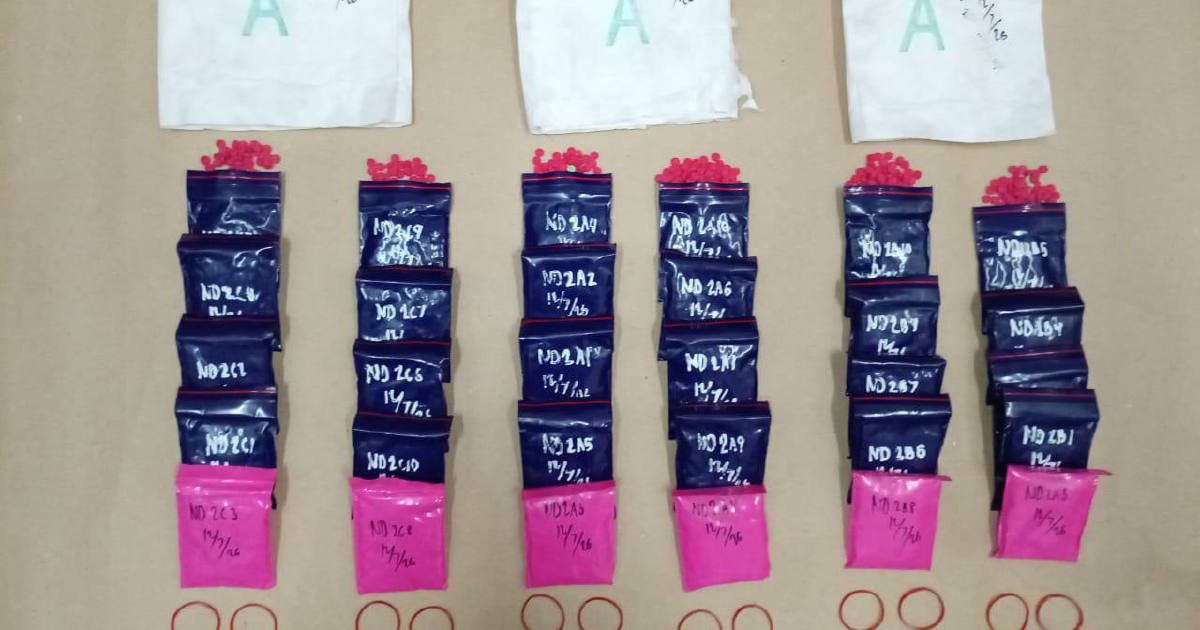
A 35-year-old tow truck operator faces drug charges following his arrest in Tumpat, Kelantan, when authorities uncovered a substantial cache of methamphetamine pills during a vehicle search near Wakaf Bharu. The operation, conducted in the Jalan Kubang Batang area, resulted in the confiscation of 6,000 yaba pills—stimulant tablets commonly known for their amphetamine content—with police valuing the haul at RM60,000 at street rates.
The arrest highlights the persistent challenge of drug trafficking through Malaysia's northern corridor, where methamphetamine remains the substance of choice for traffickers supplying regional demand. Kelantan, positioned as a transit point between Thailand and central Malaysia, continues to experience sustained narcotics activity despite heightened enforcement efforts. The state's geography, with accessible border crossings and established trafficking networks, creates vulnerabilities that law enforcement agencies struggle to fully contain.
Yaba pills—colloquially referred to as "crazy medicine" in Thailand and the region—represent a particularly troubling drug category for authorities. Unlike heroin or cocaine, which require conversion through chemical processing, yaba tablets are manufactured in Southeast Asian labs and require minimal packaging, making them ideal for smuggling across porous borders. A single pill can be concealed easily, yet massive quantities remain transportable within vehicle compartments, creating an asymmetry that favours traffickers.
The choice of using a tow truck as a cover for transportation reflects common smuggling tactics observed throughout Malaysia. Commercial vehicles engaged in legitimate roadside assistance work benefit from reduced scrutiny at checkpoints compared to private cars, and drivers enjoy regular mobility patterns that provide plausible explanations for frequent journeys between regions. This operational approach, when combined with corrupt officials or inadequate information-sharing between agencies, creates gaps that allow contraband to move relatively freely.
The RM60,000 valuation places this seizure in the medium-range category for drug operations in Malaysia. For context, yaba pills typically retail between RM5 and RM15 per tablet in domestic markets, though bulk wholesale prices remain substantially lower. This particular haul, if successfully distributed, would have generated considerable profit while feeding the domestic demand for stimulants among younger users and those requiring extended wakefulness for work or recreation.
The arrest comes amid broader concerns about amphetamine-type stimulant proliferation across Southeast Asia. The United Nations Office on Drugs and Crime has repeatedly flagged the region as a major production and consumption hub for synthetic drugs, with production facilities located primarily in Myanmar and Thailand. Malaysian authorities serve as first-responders to interdicting these flows, yet resources remain stretched across multiple priorities including heroin, fentanyl, and cocaine operations.
Kelantan's position in Malaysia's drug trafficking landscape deserves particular attention from policymakers. The state shares a lengthy land border with Thailand's southern provinces, where notorious drug labs operate with relative impunity due to rural isolation and limited governance reach. Trafficking organisations exploit seasonal patterns, weather conditions affecting border patrols, and occasional political instability that diverts resources from drug enforcement. Intelligence suggests that syndicates operating from Thailand deliberatelytarget Malaysian intermediaries like tow truck operators precisely because their mobility and commercial legitimacy reduce detection risk.
The investigation process following such arrests typically involves examining financial records, communications, and vehicle movement patterns to identify higher-level distributors and identify whether the operator was acting as an independent smuggler or functioning within a larger trafficking network. Such intelligence gathering remains crucial for disrupting supply chains rather than simply removing individual transporters, who can be quickly replaced within operational structures.
Roadside enforcement, while important, addresses only the supply-side visible portion of drug trafficking. Complementary approaches including demand reduction, rehabilitation services, and cross-border intelligence sharing with Thai authorities remain underutilised components of comprehensive drug policy. Malaysia's success in managing drug trafficking ultimately depends on regional cooperation, domestic enforcement capability, and genuine reduction in market demand—a combination that continues to elude sustained achievement.
The incident reinforces broader questions about resource allocation within Malaysian law enforcement. Individual arrests generate positive media coverage but represent reactive responses rather than proactive disruption of trafficking infrastructure. Building sustainable drug control requires investment in intelligence networks, community engagement in border regions, and long-term commitment to addressing the socioeconomic factors that make drug trafficking economically attractive to individuals like this tow truck operator.

