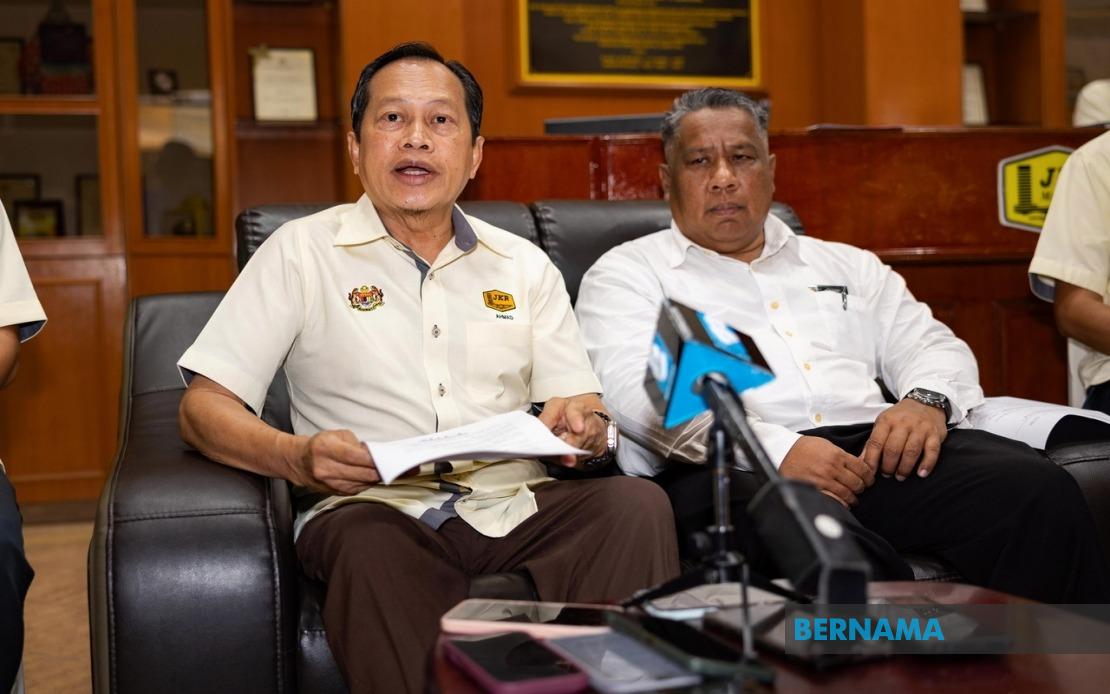
Responsibility for tree management along federal roads rests with local authorities rather than the Public Works Department, according to Deputy Works Minister Datuk Seri Dr Ahmad Maslan, who stressed that JKR and road maintenance concessionaires are prepared to strengthen partnerships to enhance public safety. Speaking during a site visit to the Manjung District Engineer's Office in Lumut, Ahmad sought to clarify the division of duties that has come under scrutiny following recent tragedy involving falling trees on Malaysian highways.
The legal framework governing this arrangement is outlined in Section 101(b) of the Local Government Act 1976, which grants local authorities broad powers to plant, maintain, prune, or remove vegetation within their administrative boundaries. This provision explicitly extends to trees located on federal road reserves that fall within the jurisdiction of particular local authorities, creating a clear legal foundation for their management role. Ahmad's remarks suggest growing awareness among government officials that the existing framework requires more consistent enforcement and coordination to prevent incidents that cost lives.
The clarification came in response to mounting public concern about falling tree incidents on Malaysian highways, most recently the tragic death of four family members struck by a falling tree on the FT68 Bentong-Kuala Lumpur Old Road. Bentong MP Young Syefura Othman had called for JKR and maintenance concession companies to strengthen ties with certified arboriculture experts and conduct regular technical assessments of mature trees and unstable slopes throughout the federal road network. Such incidents have prompted fresh examination of whether existing protocols and responsibility structures adequately protect motorists.
Ahmad addressed a critical constraint affecting response capacity, noting that maintenance concession agreements do not authorize routine tree removal but instead permit only the clearing of trees that have already fallen. This restriction, embedded in contractual terms governing road upkeep, appears to create a reactive rather than proactive approach to arboricultural hazards. The deputy minister's emphasis on the distinction between normal vegetation management and emergency clearance suggests that the current system may struggle to address deteriorating tree conditions before they pose imminent danger to road users.
While emphasizing that tree planting and management do not fall within JKR's core mandate—which focuses on road infrastructure elements such as furniture and signage—Ahmad indicated openness to enhanced collaboration. This nuanced position appears designed to clarify roles without absolving the public sector from contributing to solutions. The Works Ministry's willingness to work alongside local authorities and maintenance partners signals recognition that fragmented responsibility systems may be inadequate for managing complex safety challenges along Malaysia's expanding highway network.
The deputy minister's visit to Manjung encompassed broader oversight of JKR operations at the district level, including reviews of organizational structure, divisional functions, and progress on infrastructure projects. This engagement reflects a wider strategic approach by the Ministry of Works to strengthen monitoring and coordination across administrative tiers. Ahmad stressed the importance of maintaining continuous oversight to ensure all projects and maintenance activities meet required technical specifications, adhere to schedules, and remain within budget allocations—foundational elements of effective public infrastructure management.
The Ministry of Works has positioned enhanced inter-agency coordination as central to future road safety improvements. Ahmad's comments indicate that KKR intends to intensify monitoring and cooperation between the ministry, state-level JKR branches, and district-level engineers to sustain Malaysia's public infrastructure at standards meeting safety and user comfort expectations. This commitment appears driven by recognition that the country's rapid urban expansion and aging road networks require more sophisticated management approaches than traditional arrangements provide.
For Malaysian motorists and road users, these developments carry significance beyond procedural clarification. The tragic Bentong incident and Ahmad's subsequent remarks suggest that policymakers are now actively examining whether current responsibility frameworks and resource allocation adequately address tree-related hazards on federal roads. The involvement of certified arboriculture experts, as advocated by Young Syefura Othman, could introduce more systematic assessment of risk factors such as tree age, soil stability, and weather resilience—elements that informal maintenance systems may overlook.
The clarification of JKR's role and limitations offers transparency about what the public sector can realistically deliver under existing contractual and legislative constraints. However, it also implicitly raises questions about whether local authorities possess adequate technical expertise, funding, and enforcement mechanisms to fulfill their statutory obligations comprehensively. Many Malaysian municipalities face capacity constraints that may hinder effective vegetation management across sprawling road networks, particularly in rapidly developing areas where maintenance demands have outpaced institutional capacity.
Looking forward, Ahmad's remarks suggest that the Works Ministry recognizes opportunities for improvement without necessarily proposing wholesale legislative or contractual reform. Enhanced cooperation between JKR, concessionaires, and local authorities could include clearer protocols for assessing tree conditions, more frequent communication channels for reporting hazards, and streamlined procedures for removing obviously dangerous vegetation. Such measures might operate within existing frameworks while meaningfully improving response times and accident prevention.
The ongoing dialogue between federal and local authorities regarding tree management reflects broader challenges in Malaysian governance where responsibility spans multiple jurisdictions. As highway networks continue expanding and climate patterns increasingly produce severe weather events, the ability to coordinate effectively across traditional administrative boundaries may prove decisive in preventing further tragedies. Ahmad's visit and subsequent clarifications suggest that the Works Ministry is gradually shifting toward a more integrated approach to infrastructure management, though the pace of institutional change will likely determine whether these efforts substantively reduce risks facing road users across Malaysia's federal highway system.

